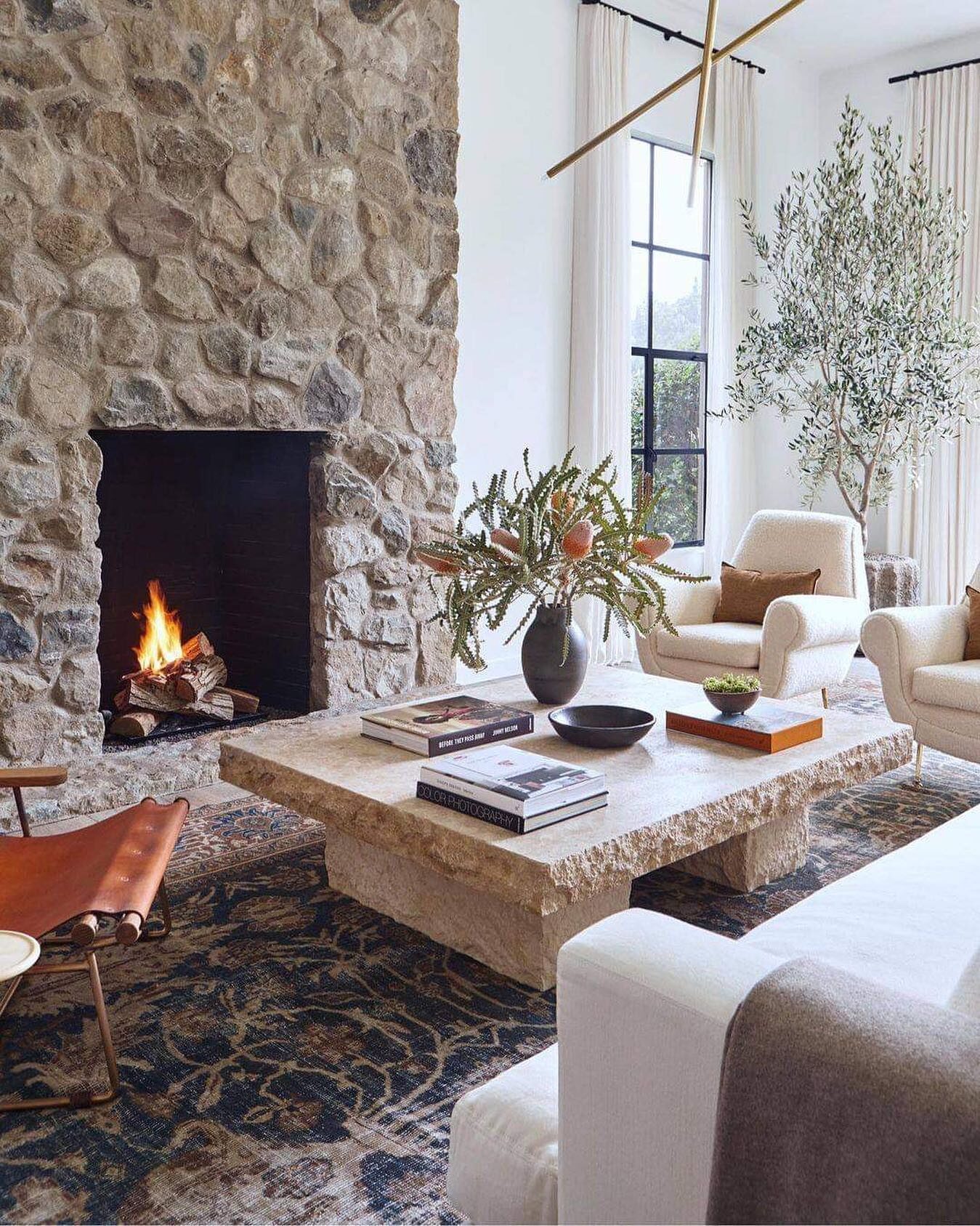
knowledge library / Choosing an Antique Rug for a British Period Home
Choose an antique rug for a British period home by considering its actual dimensions, visible pattern and condition alongside the room's architecture. A fireplace, a bay window or a narrow seating arrangement can change which part of the rug you notice. At WOVEN PLACE, we would begin with that relationship, then assess the individual piece for its intended use.
The age of a house does not dictate a single rug style. Contemporary seating can work against a patterned antique; a room filled with carved furniture and decorative textiles may benefit from a more open field. Decide what the rug needs to contribute before choosing by origin or period.
Start with the view into the room
Look from the main doorway and mark the strongest features on a simple plan. The fireplace may establish an axis, but the furniture might sit to one side of it. A bay can give one end of the room more depth. Measure the area the seating actually occupies, as well as the room itself.
An antique rug is an existing object with fixed proportions. Test its measurements against the plan early. A piece that is too narrow to connect the sofa and chairs will ask for a different arrangement, however persuasive its colours look in isolation.
Our antique collection can be explored by the particular character of each piece. Keep the rug reference and dimensions beside the room plan when comparing candidates, so that the preferred pattern does not become separated from the question of fit.
Judge the pattern the furniture will leave visible
A central medallion, an all-over field and a strong border distribute attention differently. A medallion gives the rug a defined centre. Repeated motifs spread interest across the surface. A border frames the composition, but its effect depends on how much remains visible around the furniture.
Consider an illustrative sitting room with a fireplace, two facing sofas and a broad coffee table. The table covers much of the rug's centre. A medallion may be partly hidden, while the corners and border remain clear. An all-over pattern offers a different rhythm through those exposed areas. Neither arrangement is automatically wrong; compare the parts you will actually see.
Print a full view of the rug and mark the furniture positions over it. This simple exercise can reveal a border disappearing beneath a sofa or a strong motif falling exactly where a chair will stand. Try the rug in the opposite orientation before dismissing it.
Use the existing floor as a colour reference
Compare the rug with the floorboards, stone or other surface that will surround it. A warm floor and a warm rug can produce a close palette, while a contrasting field can give the seating area a clearer boundary. These are design choices to test with the room's materials.
Bring a flooring reference and the principal upholstery fabric when viewing a candidate. If the rug has several colours, identify the one that occupies the largest area and the smaller accents you want to repeat elsewhere. Picking every colour out in cushions or accessories can make the room feel more coordinated than you intended.
Let some colours remain in the rug alone. In a room with collected furniture, the rug can connect pieces without requiring each one to share the same finish or fabric.
Make condition part of the placement decision
Condition should be considered in relation to how the room will be used. Ask for a description of the individual rug, including known repairs and any areas that need closer examination. Photographs of the face, reverse and edges help organise the discussion; an inspection is needed where the photographs leave structural questions unresolved.
At WOVEN, inspection comes before decisions about repair or alteration. The next steps and timing depend on that assessment. For a buyer, this means keeping the condition discussion open until the particular piece has been considered for the proposed room.
A sitting room used every evening presents a different brief from an occasional drawing room. Describe the movement through the space and where chairs will be used. If suitability remains uncertain, consider another piece rather than relying on the general label “antique” to settle the question.
Keep the object record with the room brief
Before committing to an antique rug, establish:
- The exact reference and measured dimensions, including how fringe is recorded.
- The stated origin and approximate date, with the basis for any attribution.
- The condition description and known repairs or alterations.
- Whether further inspection or work is needed for the proposed use.
- Current availability and the agreed delivery arrangements.
A softened colour or an old-looking pattern cannot establish age or provenance on its own. Keep the seller's description with the rug record, and distinguish documented information from a visual impression.
Bring a shortlist to London
Choose a few candidates that offer meaningfully different possibilities: perhaps a more open field, a broader border or a different proportion. Compare each against the same plan and materials. The reasons for rejecting a rug can be as useful as the reasons for keeping it.
Our London showroom is at 16 Bloomfield Terrace, London SW1W 8PG. Send the antique rug references and room details before visiting so that availability and the next steps for viewing can be established.