knowledge library / A History of Swedish Rugs: From Household Weaving to Modern Design
Swedish rug history brings together household weaving, regional textile traditions and the work of twentieth-century designers. Rya pile textiles once served as warm bedcovers, while röllakan flatweaving became an important part of Sweden’s designed rugs. Artists including Märta Måås-Fjetterström and Ingegerd Torhamn gave these textile traditions new expression through pattern, color and composition.
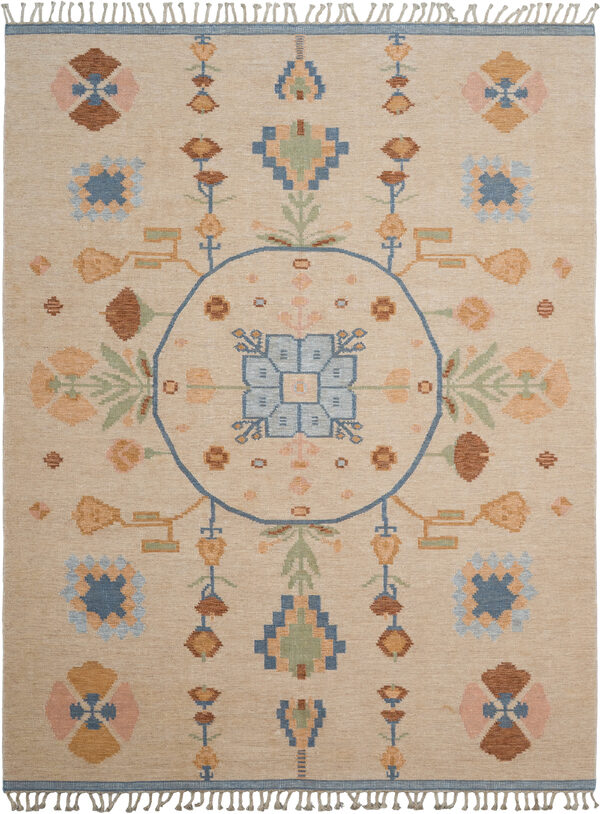
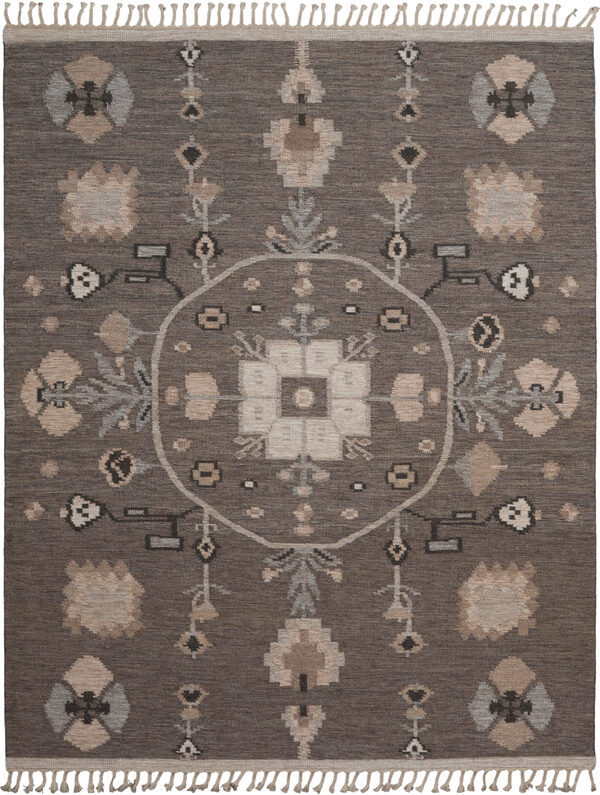
That history is more varied than the pale, minimal interiors often associated with Scandinavian design. It includes richly patterned textiles, bold geometry and color used with considerable freedom. For WOVEN, those possibilities are the starting point for Skala by STUDIO WOVEN, our series of original rugs inspired by Swedish weaving and modernism.
Before rugs belonged on the floor
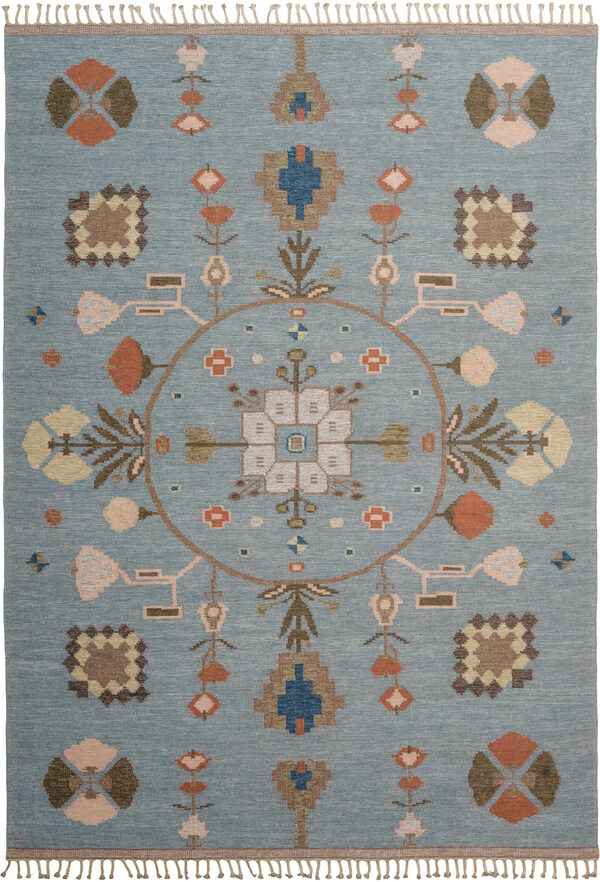
Many textiles we now associate with Swedish rugs began with another purpose. Rya, a textile with knotted pile, was used as a bedcover for warmth. Practical versions were placed with the pile toward the body; more decorative versions displayed their patterned pile on the made-up bed.
These textiles belonged to a wider Nordic tradition, with use and pattern varying across places and households. In Sweden, rya was made by professional weavers as well as in the home. Decorative examples could also mark an occasion: a wedding rya might carry the couple’s initials and the year.
The change from bedcover to floor rug helps explain why Swedish textile history cannot be reduced to a single decorating style. Function changed, and makers found new uses for familiar skills. The long-pile rugs associated with twentieth-century interiors have a much older textile history behind them.
Röllakan and rya: two different surfaces
Röllakan, also written rölakan, is a flatweave. Its pattern is formed within the woven surface, without a separate knotted pile. Rya has pile formed by knots, giving the yarn a different presence above the foundation. Both belong in an account of Swedish rugs, but they are different ways of making a textile.
Röllakan has a strong association with southern Sweden. Surviving examples of the technique include cushions and covers as well as rugs, another reminder that the same weaving knowledge could serve several purposes. In later designed rugs, flatweaving offered a surface for ordered repeats, blocks of color and carefully measured borders.
For a reader looking at rugs today, this distinction is useful before any discussion of style. A geometric design may be flatwoven or made with pile. The pattern alone does not identify the construction, and the word “Swedish” does not describe one universal surface.
Märta Måås-Fjetterström and the designed rug
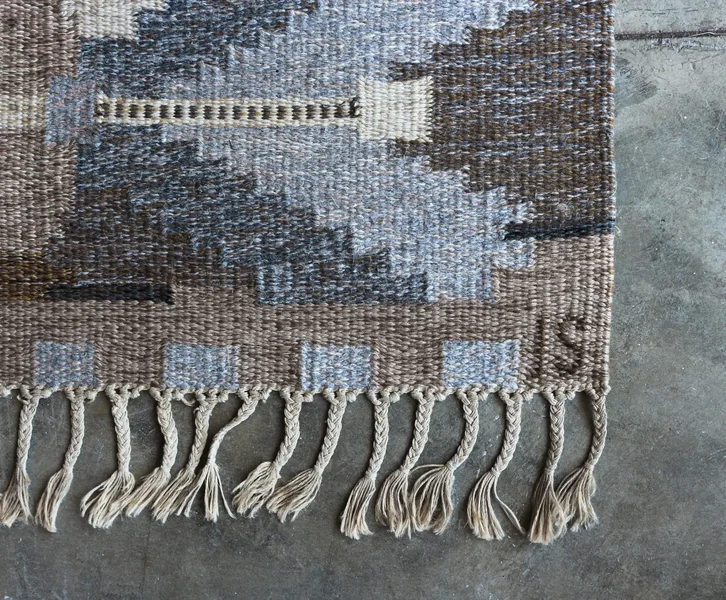
Märta Måås-Fjetterström opened her weaving studio in Båstad in 1919. Her work brought knowledge of older textiles into a practice built around her own designs, interpreted by skilled weavers. Nature, Scanian textiles and rugs she encountered from other traditions all informed her work.
Her compositions ranged from plants and animals to increasingly spare arrangements of lines and squares. She worked in both flatweave and knotted pile, allowing the technique to shape how a design took form. The workshop shows how Swedish rug making could draw from regional craft while developing an individual artistic voice.
After her death in 1941, the studio reopened as a limited company in 1942, with Barbro Nilsson as artistic director. Designers including Marianne Richter contributed to its continuing work. Swedish textile design developed through those different hands and perspectives; it was never the achievement of one artist alone.
Modernism brings a different geometry
The Stockholm Exhibition of 1930 gave modern art, architecture and design a prominent public setting. Ingegerd Torhamn exhibited rugs there that approached the woven surface through geometric forms. One surviving wool pile rug combines circles, cylinders and rectangles in a composition far removed from a conventional floral repeat.
Torhamn’s work is a useful counterpoint to the idea that Swedish rugs simply preserved older patterns. Traditional handwork could also carry a distinctly modern composition. A rug could participate in the same design conversation as the furniture and architecture around it.
This is one of the most interesting parts of the history for us: the relationship between the rug’s own pattern and the room it helps create. Geometry can establish direction, divide a field or give a seating area a clear rhythm. Its effect depends on proportion and color as much as on the shapes themselves.
The mid-century story includes color and pile
Rya enjoyed a period of particular popularity from the 1950s through the 1970s. Artist-designed patterns circulated through handicraft associations as kits, alongside finished products. Rug making could be a studio practice, a commercial product or an activity undertaken at home.
Flatwoven rugs and expressive pile textiles therefore sit alongside one another in the Swedish design story. Treating the whole tradition as neutral or austere leaves much of it out. The more useful questions concern the individual design: how colors meet, how motifs repeat and how the surface changes their appearance.
Our Scandinavian rug guide looks more closely at construction, attribution and choosing an older piece. Here, the history points toward an approach to designing new work: study the relationship between technique and composition, then develop an expression of your own.
Skala: WOVEN’s interpretation of Swedish rug design
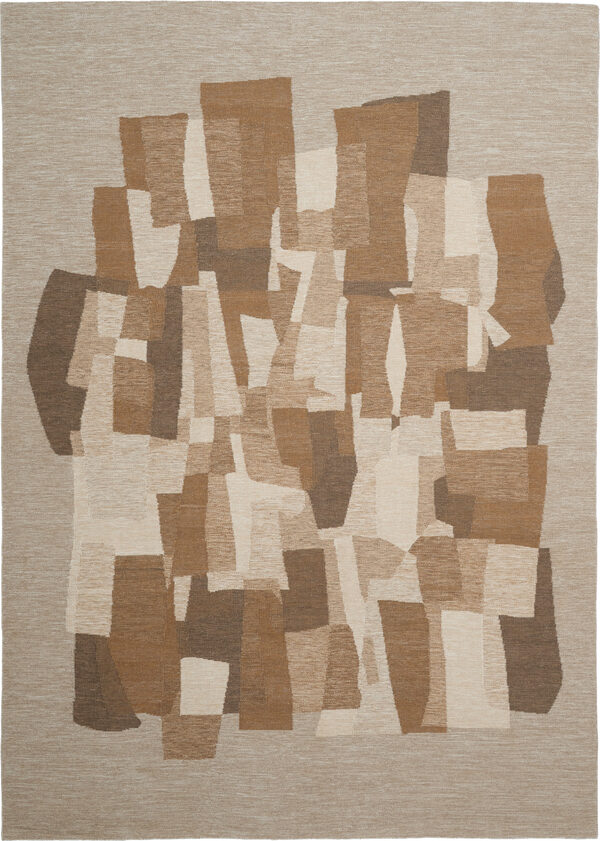
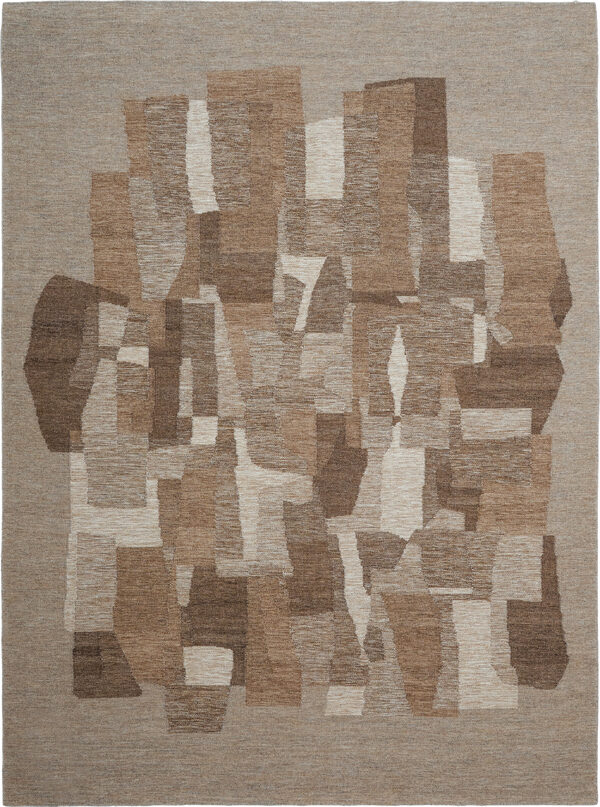
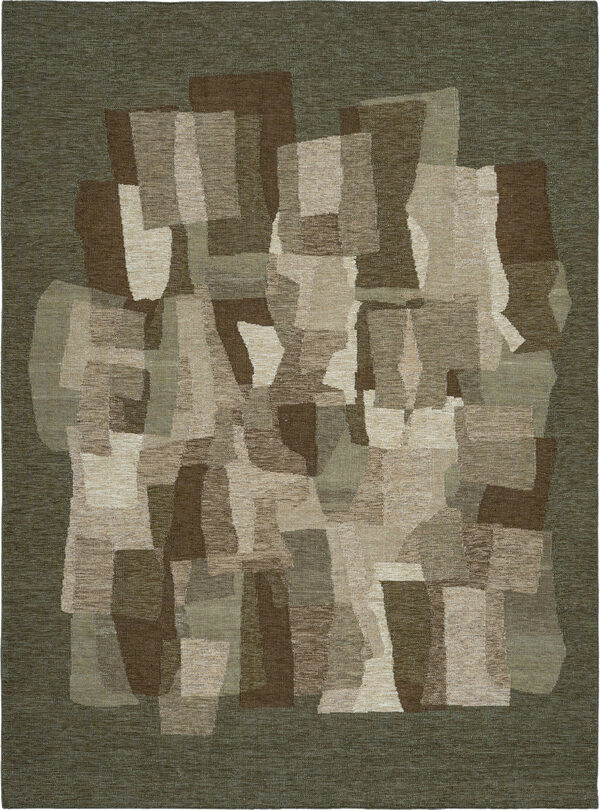
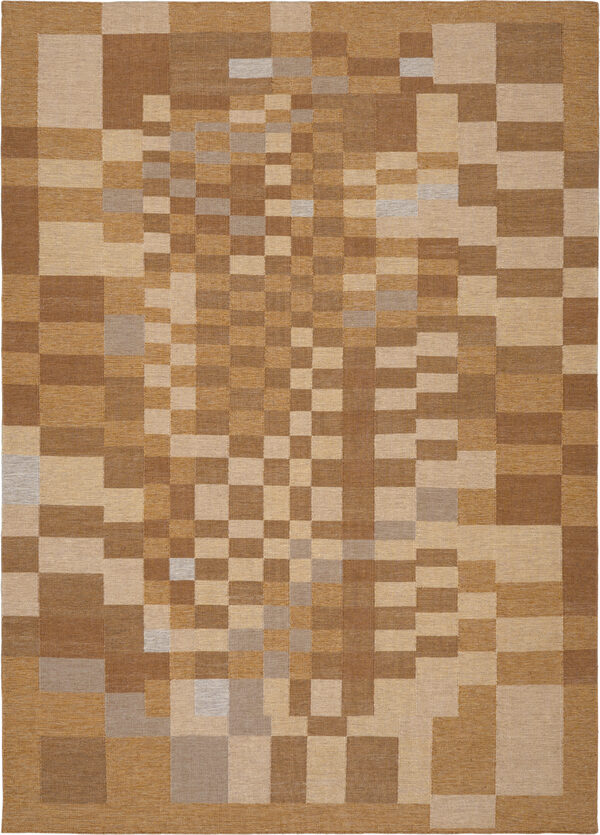
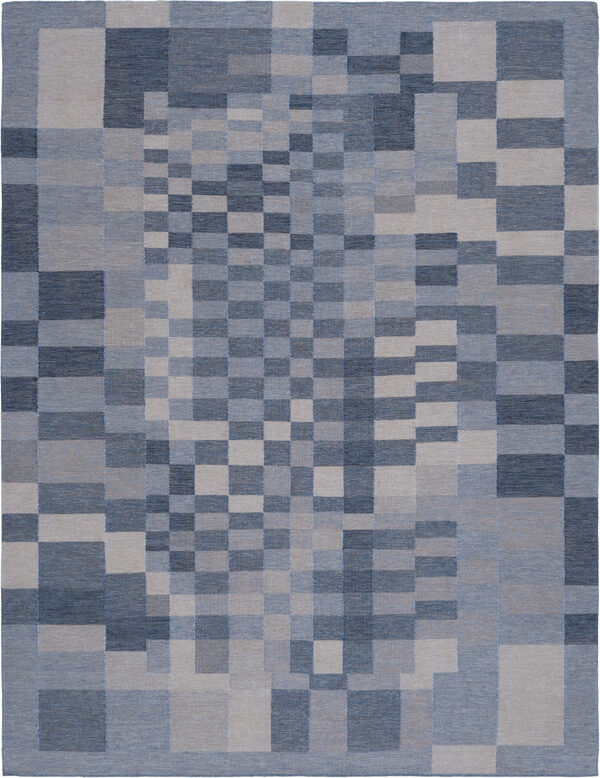
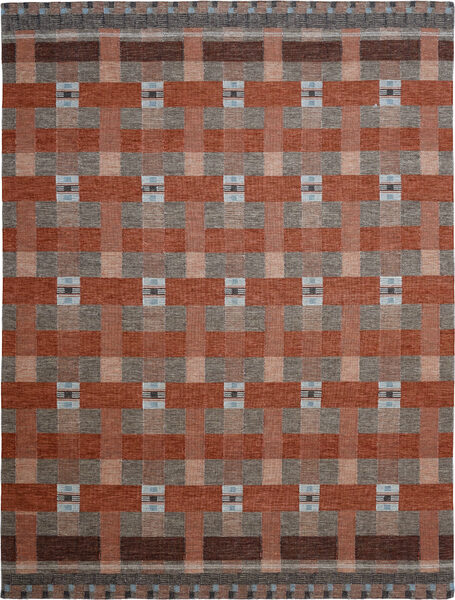
Skala takes its name from the Swedish word for “scale.” We developed the series around proportion, geometric composition and the color relationships found in Swedish röllakan weaving. The designs are original WOVEN work, with Swedish textiles providing a point of departure.
Color development was a hands-on process. Our weavers dyed hundreds of shades, and our design team hand-wove swatches in the Los Angeles showroom to refine the colorways. The series includes wool, linen and silk blends, alongside wool-and-linen colorways; the material combination belongs to the particular rug selected.
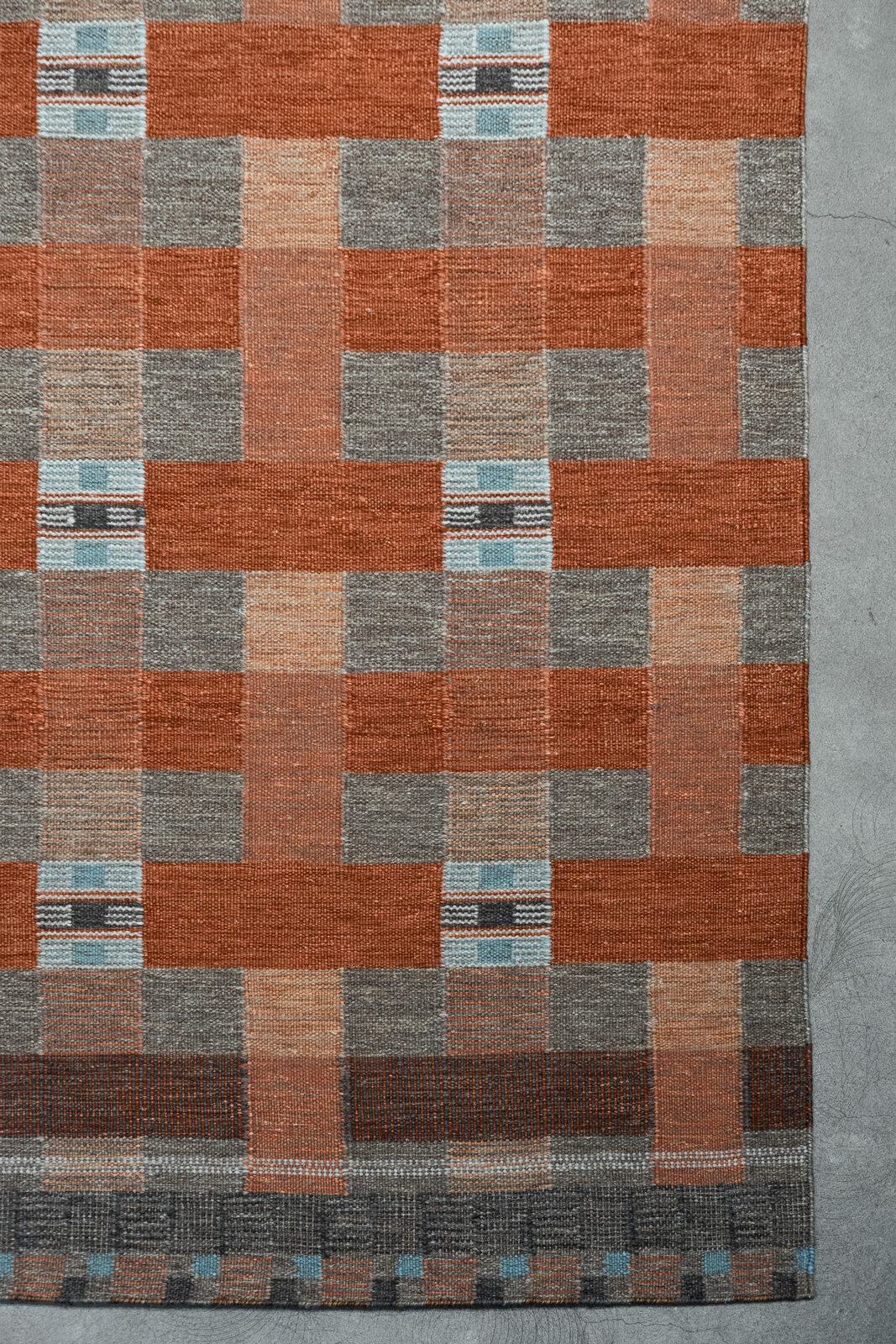
In Takt – Vermilion, broad warm-colored bands meet gray fields and smaller pale-blue details. Up close, shifts within the yarn soften the larger geometry. From farther away, the arrangement reads as a sequence of blocks and intervals. That change in scale is part of what makes a woven pattern worth looking at beyond its first impression.
In a room, we would begin with the pattern that will remain visible around the furniture. Larger blocks can establish the composition from the doorway, while smaller color changes reward a closer view. Compare the whole rug with the room plan, then bring a sample alongside the upholstery and floor.
Explore the Skala series to see how STUDIO WOVEN carries that interest in geometry, color and woven detail into new rugs for contemporary rooms.