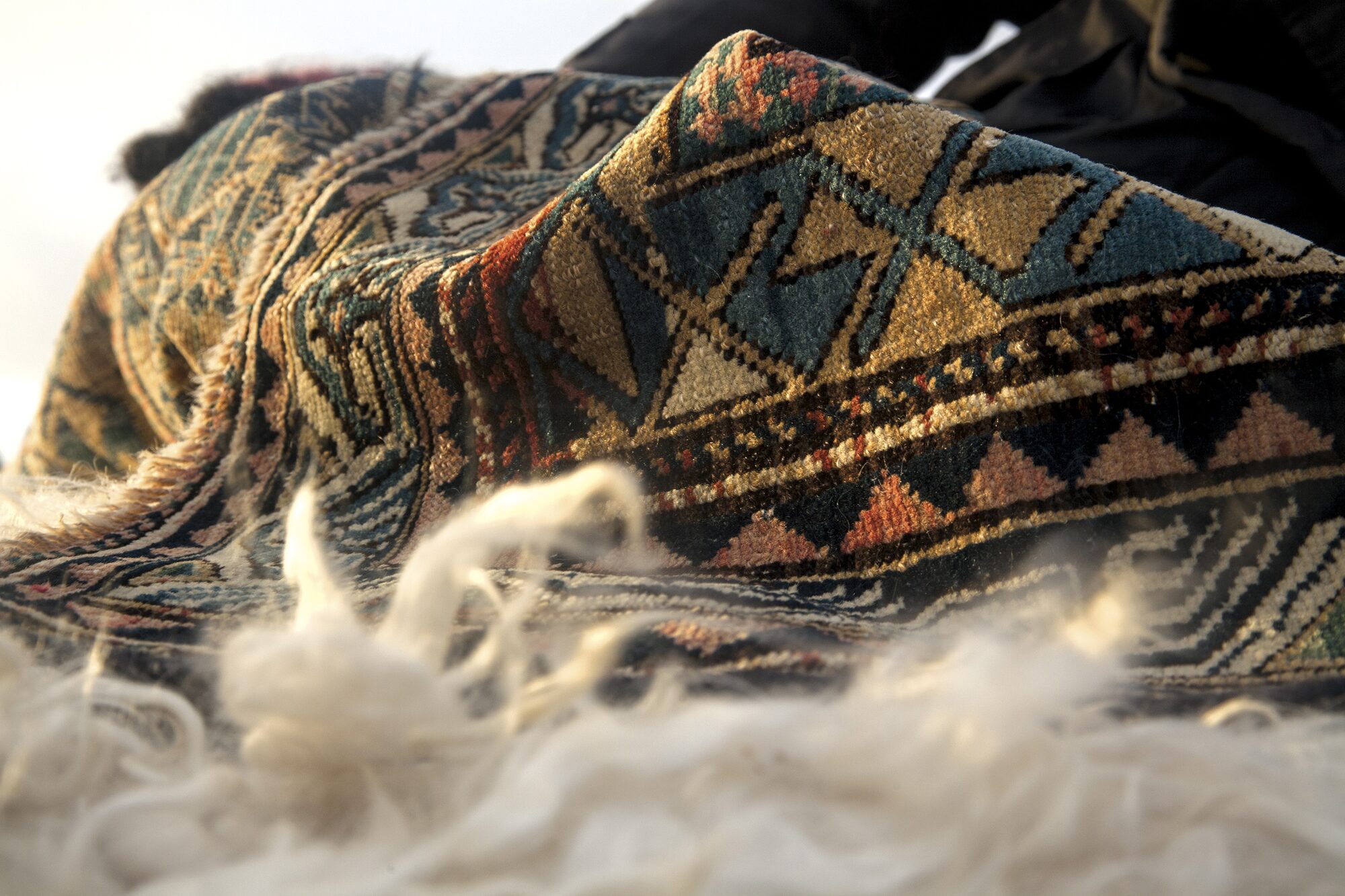
knowledge library / Kilim vs. Dhurrie vs. Soumak: Understanding Flatweave Rug Construction
Kilim, dhurrie and soumak are flatweave terms with different regional and structural meanings. Kilim commonly describes weft-faced tapestry; dhurrie is a South Asian rug category that can also use tapestry interlacing. Soumak is distinguished by weft wrapping around warps. The names therefore overlap: identify the yarn path and the individual rug before treating the label as a construction specification.
These terms come from different languages, regions, and trade histories, so usage is not perfectly standardized. Materials and specific weave structures vary within each family, and contemporary rugs may use the names more loosely. The construction of an individual rug should be confirmed from its front, reverse, edges, materials, and production description rather than inferred from the label alone.
What is a flatweave rug?
A flatweave rug is made without the rows of cut pile knots that create a raised pile surface. Its structure is built primarily by interlacing or wrapping warp and weft yarns. Warps run lengthwise on the loom; wefts cross them and may form the ground, the visible design, or both.
“Flatweave” is therefore an umbrella term, not a single technique. A smooth tapestry kilim, a plain-woven dhurrie, and a textured soumak can all be classified as flatweaves even though their yarn paths, reverses, thicknesses, flexibility, and surfaces differ. WOVEN's modern flatweave collection illustrates how broad the category can be.
What is the difference between kilim, dhurrie, and soumak?
The key structural distinction is between interlacing and wrapping, not simply between three names. Tapestry uses closely packed wefts that turn within design areas and can occur in both kilims and dhurries. Soumak patterning yarns wrap around warps. Regional names, materials and finishing add information but do not replace examination of the weave.
| Comparison | Kilim | Dhurrie | Soumak |
|---|---|---|---|
| Core structure | Weft-faced tapestry weave; colored wefts work back and forth within design areas | South Asian flatweave category; plain interlacing includes weft-faced tapestry examples. | Patterning wefts wrap around warps, sometimes over a separate ground weave |
| Surface | Generally smooth, crisp, and graphic | Usually smooth and relatively even; character changes with yarn and weave | Slightly raised, braided, or embroidered in appearance |
| Reverse | Often shows the same or a closely related design; joins may be visible | Often similar on both sides, but reversibility is not guaranteed | May show longer yarn floats, loose ends, or a different visual structure |
| Typical profile | Thin and flexible, although materials and finishing vary | Low profile, ranging from light cotton to more substantial wool | Low pile-free profile with more body and surface relief than many tapestry weaves |
| Main caution | Not every kilim uses slit tapestry, and the term is sometimes applied broadly | Dhurrie is a regional and trade category rather than one universal weave formula | Soumak is weft wrapping, not hand-knotted pile; contemporary use of the name may vary |
How is a kilim woven?
A kilim is most precisely understood as a pileless tapestry weave in which tightly packed wefts cover most or all of the warps and create the visible design. Each colored weft may travel only across the area where that color is needed, then turn back rather than crossing the full width of the rug.
When adjacent color wefts turn around separate warps, a narrow vertical opening can form between the color areas. This is slit-tapestry weave. The technique encourages stepped, diagonal, and geometric contours because long vertical slits would weaken or separate the surface. Weavers can also dovetail or interlock adjacent wefts, reducing or eliminating slits and producing different joins.
The front and reverse of a tapestry kilim often show the same principal design because the colored wefts form the structure itself. Small yarn ends, joins, brocaded details, repairs, or finishing may still distinguish one side. The vintage kilim collection includes examples that demonstrate the range within the term rather than one fixed appearance.
How is a dhurrie woven?
A dhurrie is a South Asian flatwoven floor covering, not one exclusive yarn structure. Examples include weft-faced tapestry as well as other plain-interlaced surfaces. Cotton and wool, stripes, geometry and pictorial designs all occur within the category. A dhurrie and a kilim can therefore share a structural description while carrying different regional names.
Dhurrie is broader as a cultural and trade term than a single laboratory structure. Some examples are thin and light; others are dense and substantial. Some appear nearly identical from both sides, while supplementary patterning, finishing, or compound structures can make the two faces different. “Reversible” should be verified for the individual rug rather than assumed.
The smooth surface of a dhurrie often reads as quiet and architectural, especially when the weave and palette are restrained. WOVEN's modern dhurrie rugs translate that low-profile character into heathered wool, but product-specific material and construction information should guide any performance or care decision.
How is a soumak woven?
Soumak is a weft-wrapping structure in which patterning yarn passes over and around groups of warps, creating slightly oblique spans on the face. A separate ground weft may run between rows of wrapping and help stabilize the foundation. The wrapping can cover the full surface or be added selectively as decoration.
Changes in wrapping direction can create diagonal, braided, or herringbone effects. Because the patterning yarn takes a longer route around the warps than a plain interlaced weft, soumak usually has more surface relief and body than a smooth tapestry weave made from comparable yarns.
The reverse can reveal yarn returns, ends and any separate ground wefts. Plain, countered and reverse soumak arrangements differ, so do not use one front-to-back span formula for every example. Trace the actual wrapping where it is visible; a long float by itself is not enough to identify soumak.
Soumak is not a hand-knotted pile construction. It is a wrapping or brocading technique within the flatweave family. WOVEN's antique soumak rugs should be described with that distinction, while contemporary products using soumak terminology require confirmation of their exact braid, wrap, ground weave, and finishing method.
How can you identify each flatweave from the front and reverse?
Identify a flatweave by tracing how its yarns build the surface, not by relying on pattern alone. Similar diamonds, stripes, medallions, and color blocks can appear in multiple techniques. At WOVEN, we compare the face, reverse, joins, yarn direction, edges, and handle before settling on a structural description.
- Find the warp direction. Identify the lengthwise foundation yarns, often visible at the ends or fringe.
- Follow a visible weft. Determine whether it interlaces over and under individual warps, turns within a color area, or wraps around groups of warps.
- Inspect color boundaries. Slits, dovetailing, or interlocking suggest tapestry construction; wrapped outlines or oblique spans suggest soumak.
- Compare both sides. Match the same area on the face and reverse and trace interlacing or wrapping. Similarity between the two faces, or a long float on one, is not sufficient by itself.
- Read the surface in raking light. Smooth interlacing and raised wrapping respond differently when light travels across the weave.
- Account for later work. Repairs, backing, patching, overcasting, applied fringe, and joined panels may conceal the original structure.
A photograph may support a preliminary identification when it includes a full front, full reverse, close details at a consistent scale, both ends, both sides, and an oblique surface view. Exact structure, material, age, origin, condition, and restoration may still require direct specialist examination.
Record what the flatweave actually shows
A flatweave comparison should use identified specimens and matched views rather than three unverified labels. Keep one observation record per rug. The record below is a proposed examination aid, not a report of WOVEN samples already examined.
| Observation | Record for the individual rug |
|---|---|
| Identity and views | Object/sample ID; full face and reverse; matched details with scale and orientation. |
| Yarn path | Interlacing, color-area turns or wrapping: visible / uncertain / concealed. |
| Joins and ground | Slits, interlocks, shared warps or separate ground wefts where visible. |
| Alteration and limits | Repairs, backing or finishing that obscure the original structure. |
| Conclusion | Observed construction; regional/trade name; unresolved questions and reviewer. |
Keep the structural conclusion separate from origin, age and suitability for use. A clear wrapping sequence can identify a technique without proving where the rug was made or whether its present condition will tolerate the planned room.
How does flatweave construction change the way a rug works in a room?
Flatweave construction changes a rug's visual weight, texture, flexibility, and relationship to furniture. Kilim often offers the crispest graphic surface; dhurrie can create a smooth and understated ground; soumak adds low-profile relief and stronger directional texture. These are tendencies, not universal performance ratings.
Consider doors, furniture, and visible pattern
Low profile can be useful near door clearances and beneath furniture, but thickness still varies with fiber, yarn scale, weave density, repairs, and finishing. A kilim medallion or directional motif needs enough visible area to read, while a stripe or all-over dhurrie may tolerate interruption. Raised soumak texture should be checked beneath chair legs, rolling furniture, or tightly spaced doors.
Plan for movement and the floor beneath
Many flatweaves are lighter and more flexible than pile rugs, which can make edge movement, rippling, or shifting more noticeable. Rug size, floor finish, furniture anchoring, traffic, and the chosen pad all affect the result. No pad material is universally safe for every floor; confirm compatibility with the floor and rug specialists responsible for the project.
Match care to the exact structure and fiber
A pileless surface does not automatically mean easy care. Slits, loose yarns, edges, dyes, fiber, repairs and embedded soil can all affect the appropriate method. Follow the exact product’s guidance and seek specialist assessment for fragile, valuable or undocumented pieces.
What are the most common misconceptions about flatweave rugs?
The most common misconceptions collapse several constructions into one generic category. Clear terminology helps readers understand the object without turning technique into an unsupported claim about quality or performance.
- “All flatweaves are kilims.” Kilim is one important tapestry family within a much broader range of pileless structures.
- “Dhurrie means cotton and stripes.” Cotton stripes are familiar, but dhurries also use wool, other patterns, and varied structures.
- “Soumak is hand-knotted.” Soumak patterning yarn wraps around warps; it does not form cut pile knots.
- “Every flatweave is reversible.” The two sides may differ because of floats, brocading, joins, repairs, backing, or finishing.
- “No pile means more durable or easier to clean.” Suitability depends on fiber, yarn, density, structure, edges, condition, use, and maintenance.
- “Handmade proves ethical or sustainable production.” Labor, sourcing, dyes, materials, and environmental claims require separate evidence.
How does WOVEN choose among kilim, dhurrie, and soumak?
WOVEN chooses among flatweave constructions by starting with the room and the verified rug structure. The most useful name is the one that explains how the rug is made and what that construction contributes to the design, not the label that sounds most familiar.
- Verify the construction. Record tapestry or other plain interlacing, weft wrapping, supplementary work or a mixed structure as observed. Do not assume that the regional name identifies a separate weave.
- Define the desired surface. Choose crisp graphic flatness, smooth restraint, or low raised texture.
- Map the furniture plan. Protect important motifs, check door clearance, and consider how legs or wheels meet the weave.
- Review scale and movement. Match rug dimensions, floor, pad, and anchoring to the construction's weight and flexibility.
- Evaluate the actual materials. Fiber and yarn scale affect handle, sheen, texture, maintenance, and visual depth independently of the weave name.
- Confirm care and repair expectations. Review maker guidance or specialist advice before treating a low-profile rug as simple to maintain.
Which flatweave should you choose?
Choose kilim when a smooth tapestry surface and graphic color structure suit the room; choose dhurrie when a straightforward, low-profile woven ground is the better fit; choose soumak when subtle relief and wrapped-yarn texture add useful depth. Then verify the individual rug, because material, scale, condition, finishing, and contemporary production choices can matter as much as the category name.