knowledge library / How to Match Rugs to Wood Floors
To match a rug to a wood floor, compare the floor’s undertone, its light or dark value, and the strength of its grain with the rug’s color and pattern. View samples together in the room before choosing. Then confirm that the rug backing and underlay are compatible with the actual floor finish, especially if the floor has recently been refinished.
A timber floor occupies enough of a room to influence almost every textile beside it. Yet the rug does not have to reproduce its color. The more useful question is how much separation you want between the seating area and the surrounding floor.
Read the floor in the room
Start with the installed floor, if it is available. A small wood sample can help during planning, but it may not show the variation across the finished boards. Look for the colors you actually see: honey, red-brown, gray, pale beige or deeper brown. These are observations, not fixed rules attached to a species name.
Next, notice contrast within the floor. Wide boards with quiet grain create a different background from strongly figured wood or a busy parquet arrangement. The rug will share that visual space with the floor, furniture legs and cabinetry.
Finally, look at the finish. A reflective floor and a lustrous rug may produce a more changeable surface than you expect from flat photographs. Check the combination from a seated position as well as standing above it.
Choose whether the rug should blend or stand apart
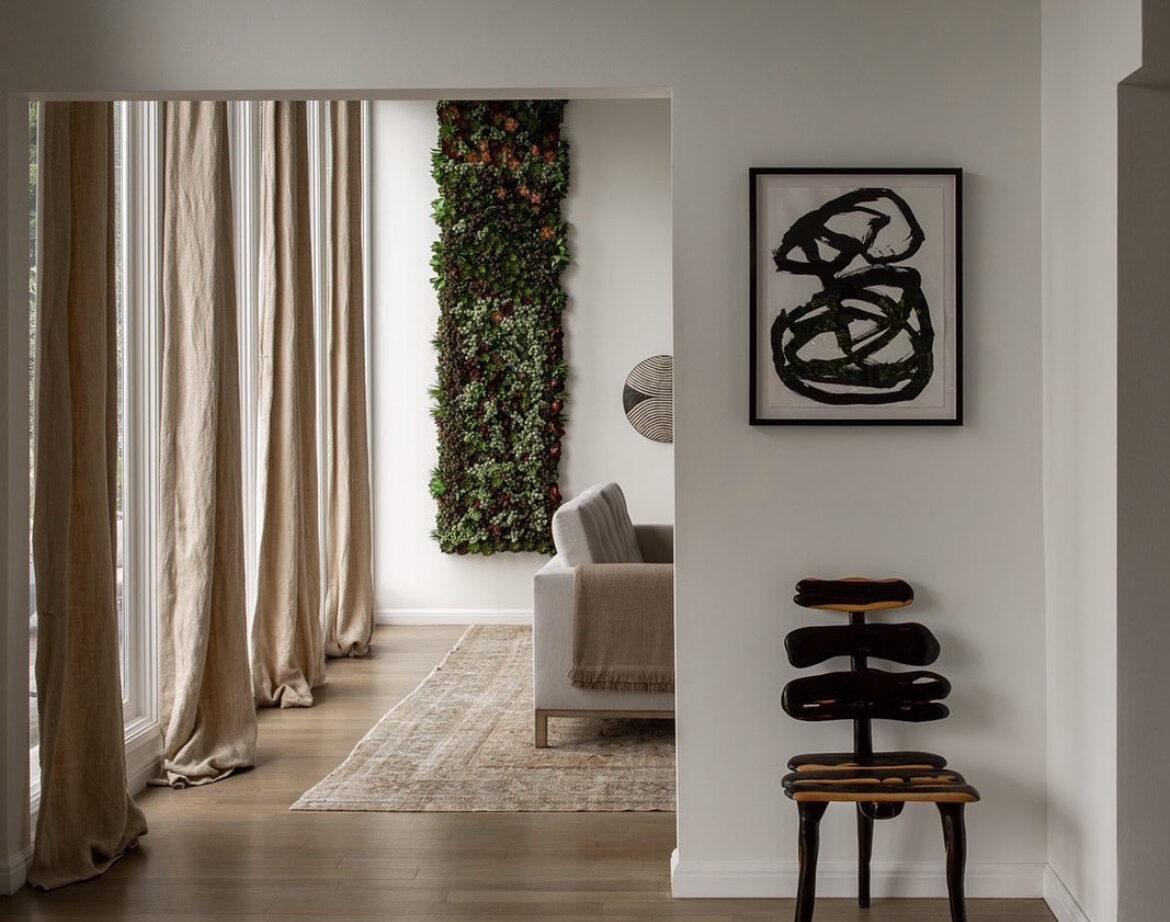
A rug close to the floor’s overall value can make the transition feel gentle. A lighter rug on a dark floor gives the seating group a clearer outline. A darker rug on pale boards can do the same. Both approaches can work; choose according to the part of the room you want to emphasize.
Use the following pairings as sample directions, not prescriptions:
| Floor appearance | A direction to try | What to check in the room |
|---|---|---|
| Pale, relatively quiet boards | A rug with visible texture and a nearby neutral color | Whether the edge is distinct enough from the floor. |
| Warm honey or red-brown boards | A muted neutral or a cooler accent drawn from another furnishing | Whether the combination balances the warmth without making either surface look dull. |
| Dark brown boards | A lighter field or a pattern with lighter passages | Whether the contrast is welcome across the full rug area. |
| Strong grain or parquet | A quieter field or a pattern at a noticeably different scale | Whether the floor and rug remain readable together. |
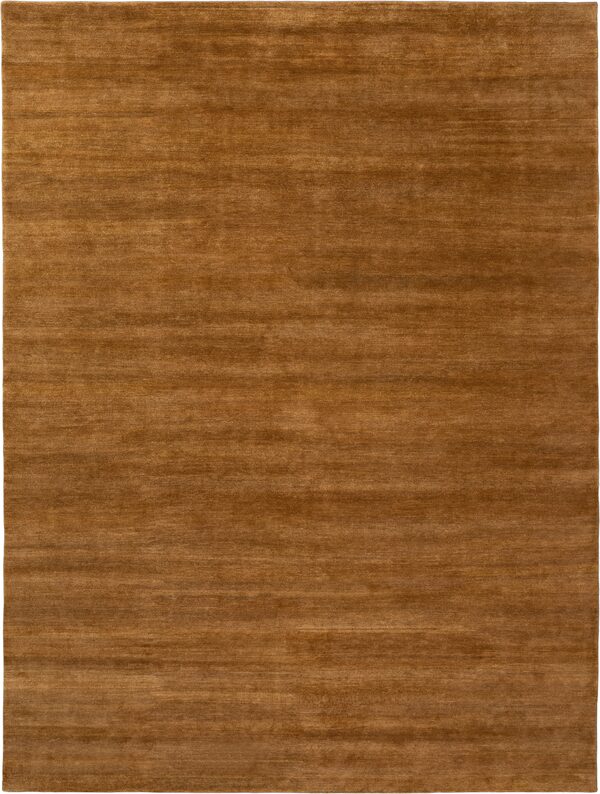
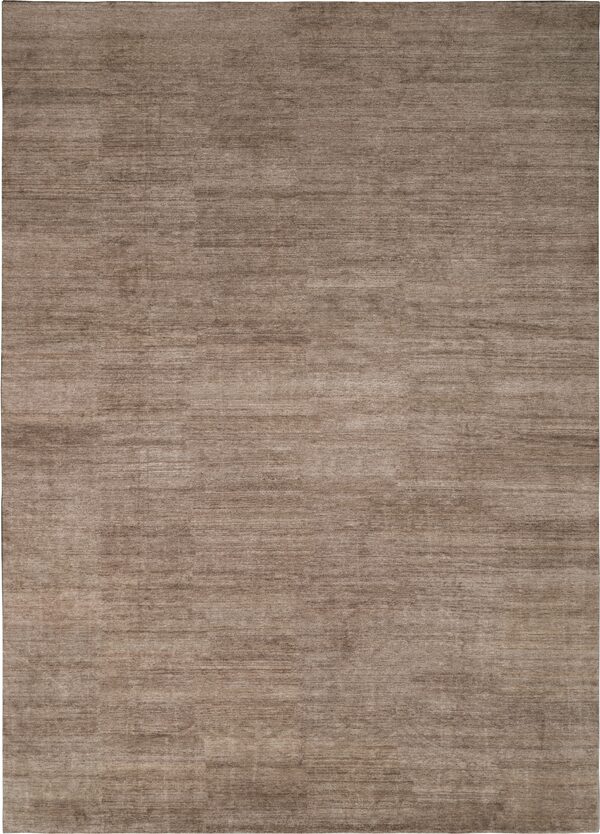
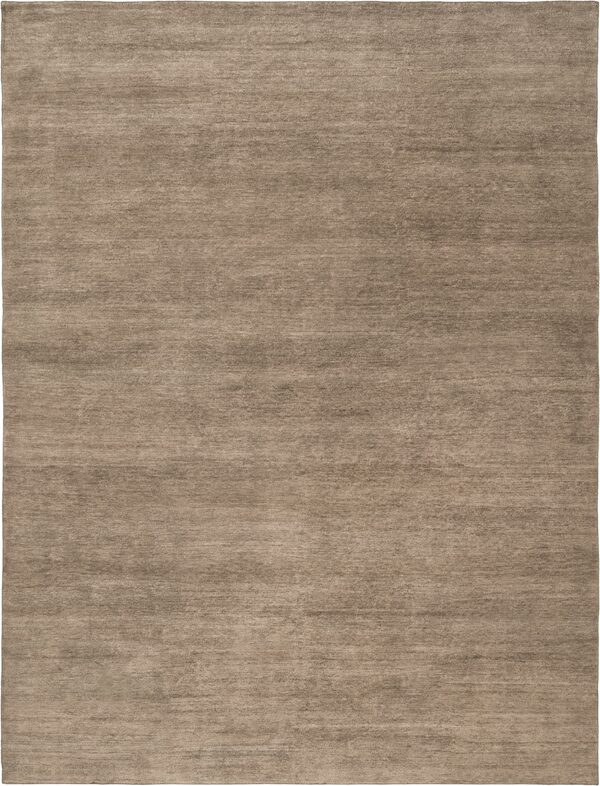
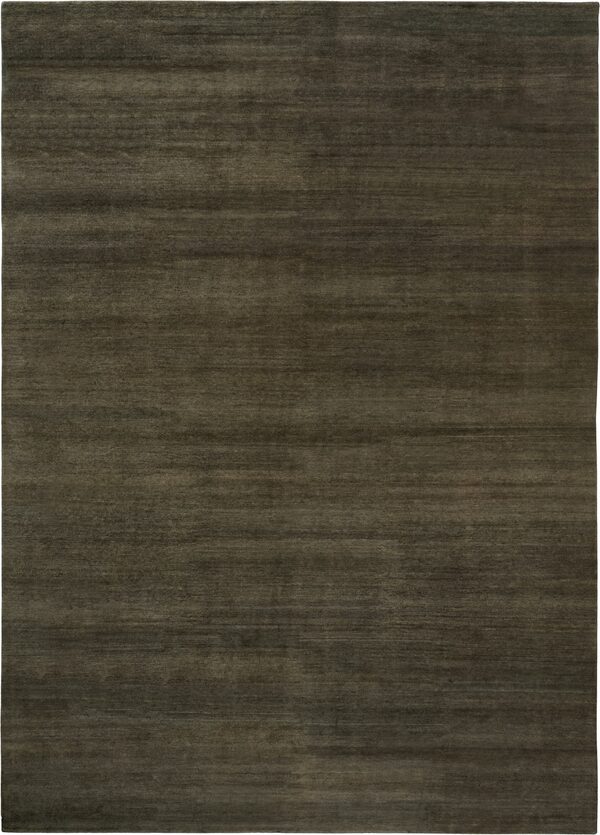
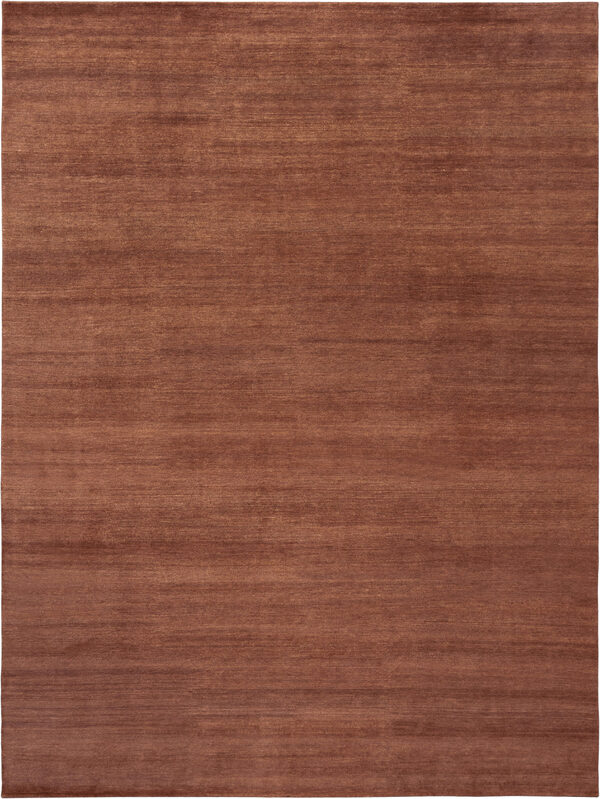
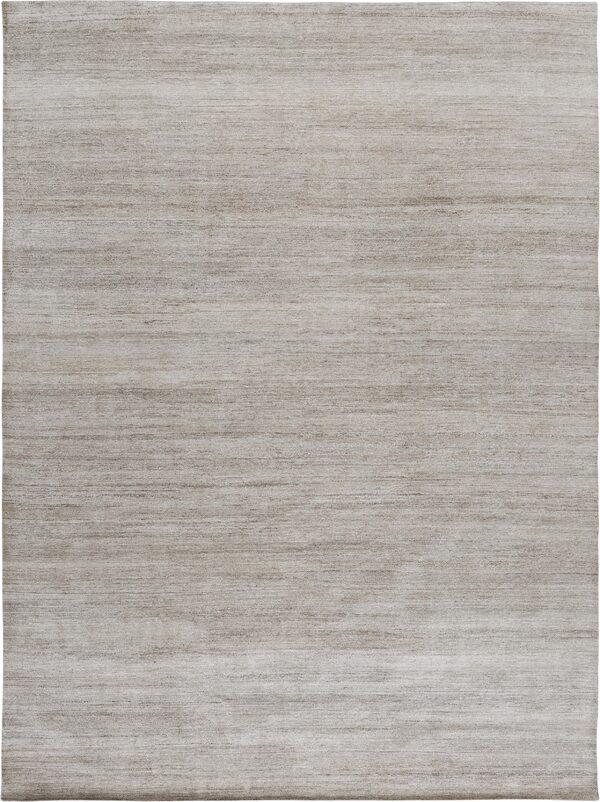
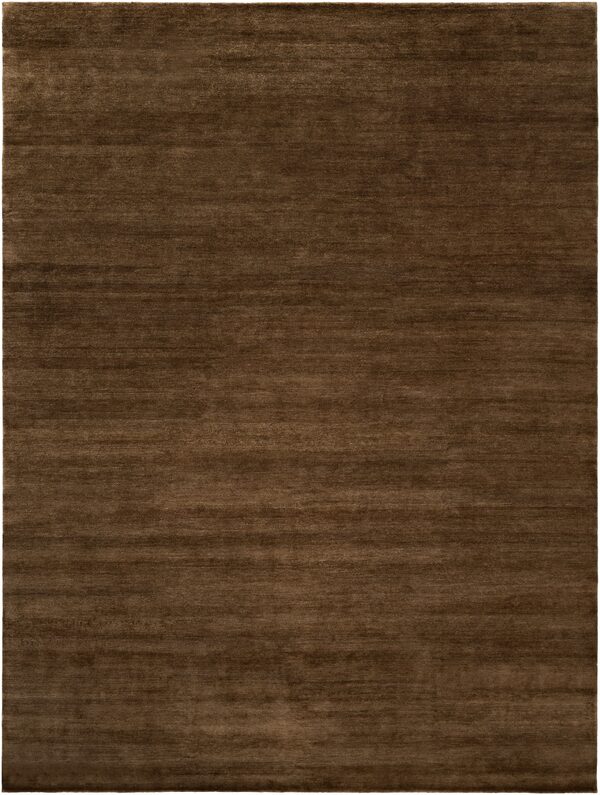
The Studio WOVEN Textures collection is a useful place to begin when surface variation is more important than a strong motif. For a patterned direction, browse antique rugs with the room palette beside you.
Give pattern enough room
Put the rug’s pattern beside the floor pattern before adding cushions and smaller accessories. A small repeat can become hard to read against strongly figured wood. A larger motif or more open field may create a clearer distinction. This is a visual judgment to make with the actual options, rather than a rule that patterned floors require plain rugs.
Consider how much floor will remain exposed. A narrow strip at the room’s perimeter creates a different balance from a small rug surrounded by several feet of wood. Determine the furniture footprint first; the rug size guide can help you establish that layout.
For example, imagine a room with warm boards, a dark table and pale upholstery. A pale rug could connect the upholstery to the floor, while a patterned rug with a small amount of the table’s dark tone could bring the furniture together. Lay out both directions before settling on a third brown simply because the floor is brown.
Check backing and underlay separately from color
The layer touching the floor needs its own specification. Rug backings and underlays vary, and a product described as suitable for hardwood may still need confirmation for your particular coating or finish. Ask the flooring supplier or installer to approve the proposed contact materials in writing.
If the floor is new or recently refinished, follow the finish manufacturer’s instructions for when rugs may be placed. A surface that can be walked on may still be curing. There is no single waiting period that applies to every finish.
The rug pad guide explains the questions to resolve about support, grip and clearance. Avoid adding an adhesive or extra layer to fix movement until compatibility has been checked. Underfloor heating also belongs in this discussion: ask for advice on the complete rug-and-pad arrangement for the installed system.
Make the final choice on site
Review the samples during daylight and under the room’s evening lighting. Include the upholstery and any prominent wood furniture. Record the selected rug, backing and pad together so the approved combination is clear when the order arrives.
At installation, check door swing and exposed edges, then follow the agreed cleaning and inspection guidance for both surfaces. Light and use can change textiles over time; a good initial color match still needs thoughtful placement and care. Keep the floor-finish information with the rug’s care record so future cleaning or replacement decisions can use the same facts.