knowledge library / What Is a Mahal Rug? Scale, Floral Pattern and Room Placement
A Mahal rug is a Persian rug associated with the Arak region of Iran. Large floral motifs, vine patterns and framed fields are recurring features, although individual rugs vary in layout and color. For an interior, the useful question is how those motifs are spaced and how the border will sit around the furniture—not whether every Mahal shares a single look.
Mahal rugs often enter a design scheme because their pattern has enough presence to hold a room together. We recommend looking beyond a small screen image before deciding how strong that presence should be. The same pattern can appear dense in a thumbnail and more open when seen at its actual scale.
What the Mahal name tells you
Mahal is a regional rug label, rather than the name of one fixed pattern or a quality grade. It sits within the broader Arak-area rug conversation alongside names such as Sultanabad. These related labels help describe a tradition; they do not make two individual rugs interchangeable.
WOVEN's Mahal collection includes different palettes and compositions. Use the label to begin a comparison, then read each rug's own dimensions, materials and layout. A pale rug is not necessarily a Mahal, and a Mahal does not have to be pale.
Our Persian rug type guide places these regional names in context. If you are comparing Mahal and Sultanabad descriptions, start with the actual rugs rather than treating one name as a higher grade of the other.
Motif size and spacing do different jobs
The scale of a floral motif tells you how large the drawing is. The spacing tells you how much ground separates one element from the next. A rug can have large flowers packed closely together, or smaller motifs with generous gaps. Calling both “large-scale floral” would miss an important difference.
At WOVEN, we would compare three views before settling on a Mahal: the complete rug, a closer section of its field, and the rug beneath a furniture outline. The complete view shows the organizing pattern. The detail shows how its lines and colors meet. The furniture outline shows which parts will remain in the room's everyday view.
For a long dining table, for example, the exposed side bands may matter more than a flower in the center. For a seating group with a small coffee table, more of the field can remain visible. Use the same rug dimensions in the comparison so a difference in image size does not masquerade as a difference in pattern scale.
A Mahal does not have to have an all-over layout
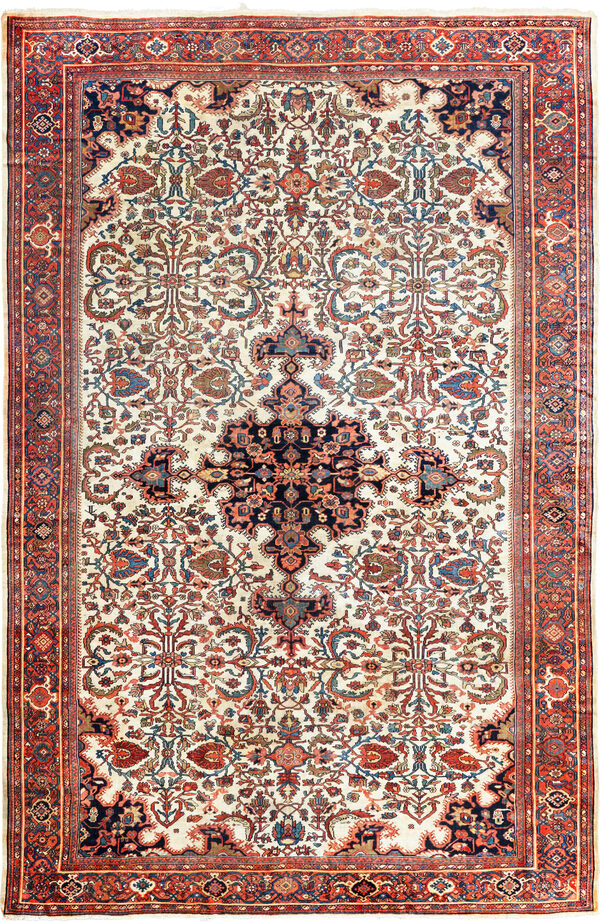
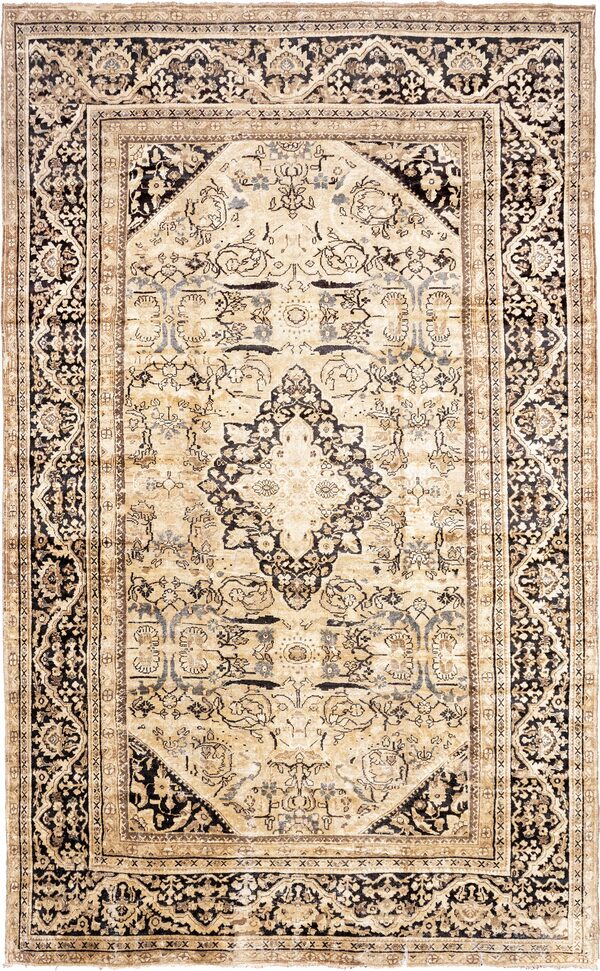
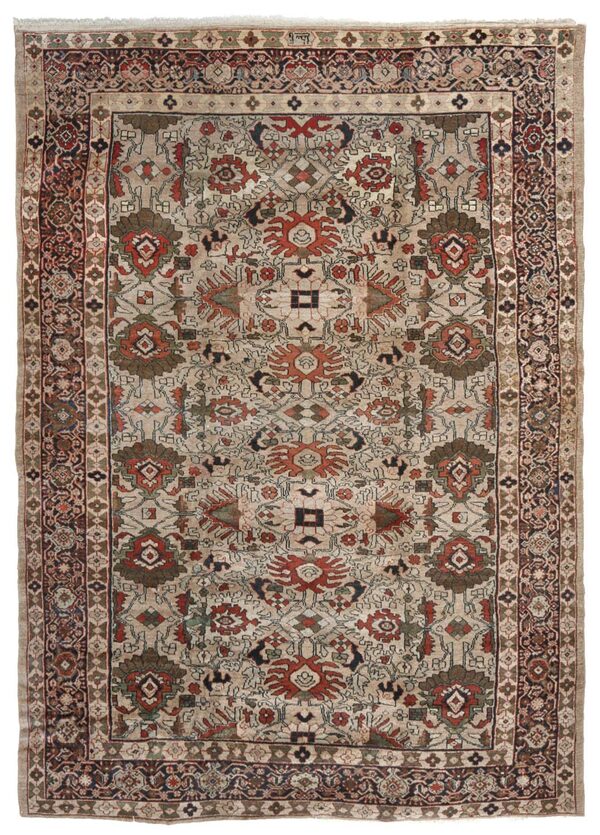
WOVEN's catalog includes Mahal rugs recorded with all-over layouts and others recorded with medallions. That variety is a reason to evaluate the composition directly. “Mahal” describes the rug family; “all-over” or “medallion” describes how a particular design is arranged.
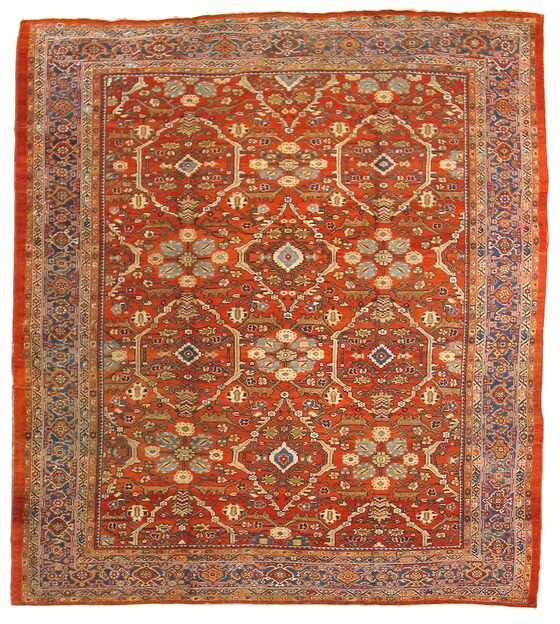
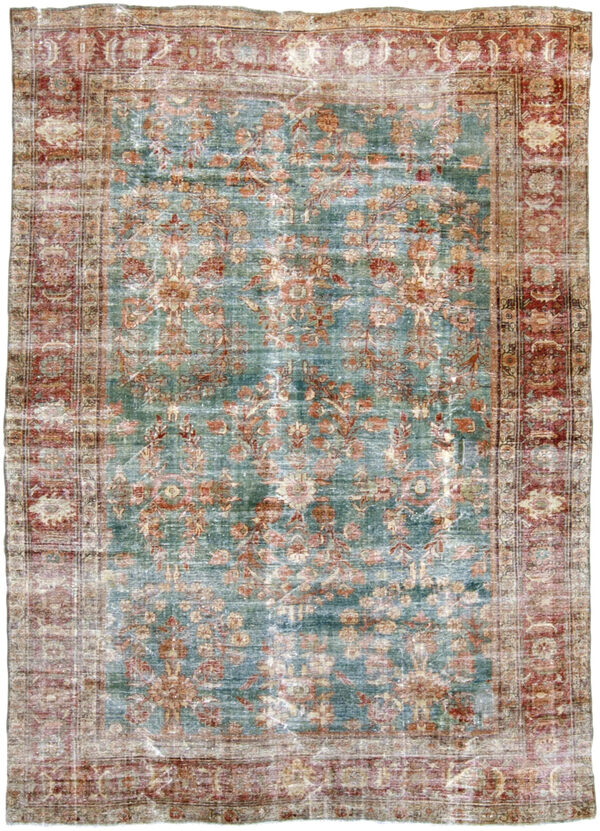
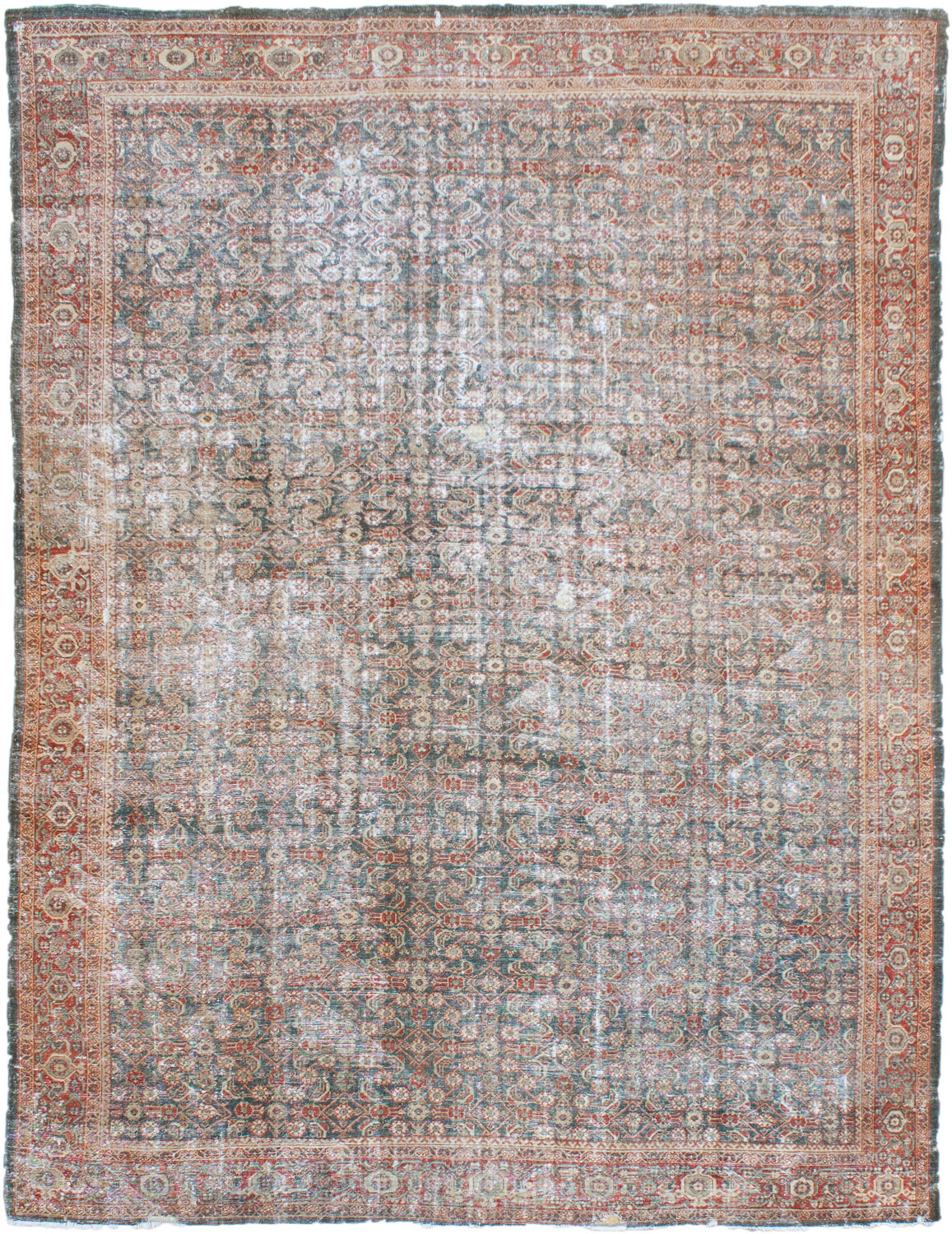
Mahal 14569, the rug illustrated here, is catalogued as wool with an all-over layout. Its photograph shows floral ornament extending across a blue-green field, enclosed by a warmer rust-colored border. The contrast between the field and frame gives the rug two different roles in a room's palette.
Mahal 14466 is catalogued with a medallion layout. When considering it beside an all-over option, compare the position of the central feature with the proposed furniture. Do not assume the same arrangement will reveal the best part of each rug.
Use the field and border as separate design choices
The field and border of a Mahal can connect to different elements in a room. A cooler field might sit alongside upholstery while a warmer frame relates to wood or another accent. You do not need to match every color; identify which relationship should lead.
| Part of the rug | What it contributes | What to check in the room |
|---|---|---|
| Main field | The largest area of color | Its relationship to the floor and main upholstery |
| Repeated motifs | Rhythm and smaller color accents | How much detail remains around the furniture |
| Border | A frame for the rug and seating group | Whether its contrast feels too strong or too faint |
| Corners and ends | The finish of the composition | What remains visible beside chairs and doorways |
A blue-green and rust Mahal could sit comfortably with either a restrained or a more colorful scheme. We would make that decision through the surrounding materials, rather than assigning the rug to a traditional or contemporary room in advance.
Choose the actual piece, including its condition
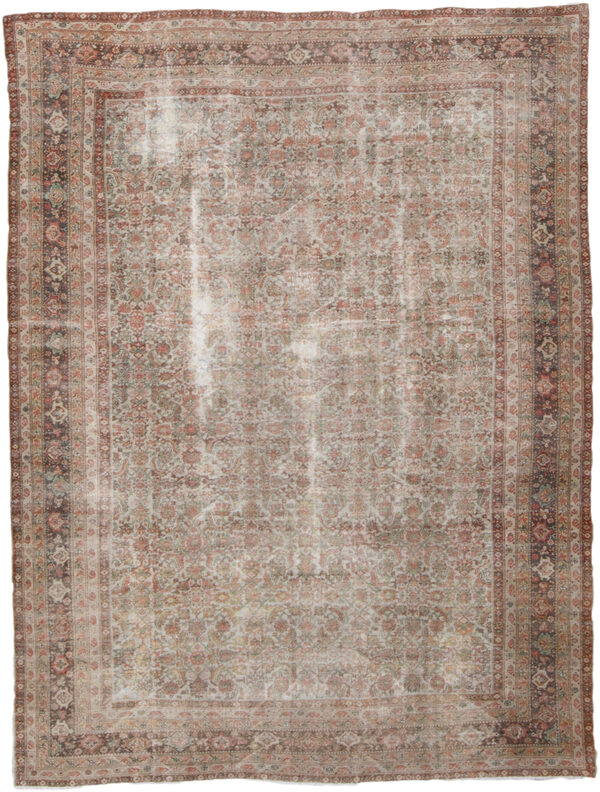
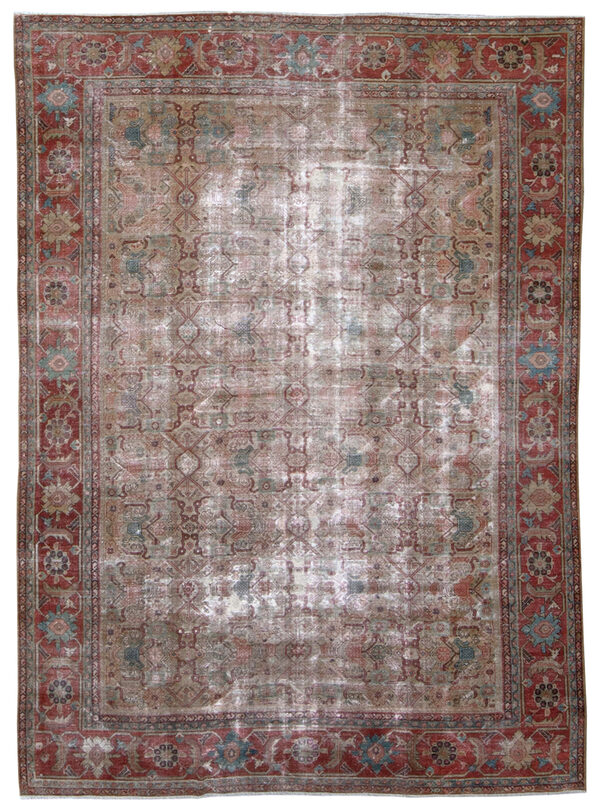
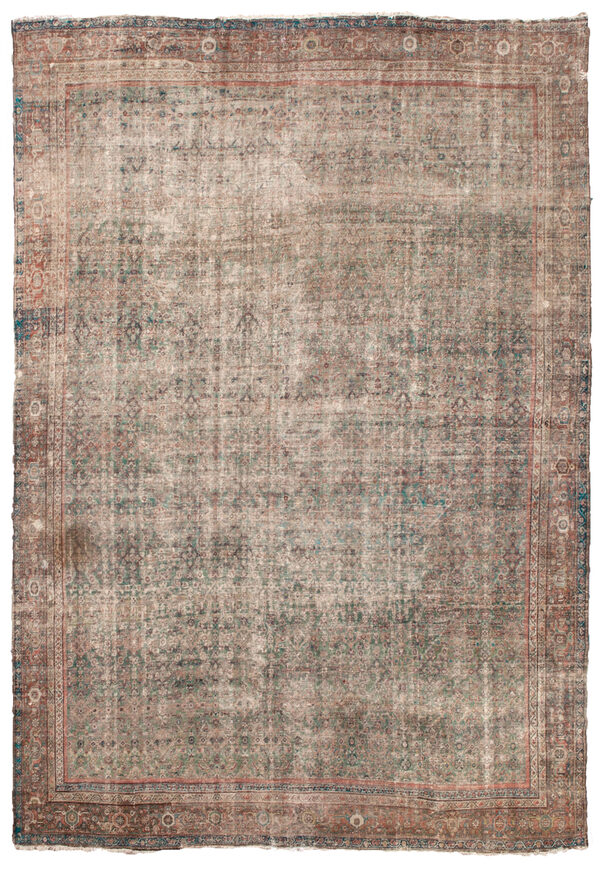
An older Mahal's visual character and physical condition need separate attention. A photograph may show changes in color or the visibility of the pattern without establishing their cause. Review the existing condition information before assuming that an attractive surface is ready for a particular use.
The antique rug evaluation guide covers the questions to resolve about an individual piece. For placement, our guide to antique rugs in contemporary homes offers a useful next step.
Choose a Mahal for the balance it brings to the room: the amount of pattern you want, the colors that remain visible and the way its border frames the furniture. The regional name opens the search. Those specific relationships make the selection.