knowledge library / What Is Antique Distressing in Rugs?
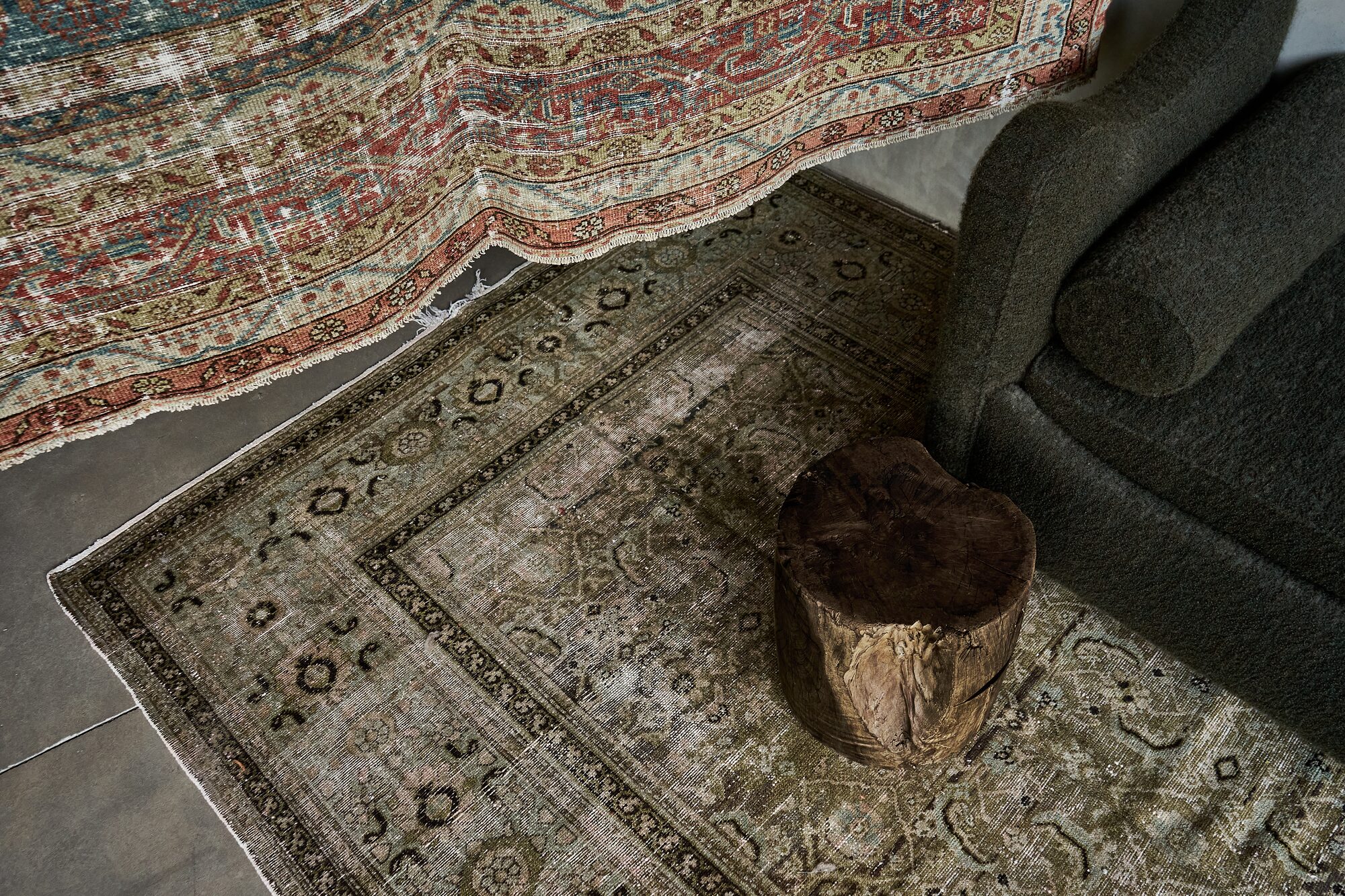
Antique distressing in rugs refers to the softened color, worn-in texture, and gently aged surface character that make a rug look as though it has lived with a room for decades. Sometimes that effect comes from real age. Sometimes it comes from careful finishing, washing, clipping, or over-dyeing. And sometimes it is built into a newly made rug designed to echo the depth and patina of an older piece.
That distinction matters. A distressed antique rug is not always a true antique rug, and a true antique rug does not always look heavily distressed. For buyers, the real question is less about terminology and more about construction, age, condition, and the kind of presence the rug brings into a space.
What “antique distressing” actually means
In rug terminology, antique distressing usually describes a visual effect rather than a single construction method. It points to signs of age or age-like character: abrash, softened borders, lower pile, muted contrast, faded field color, and a surface that feels quieter than a crisp new rug.
That look can come from a few different sources. A genuinely old rug may have developed it naturally over time. A vintage rug may have been washed, restored, or over-dyed to heighten that effect. A newly made rug may be woven to feel antique-inspired from the beginning, using intentionally softened palettes and irregular pattern definition.
Distressed antique rug vs. true antique rug
A true antique rug
A true antique rug is valued first for age, craftsmanship, and historical character. Its wear is part of its life story. The fading, patina, and variation tend to feel organic rather than staged, and the structure underneath matters as much as the surface appearance.
A distressed antique-style rug
A distressed antique-style rug is chosen for atmosphere. It may be vintage, semi-antique, or newly made, but the appeal is the same: visual softness, old-world reference, and a room that feels settled rather than sharp. In many interiors, this is what buyers are actually after, even when they begin by searching for “antique distressing.”
Why people confuse the two
The language overlaps because the aesthetic overlaps. A buyer may search for a distressed antique rug when they really want the romance of age without the fragility, cost, or unpredictability of a true antique. Another buyer may want a real antique piece but use “distressed” simply to describe the softened look they prefer.
How rugs become “distressed” in appearance
There is no single path to an antique-distressed finish. The look can come from age, treatment, or design intention.
Natural wear and age
Older handwoven rugs often mellow on their own. Foot traffic lowers the pile. Sunlight shifts color. Repeated washing softens contrast. The result is nuanced and difficult to imitate perfectly.
Restoration and finishing
Some older rugs are cleaned, clipped, or repaired in ways that make the antique quality read more clearly. Good restoration preserves the integrity of the rug. Poor restoration can flatten character or make the surface feel too uniform.
Over-dyeing and surface treatment
Vintage rugs are sometimes reworked through color treatment or finishing to create a more dramatic distressed look. These pieces can feel bold, tonal, and highly decorative, especially in contemporary rooms where some age reference is welcome but full traditional detail feels too formal.
New weaving with antique-inspired design
Many new rugs are designed to carry the mood of older textiles without pretending to be antique. The pattern may be intentionally blurred, the color may be washed back, and the finish may be quieter from the outset. This is often the most practical route for buyers who want the antique sensibility with fewer condition variables.
What buyers are usually looking for when they search this term
Most people searching “antique distressing” are trying to answer one of three questions.
They want the look of an antique without the maintenance
A distressed antique-style rug can give a room the same relaxed depth as an older piece, while being easier to place in a high-use home.
They want to understand if “distressed” lowers value
Not necessarily. In a true antique, wear can either enhance character or compromise function, depending on severity and structure. In a newer or reworked rug, distressing is often part of the design language rather than a flaw.
They want to know whether the rug is genuinely old
This is the most important buyer question. Appearance alone is not enough. Age, knotting, foundation, repairs, and provenance all matter more than a faded surface.
How to evaluate a distressed antique rug before buying
Look past the finish
Surface softness is only one layer of the story. Check the foundation, edges, ends, and overall integrity. A beautiful faded face does not help if the structure is too weak for the way you live.
Ask whether the rug is antique, vintage, or new
This should be stated clearly. A seller should be able to tell you whether the piece is genuinely antique, semi-antique, vintage, or a new antique-inspired weaving.
Check for intentional design versus heavy wear
The best distressed rugs still feel coherent. The pattern may be softened, but not lifeless. The palette may be aged, but not muddy. In good pieces, the quietness feels considered.
Think about the room, not just the keyword
Some rooms want the specificity of a true antique. Others need the flexibility of a softer antique-inspired or over-dyed piece. The right choice depends on how formal, layered, or minimal the interior is meant to feel.
Where antique distressing works best in interiors
Antique-distressed rugs work especially well in rooms that need history without heaviness. They are often effective in interiors with stone, plaster, dark wood, linen upholstery, or modern silhouettes that benefit from a little softness underfoot.
They also bridge styles well. A room can feel contemporary in architecture and still benefit from a rug with antique reference. That tension is often where these pieces are at their best.
Should you choose a true antique or an antique-inspired distressed rug?
Choose a true antique rug if you care most about provenance, age, and one-of-a-kind material presence. Choose an antique-inspired distressed rug if you care most about mood, flexibility, and living ease. Choose a reworked or over-dyed vintage rug if you want old structure with a more edited, design-forward finish.
None of those choices is inherently better. They simply answer different needs.
Final thought
Antique distressing is best understood as an aesthetic language of softness, patina, and time. Sometimes that language is earned through age. Sometimes it is refined through restoration. Sometimes it is intentionally designed into a newer piece. The key is knowing which version you are looking at, and which version your room actually wants.
FAQ
What does antique distressing mean in a rug?
It refers to the softened, aged appearance of a rug, including faded color, lower contrast, and visible patina. That look may come from real age or from intentional finishing and design treatment.
Is a distressed antique rug the same as a real antique rug?
No. A real antique rug is defined by age. A distressed antique-style rug may be antique, vintage, or new, but styled to look softened and timeworn.
Are over-dyed rugs considered antique distressed?
Some can fit that visual category, especially when older rugs are reworked for a faded or more atmospheric finish. But over-dyed rugs are their own subcategory and should be described clearly.
Do distressed rugs work in modern interiors?
Yes. They often work especially well in modern rooms because they add texture, irregularity, and visual depth without making the space feel overly traditional.