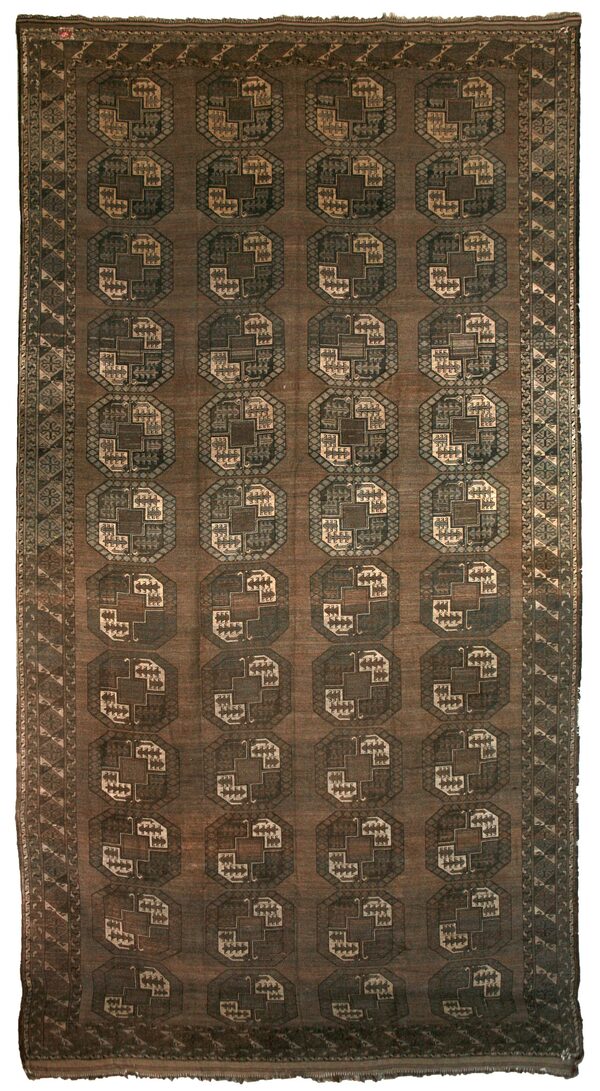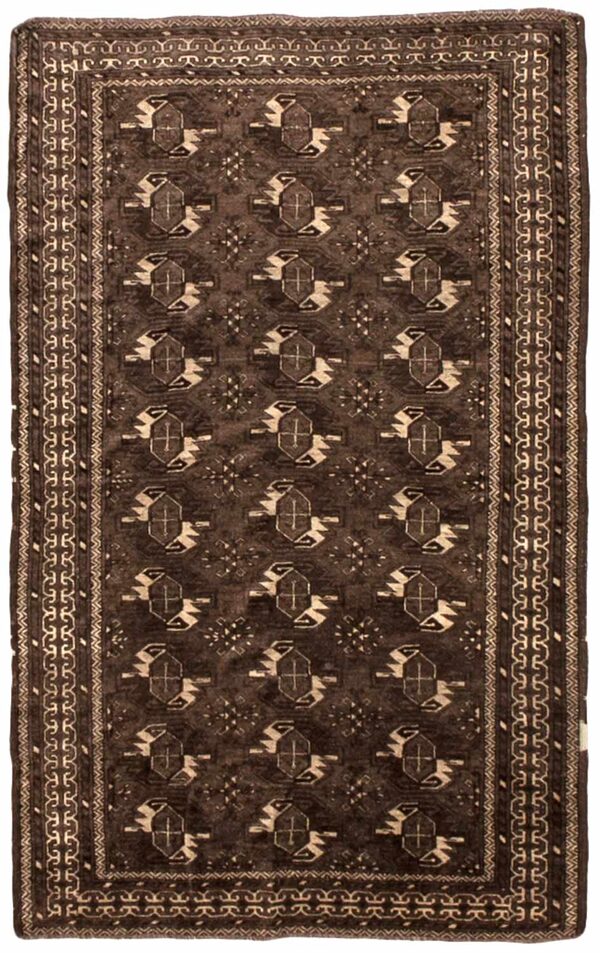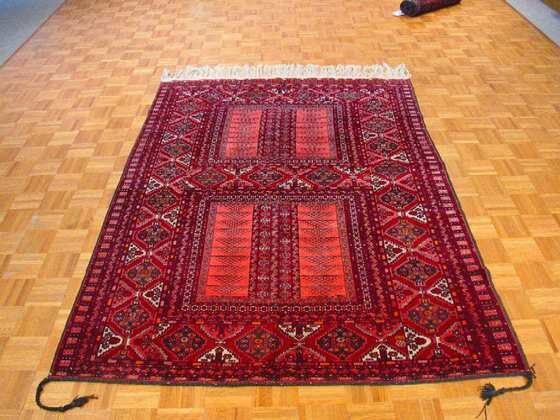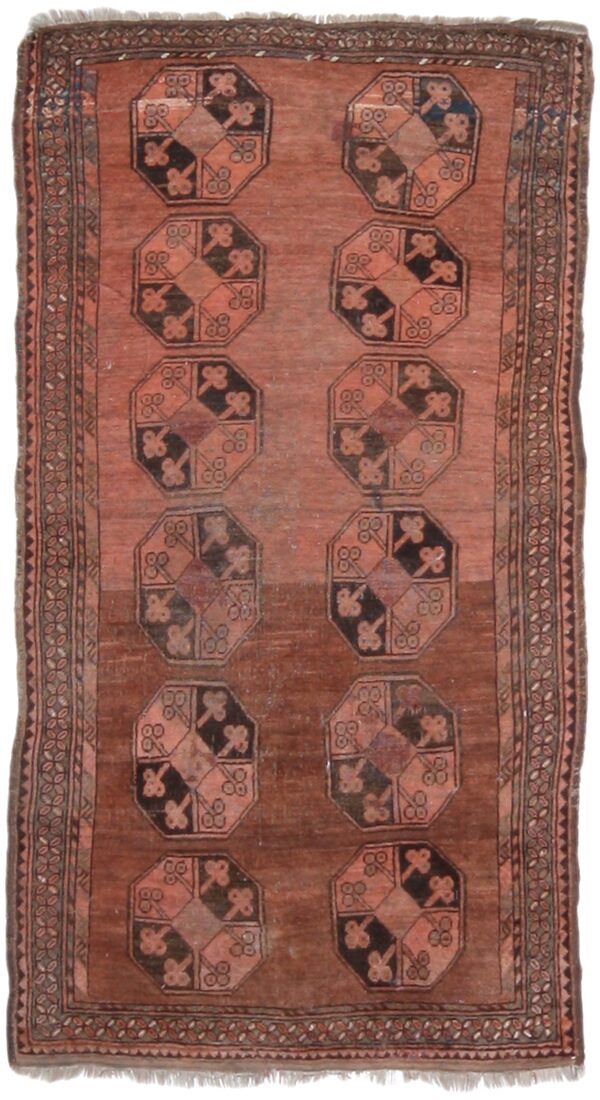
knowledge library / What Makes an Antique Persian Rug Exceptional?
An exceptional antique Persian rug is not defined by one impressive statistic. Age, knot count, rarity, and provenance can all matter, but none is sufficient on its own. The strongest rugs bring several qualities into alignment: a compelling design, materials suited to that design, confident weaving, color with depth and balance, and a condition that allows the original character to remain legible.
That is why connoisseurship begins with the whole rug rather than the label. A finely knotted carpet can feel lifeless. A more openly woven village rug can be unforgettable. The meaningful question is not simply, “How old is it?” or “How many knots does it have?” It is: “How fully does this rug realize what it sets out to be?”
Exceptional is a relationship, not a ranking
Persian rugs were made across many regions, towns, villages, tribes, and workshops, each with its own visual language and technical habits. A courtly carpet with a finely articulated floral field should not be judged by exactly the same standards as a boldly geometric village weaving. Refinement can appear as minute detail, but it can also appear as scale, rhythm, clarity, or force.
A useful assessment therefore has three lenses:
- Beauty: Does the rug hold the eye through color, proportion, drawing, and rhythm?
- Integrity: Do the materials, construction, and condition support the design?
- Context: Does the rug make sense within its attributed place, period, and type, and is that attribution supportable?
The best examples succeed through the relationship among all three. They feel resolved without feeling mechanical, distinctive without becoming incoherent, and aged without losing the qualities that made them worth preserving.
Begin with the design at full scale
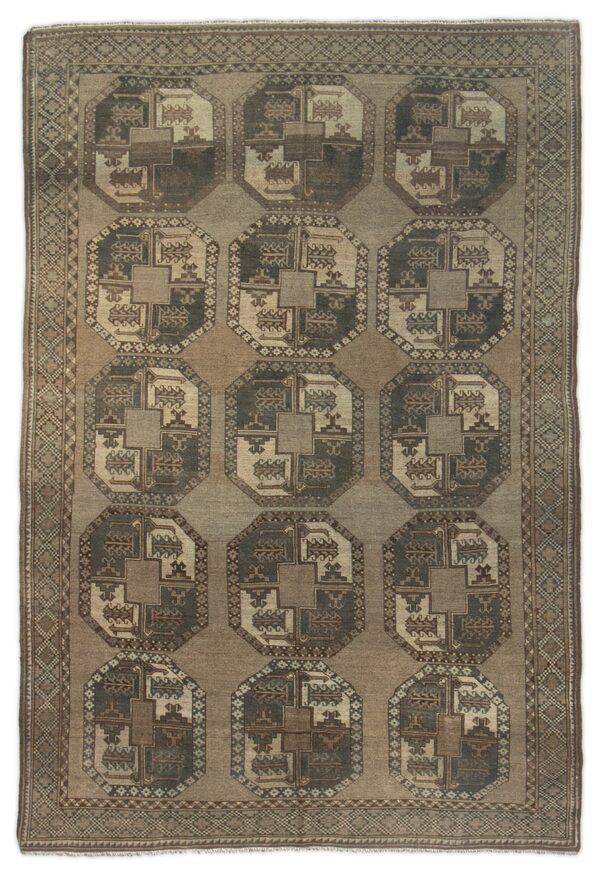
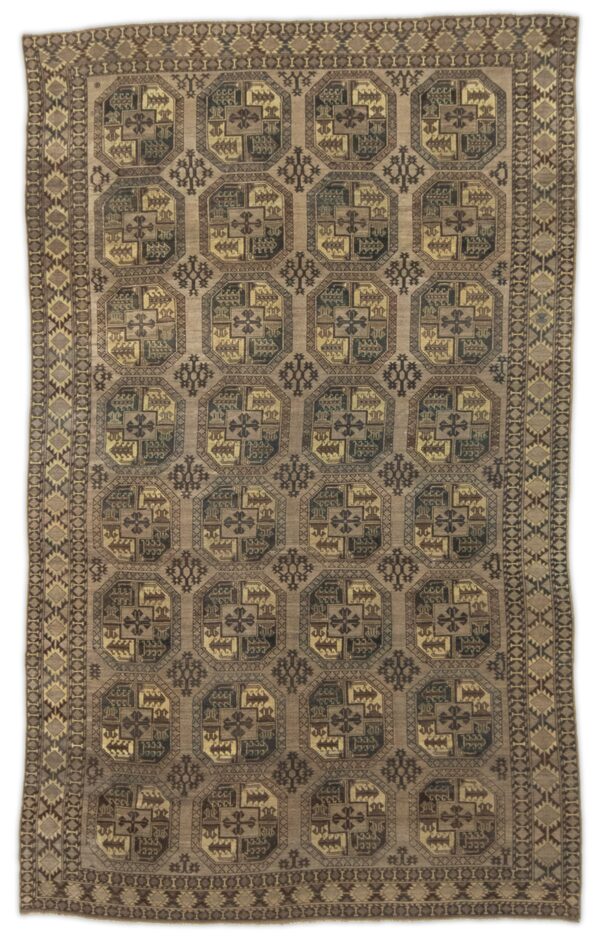
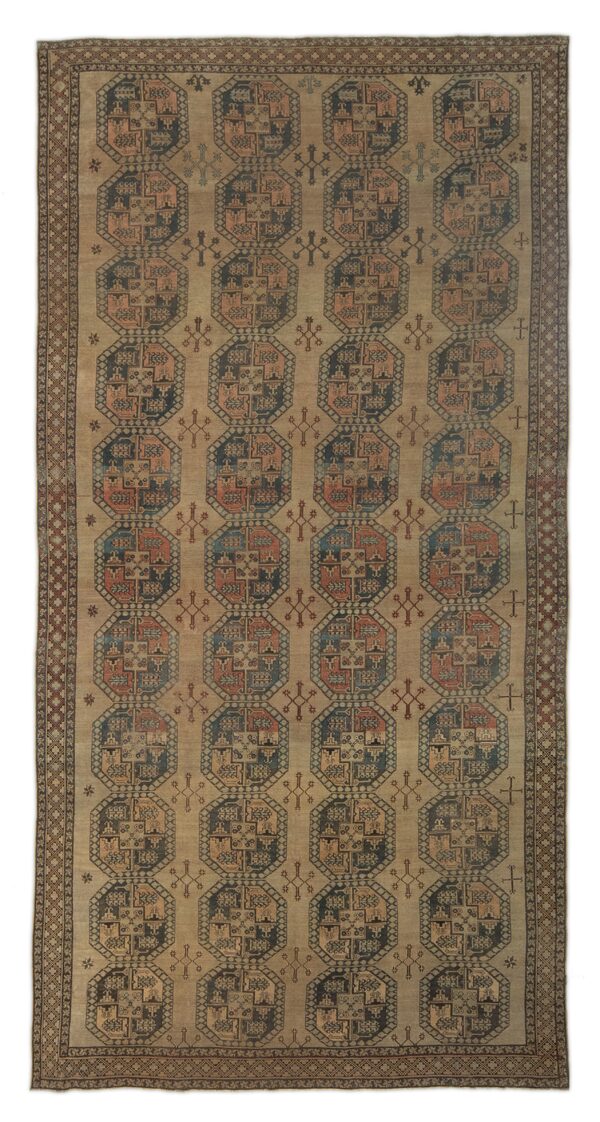
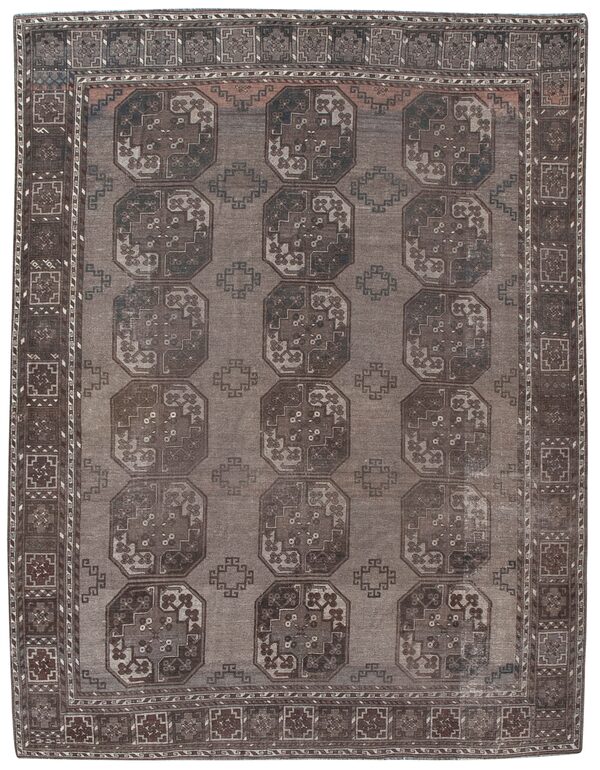
Before inspecting knots or turning over a corner, step back. An exceptional rug should have a persuasive presence from the distance at which it will be lived with. Look at the proportion of field to border, the scale of motifs, the movement of the pattern, and the way color travels across the surface.
Strong design does not require perfect symmetry. Slight shifts can give a handmade rug vitality, particularly in village and tribal work. The more important distinction is between variation that contributes to the rug's visual life and distortion that weakens the composition.
Different Persian traditions achieve balance in different ways. An antique Heriz rug may build its authority through a large geometric medallion and an architectural sense of line. A Sultanabad rug may feel exceptional because its large-scale floral pattern has room to breathe. Tabriz rugs encompass a broad range of designs and palettes, often using established motifs as the basis for highly individual interpretations. Quality is visible in how convincingly a rug speaks its own language.
Color should create depth, not merely decoration
Color is often the first source of attraction and one of the hardest qualities to reduce to a checklist. In a distinguished antique rug, the palette tends to feel relational: the ground supports the motifs, accents appear with purpose, and no single color seems detached from the composition.
Subtle variation within a color can add depth. Changes in a dye lot, yarn, exposure, or pile direction may create shifts commonly described in the rug trade as abrash. Such variation can be beautiful and historically informative, but it should not automatically be romanticized. A specialist should distinguish intentional or inherent variation from fading, staining, later over-dyeing, or repair.
Natural dyes are frequently associated with antique Persian rugs, and museum examples demonstrate the extraordinary range possible from plant and insect sources. Yet “natural” is not a quality grade by itself. What matters to the eye is the resulting harmony, clarity, and aging of the palette; what matters to attribution is evidence specific to the object.
Materials should suit the rug's ambition
Many Persian pile rugs combine wool pile with wool, cotton, or silk foundation elements, while some exceptional workshop and court carpets use silk and even metal-wrapped thread. Material choice affects fineness, surface, flexibility, color, and the level of detail a weaver can achieve.
The most luxurious material is not automatically the best material for every rug. Wool can carry saturated color and produce a deeply expressive surface. A silk foundation can support a very fine weave. A robust village carpet may derive much of its power from substantial wool and a less delicate structure. The material should be judged in relation to the design and the kind of object being made.
Touch can reveal useful differences in pile, handle, and flexibility, but it cannot authenticate a rug. Fiber identification, dye analysis, and technical attribution may require trained examination or laboratory methods when the stakes are high.
Knot count matters only in context
Knot density can enable fine curves, closely spaced motifs, and precise drawing. Museums use weave structure and density to explain how certain Persian masterpieces achieve extraordinary detail. But a higher count is not a universal ladder of artistic quality.
A rug should have enough structural resolution for its design. Intricate curvilinear work may demand a finer weave than a large geometric composition. Judging a bold tribal or village rug by the standard of a court carpet misses the point of both.
The back of the rug can reveal knot structure, foundation, repairs, and aspects of the weaving more clearly than the face. Even so, isolated inspection of the back should not replace the experience of the front. Technical competence is most meaningful when it serves the finished composition.
Look for drawing with confidence and rhythm
In rug language, “drawing” refers to how motifs are rendered: the turn of a vine, the articulation of a flower, the geometry of a medallion, or the spacing of repeated forms. Confident drawing gives the pattern momentum. Weak drawing can make even a technically fine rug feel hesitant or congested.
Repetition should reward attention. In the strongest rugs, repeated elements are related without feeling inert. Borders frame the field rather than compete with it. Secondary motifs sustain the composition between its largest gestures. Negative space, where present, is active rather than empty.
This is also where individuality can emerge. A weaver working within an inherited vocabulary may adjust a motif, compress a repeat, or let one form resolve differently from its neighbor. The result can be evidence of a human intelligence working through a tradition, not a defect to be corrected.
Age is meaningful when character survives it
WOVEN's antique collection language spans rugs dating from 1800 through the 1920s. Within that range, age can contribute historical interest, scarcity, surface, and patina. It does not guarantee excellence. A younger example with exceptional design and integrity may be more compelling than an older but ordinary or severely compromised one.
Patina is the visual record of aging that enhances rather than obscures the rug: softened color, a mellowed surface, or wear that remains coherent with the design. Damage is different. Foundation exposure, active loss, weakened edges, compromised ends, splits, corrosion, staining, and unstable repairs can affect both appearance and structural soundness.
Restoration is not automatically disqualifying. The relevant questions are how much was done, where it was done, how skillfully it was integrated, whether it is stable, and whether it changes the way the rug should be represented. Condition language should be specific. “Good for its age” is not a substitute for a clear account of wear and intervention.
Provenance can deepen the object, but it must be documented
A credible history of ownership, exhibition, publication, or commission can add important context. It can connect a rug to a workshop, patron, collection, or moment in design history. Provenance can also help support responsible title and transfer.
Stories without records should remain stories. A family account, old label, signature, inscription, or dealer attribution may be a useful lead, but each requires interpretation. Even long-standing names can be misleading: the group known as “Polonaise” carpets, for example, retained that name after scholarship established that the carpets were Persian rather than Polish.
For a consequential purchase, attribution and provenance should be evaluated by a qualified specialist familiar with the relevant Persian weaving traditions. Written documentation is more useful than an aura of certainty.
Rarity is most persuasive when paired with quality
Rarity may arise from age, origin, format, materials, workshop, design, condition, or the small number of comparable examples that survive. But rarity alone does not create beauty, importance, or desirability. An unusual rug can still be poorly composed; a familiar type can be exceptional within its tradition.
The more useful question is whether the rug combines scarcity with distinction. Is the palette unusually assured? Is the scale particularly successful? Does the design represent an accomplished or uncommon expression of its type? Has enough of the original surface survived to make those qualities visible?
Condition should be read, not merely graded
Condition is often compressed into a simple label, but an antique rug deserves a more spatial reading. Examine the field, borders, corners, ends, sides, fringe, pile, foundation, and any areas that may have been rewoven, patched, reduced, or reinforced.
Where wear occurs can matter as much as how much wear exists. A low area that softens the surface without interrupting the design may be acceptable to one buyer. The same amount of loss through a central motif or along a structurally vulnerable edge may be more consequential. Intended use also changes the judgment: a rug for a quiet study, a wall, or a heavily used living room presents different tolerances.
Condition, restoration, cleaning, and placement decisions should be made with the individual rug in view. Aggressive cleaning or poorly planned repair can alter color, pile, structure, and value, so specialist assessment is appropriate when there is uncertainty.
A practical way to assess an antique Persian rug
When considering a rug in person or remotely, move through the questions in this order:
- Read the whole composition. Does it have balance, rhythm, and presence at room distance?
- Study the palette. Do the colors support one another, and are variations understood rather than assumed?
- Match technique to design. Is the weave fine or robust in a way that serves the drawing?
- Inspect materials and handle. What are the pile and foundation believed to be, and how certain is that identification?
- Map condition. Where are wear, loss, repairs, fading, stains, or structural concerns located?
- Test the attribution. What supports the stated origin, date, workshop, tribe, or maker?
- Consider the room. Does the rug's scale, condition, palette, and surface make sense for its intended use?
Photographs can answer some of these questions, but not all. Ask for a full front and back, close views of the weave, corners, ends, sides, representative pile, and every repaired or worn area. Color should be reviewed with an awareness that screens and lighting can mislead.
The exceptional rug holds more than one kind of value
The finest antique Persian rugs reward both immediate and sustained attention. They can anchor a room through color and scale, reveal the intelligence of their construction at close range, and carry a history that remains visible without being reduced to a date or price.
WOVEN's approach to antique rugs begins with the discerning eye: looking for pieces that are not only uncommon, but beautiful enough and coherent enough to hold a room again. That is ultimately what makes an antique Persian rug exceptional. Its materials, drawing, color, workmanship, age, and condition do not compete for attention. They become one object.