knowledge library / How Custom Hand-Knotted Rugs Are Made
A custom hand-knotted rug moves from an approved design through yarn preparation, dyeing, weaving and finishing. At WOVEN, the drawing establishes the composition, while the chosen yarn and construction determine how that composition becomes a textile. Washing, drying, stretching and hand finishing continue the work after the rug leaves the loom. This process describes hand-knotted production; other constructions follow different methods.
Understanding the sequence helps explain why a rendering, a sample and a finished rug each answer different questions. They are useful at different stages of the same commission.
The drawing becomes a guide for the loom
The design begins as artwork with the intended dimensions, pattern and color placement. For hand-knotted production, the manufacturer translates the technical drawing into a graph that guides the weavers. In this graph, individual squares correspond to knots, connecting the larger composition to the detail that can be made by hand.
Suku provides one example of this translation. Its WOVEN drawing becomes a weaver's graph, then a pattern on the loom and finally the finished rug. The artwork carries decisions about the composition into each stage of making.
Before approving artwork, look at the entire rug. Check where a border begins, how a motif meets the edge and which part will sit beneath furniture. A pleasing small image does not settle those questions at full scale. Our guide to turning artwork into a custom rug covers that design stage in more detail.
Yarn gives the design its surface
Once the material is specified, yarn preparation begins. Carding aligns fibers before spinning. In the hand-spun yarns described in our process, small differences in the yarn contribute to variation in texture and dye uptake.
That is one way abrash, or variation in color across a rug, can develop. The effect belongs to the material and making process as well as the design. A rendering cannot fully describe it.
Color is developed for the yarn being used. Our documented dyeing process starts with a sample dye lot, followed by a larger batch for the order once the color is established. Yarn preparation and color development therefore need to be considered together. A color reference on paper is not the finished textile.
Keep the approved sample beside the drawing
A drawing records the layout; a woven sample records the proposed surface. WOVEN's custom guidance uses strike-offs to review changes in materials, construction and some color or pile-height requests. An unchanged standard quality can follow a different sample route.
A full-scale section helps show how a line, color or texture will be woven. Keep its identity and scale with the approved artwork, so the references describe the same rug. Our sample and strike-off guide explains the separate approval decisions.
Weaving builds the rug a little at a time
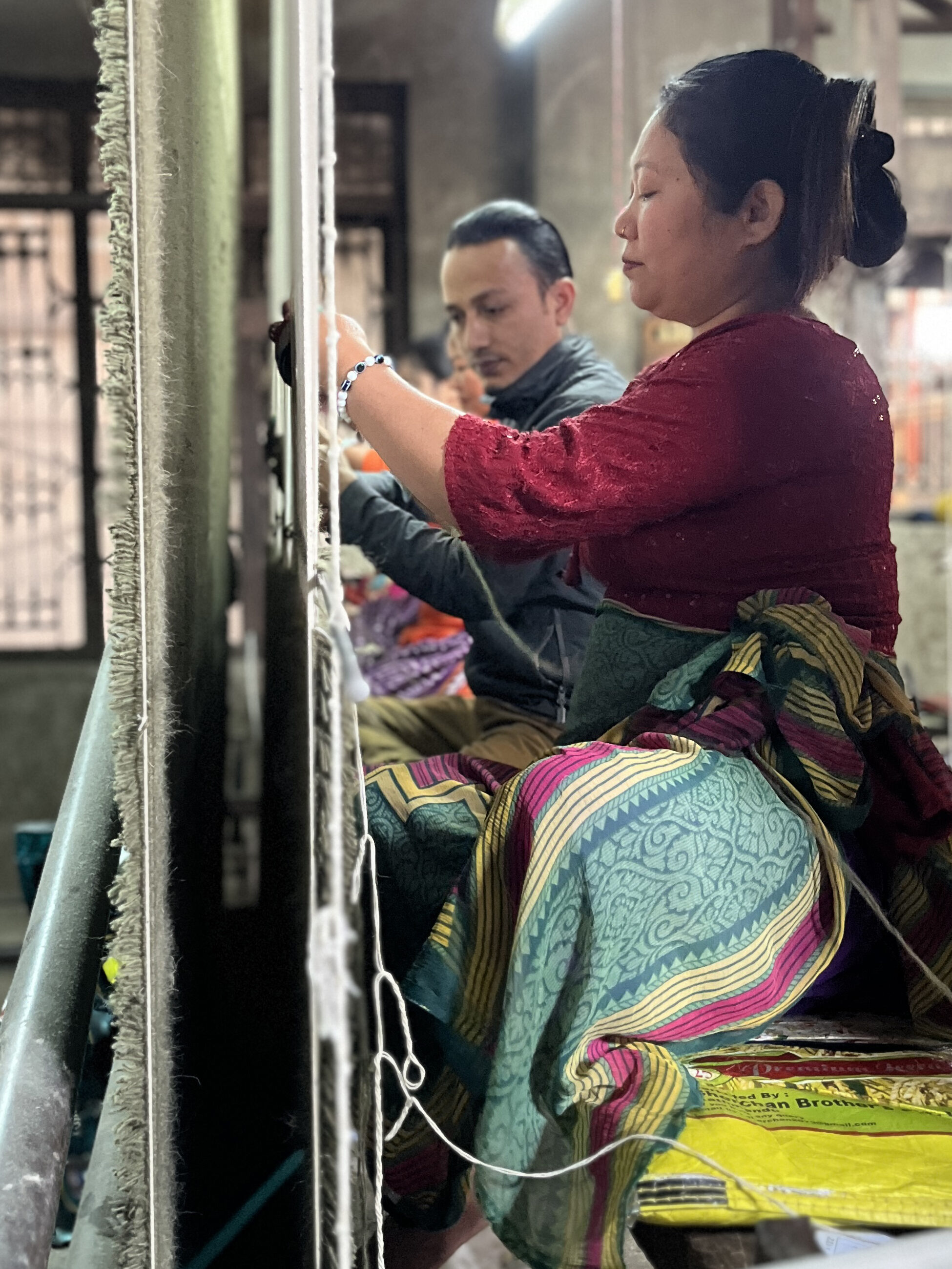
The loom holds the foundation threads under tension while the weavers build the rug according to the graph. The pattern develops through repeated work across the width. For larger pieces, several weavers may work on the same rug.
The composition that looked immediate on a screen now has to be made across the full surface. Construction, dimensions and the detail in the design all belong in the production discussion. A hand-knotted commission should not be assigned a delivery promise from a photograph or a general description of the method.
Finishing changes what comes off the loom
After weaving, the rug is cut from the loom and washed. In our documented process, washing is followed by drying and stretching to help recover the intended size and shape. Clipping and grooming refine the pile, and the edges are finished.
This stage helps explain why the surface on the loom is not yet the surface you will live with. The appearance of the yarn and the definition of the pile continue to develop through finishing. Weather can affect drying, so the work after weaving also belongs in the project schedule.
We keep mill production, inspection, transit and delivery distinct when planning a custom rug. For the timing questions, see our custom rug lead-time guide.
Explore STUDIO WOVEN with the making process in mind. When a design catches your eye, its construction and material details are the next things to read. They explain how the drawing becomes the rug.