knowledge library / How WOVEN Collaborates with Interior Designers
WOVEN brings antique, vintage and contemporary rugs together with an in-house design studio to support interior designers’ rug decisions. Start with the room brief, compare the relevant sourcing paths, and identify the evidence needed for each approval. This guide offers a working framework for that conversation; project-specific services, deliverables, responsibilities and timing should be confirmed in the agreed scope.
What does collaboration with WOVEN mean?
STUDIO WOVEN’s in-house design work spans research, sketching, color, sourcing, sampling and presentation. Those capabilities support a design conversation; they do not mean every project includes every stage or that a sample approves a finished rug. Establish the appropriate route for the actual brief.
Collaboration with WOVEN means treating the rug as part of the architecture and furnishing plan, not as a decorative layer added at the end. A productive conversation connects the designer's intent to proportion, color, texture, construction, condition, and use. It also keeps separate questions separate: a rug can be visually right but dimensionally wrong, materially compelling but unsuitable for the setting, or beautiful on its own without supporting the room.
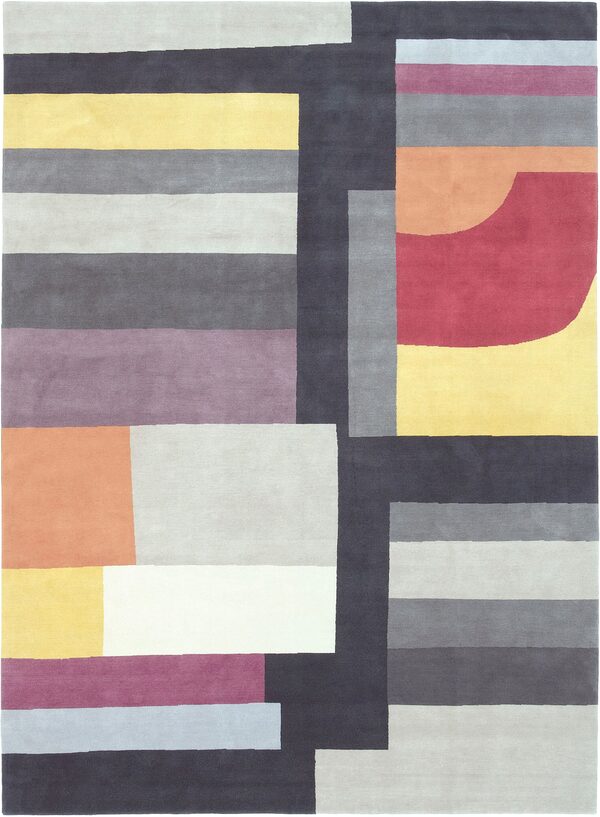
WOVEN's perspective spans one-of-one antique rugs, expressive vintage rugs, contemporary work, and STUDIO WOVEN. That range is useful because the design problem can determine the sourcing path. The process does not need to begin with a predetermined category.
Begin with the room, not a rug category
The strongest rug brief explains what the room needs before it names a style. A designer should identify the rug's visual role, the furniture relationship it must support, the boundaries it should establish, and the practical conditions that may affect the choice. These facts make a search more precise without closing off unexpected answers.
A useful opening brief includes:
- the room plan, relevant dimensions, and intended orientation;
- the rug's role as anchor, quiet ground, counterpoint, or transition;
- furniture footprints, circulation paths, doors, thresholds, and fixed architecture;
- palette references and the materials that should lead or recede;
- expected use, light, maintenance context, and known project constraints;
- the decision required now and the questions that can remain open.
Measurements alone do not make a complete brief. Two rugs of the same size can organize a room differently because their borders, fields, motifs, pile direction, tonal contrast, and negative space place visual weight in different locations. The plan establishes fit; the composition establishes behavior.
Choose the sourcing path after the design problem is clear
The right sourcing path depends on which aspects of the room are fixed and which can remain flexible. An existing antique or vintage rug invites the room to respond to a singular object. Contemporary inventory can offer a more controlled visual language. STUDIO WOVEN connects modern design with WOVEN's study of antique and vintage rugs. Custom development becomes relevant when size, shape, palette, or surface must answer a project-specific condition.
| Sourcing path | Best suited to | What needs close review |
|---|---|---|
| Antique or vintage | A room that can be composed around the character of a one-of-one rug | Actual dimensions, orientation, condition, color relationships, and how the full composition sits with furniture |
| Contemporary inventory | A room needing a current design language with an existing rug as the starting point | Scale, material, pile, sheen, construction, and the exact rug's relationship to the room |
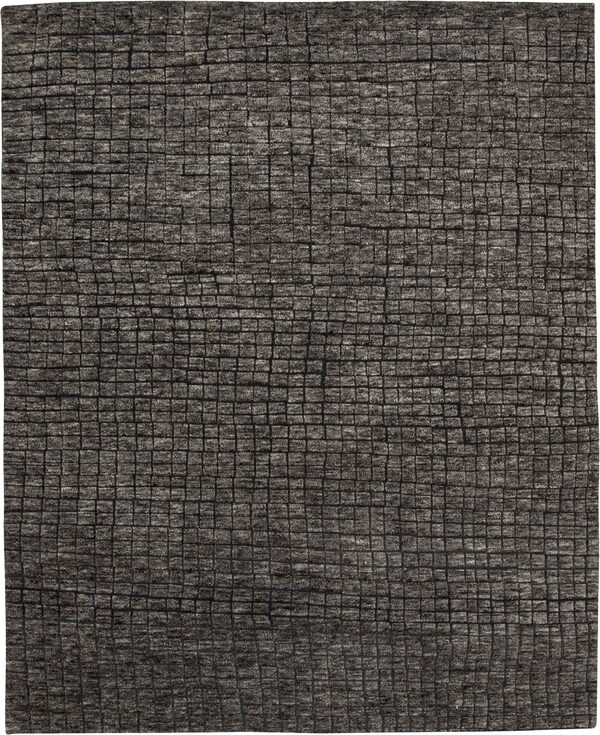
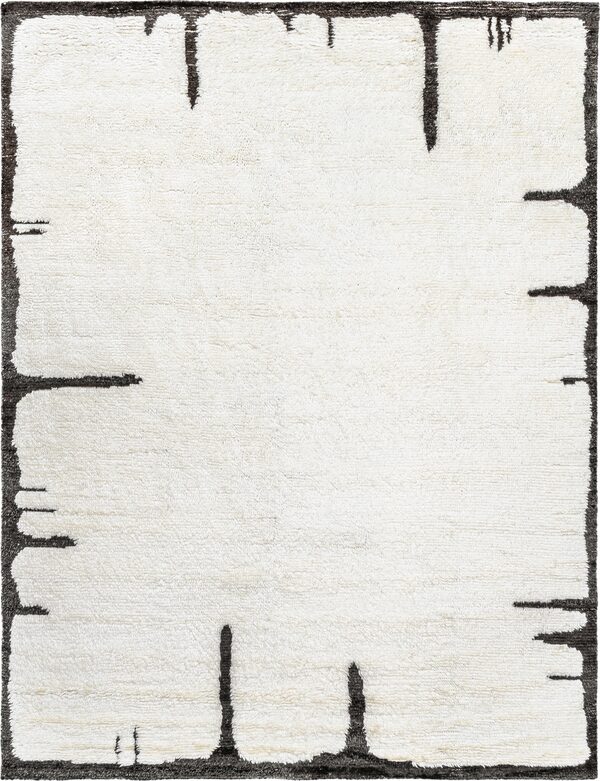
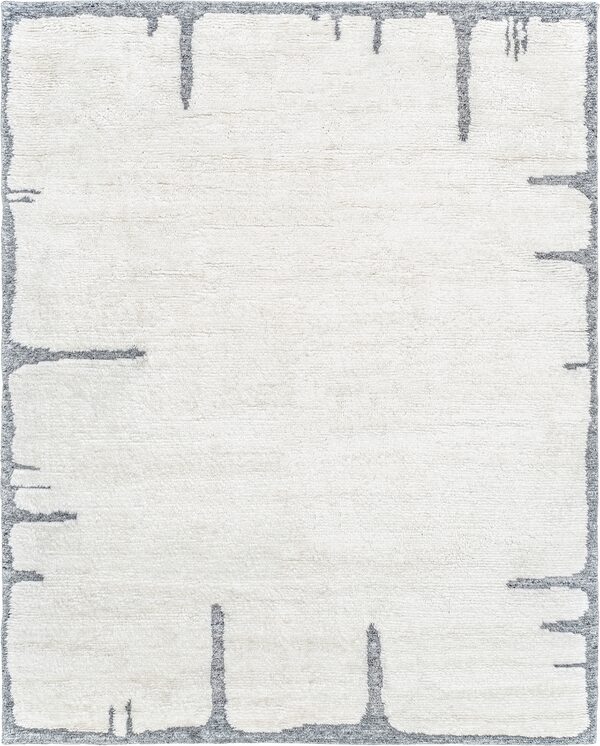
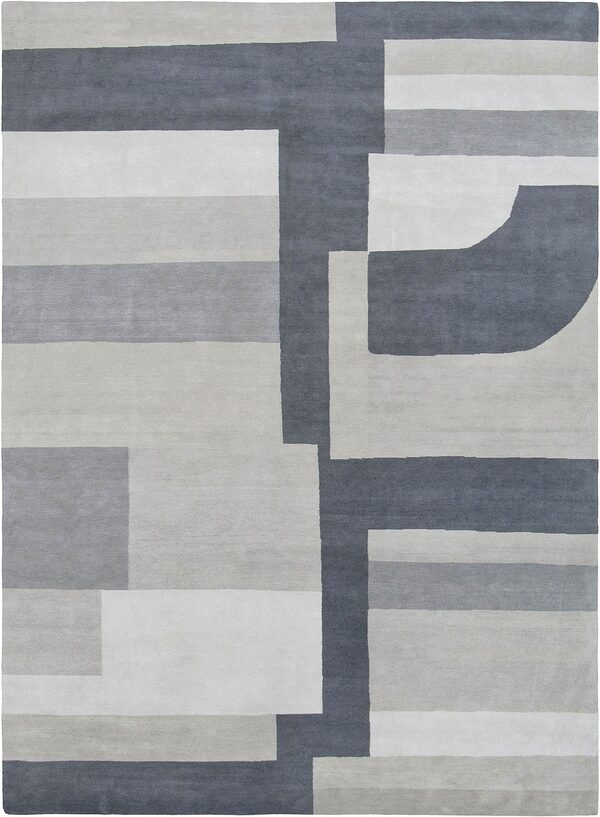
| STUDIO WOVEN | A project that benefits from modern form, material experimentation, texture, and color informed by WOVEN's rug archive | The specific series, surface, colorway, available format, and project suitability |
| Custom development | A project with a consequential requirement that existing rugs cannot resolve cleanly | Finished geometry, artwork, palette, material, construction, sampling, approvals, schedule variables, and site conditions |
Custom is not automatically the most resolved choice, and an existing rug is not automatically a compromise. At WOVEN, we consider the simplest sourcing path that can protect the design idea. A singular antique may give a room the tension it needs; a restrained rug from our solids and textures selection may let the architecture lead; a custom rug may be justified when a fixed plan condition cannot be answered another way.
Evaluate every rug at room, surface, and object scale
A rug should be evaluated at three scales: how it organizes the room, how its surface behaves in light and use, and what is true of the individual object. This prevents a strong photograph or appealing sample from carrying more authority than it should.
- Room scale: Review footprint, exposed floor, furniture relationships, circulation, sightlines, and the distribution of visual weight.
- Surface scale: Review color in context, pile direction, reflectivity, relief, texture, pattern density, and how the rug changes from threshold to close range.
- Object scale: Review actual dimensions, construction, materials, edges, reverse, condition, repairs, irregularity, and any facts that affect use or care.
This three-scale review is especially important when comparing new work with antique or vintage rugs. Age does not establish suitability, and new production does not guarantee uniformity or performance. Each rug still needs to be judged as a specific surface in a specific room.
Use material and texture to support the design hierarchy
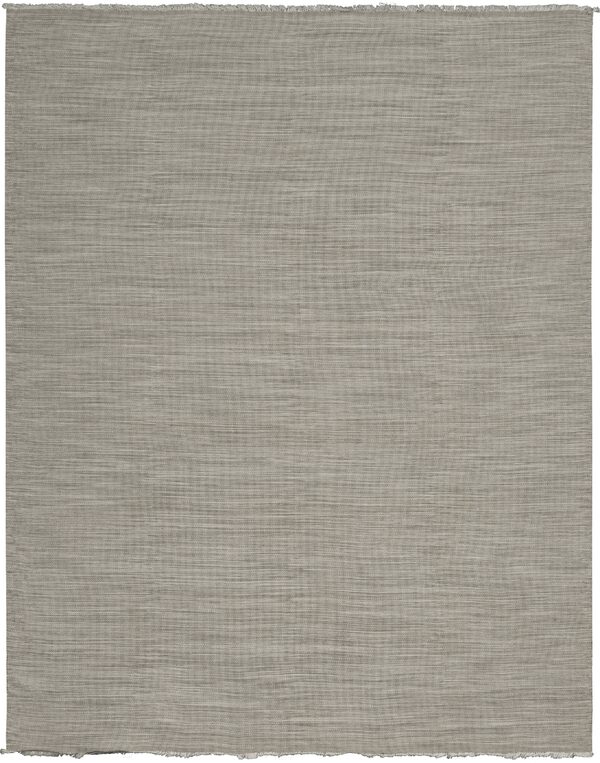
Material and texture should reinforce the room's hierarchy rather than compete for attention by default. A reflective pile can shift as the viewer moves. A heathered or irregular surface can soften a large field. A low-profile construction can make transitions feel quieter, while relief can give a restrained palette enough structure to hold a large room.
At WOVEN, we separate material identity from surface effect. Fiber names matter, but they do not tell the whole story. Yarn, construction, pile, density, finish, color, and lighting work together to determine what the designer actually sees and feels. This is why a full surface should be reviewed from the threshold, the principal seating position, and the reverse approach whenever those views are consequential.
The same reasoning applies to low-profile options. The modern flatweave collection is useful as a design reference when a project calls for a clearer floor plane, but the category name alone does not decide suitability. The individual rug, underlay, floor finish, furniture, movement, and care context still require review.
Make comparisons answer the same brief
A useful rug comparison holds the decision criteria steady. Each option should be shown in relation to the same room plan, furniture arrangement, orientation, and material references. When one option is presented as a full-room image and another as a cropped detail, the client is comparing evidence as much as rugs.
The edited group should be small enough for the differences to remain legible. One rug might preserve architectural calm, another might introduce historical depth, and a third might shift the room through color or shape. Each should earn its place by showing a meaningful design direction, not by adding another variation of the same unresolved idea.
Keep approvals tied to visible decisions
A clear approval identifies what has been decided and what remains open. Approval of a palette does not necessarily approve construction, finished dimensions, artwork, condition, commercial scope, or production release. The record should name the rug or revision, the approved attributes, any conditions, the responsible approver, and the next decision.
This discipline matters when the project changes. Furniture dimensions shift, finishes are replaced, door clearances tighten, and installation conditions evolve. The team should return to the room brief and identify which rug assumptions are affected. A revision is easier to control when the original decision is explicit.
Agree the handoff before the next decision
Assign each open question to the person who can resolve it and identify the evidence needed for the next approval. The following is a proposed coordination map, not a statement of standard contract responsibilities. Confirm the actual assignments with the project team and record them alongside the selected rug or custom revision.
| Question | Suggested coordination | Record to keep |
|---|---|---|
| What must fit the room? | Designer and responsible site-measurement party. | Current plan, furniture footprints, dimensions and revision. |
| What is true of the proposed rug? | WOVEN rug specialist or relevant production contact. | Object/quality ID, materials, condition or feasibility information and unresolved limits. |
| What requires project-specific technical review? | Responsible architect, code/accessibility professional, installer or maintenance specialist. | Applicable requirement, reviewed rug/pad/floor assembly and written conclusion. |
| What is approved now? | Named client or project approver under the agreed scope. | Exact item or revision, approved attributes, conditions, date and next action. |
For example, a preferred color can remain selected while final dimensions are still open. Label that decision “color direction selected; dimensions pending” rather than allowing it to be read as production release. A useful handoff makes both the decision and its boundary visible.
Know when to change direction
Changing the sourcing path can be a sign of good judgment. If a one-of-one rug creates the right atmosphere but cannot resolve the plan, its palette or compositional logic may guide a different answer. If a custom concept accumulates complexity without improving the room, an existing contemporary rug may be the more disciplined choice.
The decision should return to the same question: what does the room need from the rug? Collaboration is most effective when the designer and rug specialist protect that question through each change, rather than protecting an early option simply because time has already been invested in it.
What should a designer bring to the first rug conversation?
A designer should bring enough information to make the room and the immediate decision understandable. A complete specification is not required at the first conversation, but the project should have a clear point of view and visible constraints.
- a dimensioned plan or reliable working dimensions;
- furniture layout and key circulation paths;
- images or samples of fixed finishes, textiles, and artwork;
- the desired visual role of the rug;
- known use, light, access, floor, and maintenance conditions;
- the project stage, current decision, and responsible approver.
From there, the collaboration can remain open without becoming vague. The brief supplies the boundaries; WOVEN's range of antique, vintage, contemporary, and studio work supplies distinct ways to answer them.
Bring the shortlist into the project record
Keep the selected rug references, room plan and material decisions together as the project develops. The WOVEN trade portal includes project folders, sharing tools and custom sidemarks for identifying items within a project. Use the same references in the quote and approval record so everyone is discussing the same rug.
For custom color, compare the proposed yarn colors beside the room’s finishes in lighting close to the intended setting. Carry the selected references into the artwork and sample review. Our sample and strike-off guide explains what each reference can approve. The next conversation can then focus on the remaining decision, whether that is a color adjustment, a change of scale or a different rug.