knowledge library / Undyed wool rugs: benefits, color variation, and what to check
Undyed wool rugs take their color from the wool itself, without added dye. We use that natural variation to bring depth to neutral rooms: a heathered braid or a small loop can add detail beside timber, stone and plain upholstery. The choice still comes down to the particular rug. Its surface, placement and care matter as much as its color.
What undyed wool tells you
Undyed describes how the yarn gets its color. It does not mean unbleached or untreated, and it does not establish the health or environmental performance of a finished rug. For most room schemes, the useful starting point is simpler: do you like the natural shades and the way they appear in the weave?
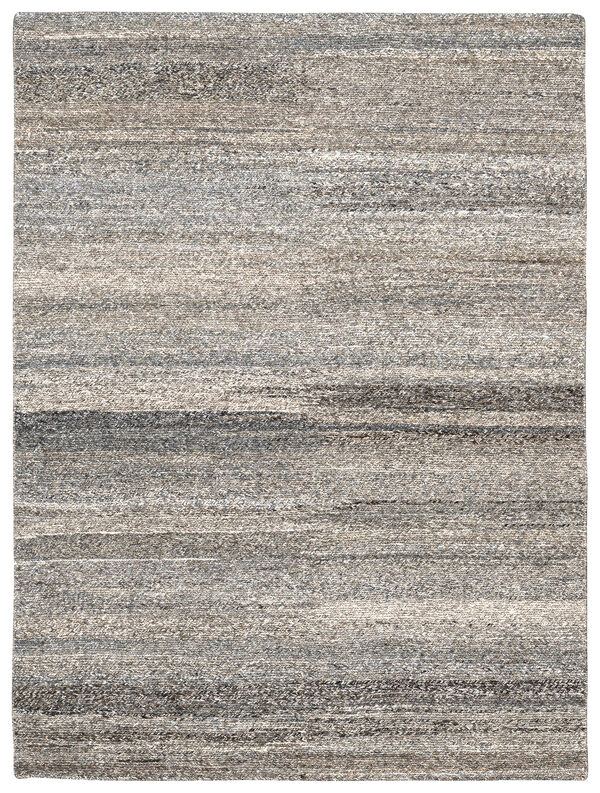
Heathered yarn contains more than one visible tone. Those small differences can give a broad area of neutral color some movement. Heathering alone does not prove that wool is undyed, however; the product description needs to identify it as such.
Natural dye is a separate category. Wool colored with a plant-derived dye has still been dyed. Our guide to natural and synthetic rug dyes explains the distinction.
Two ways we use undyed wool
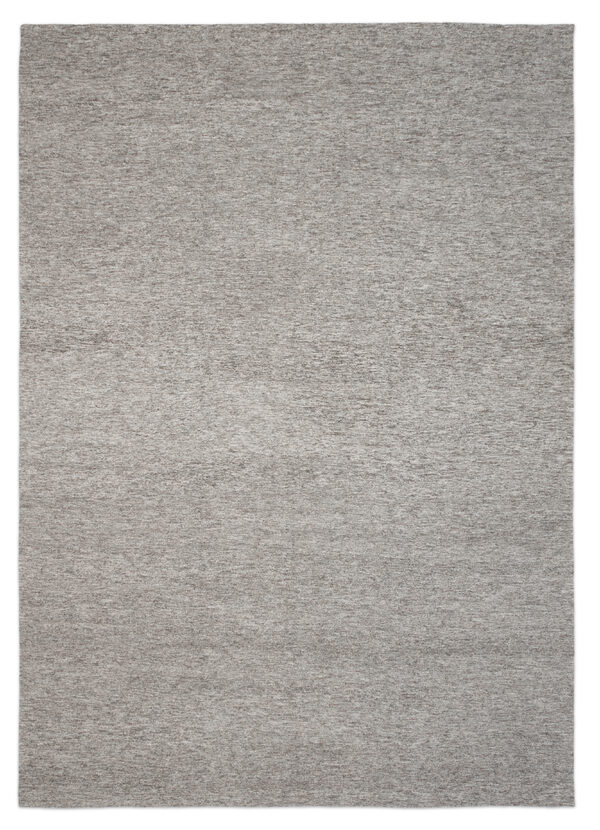
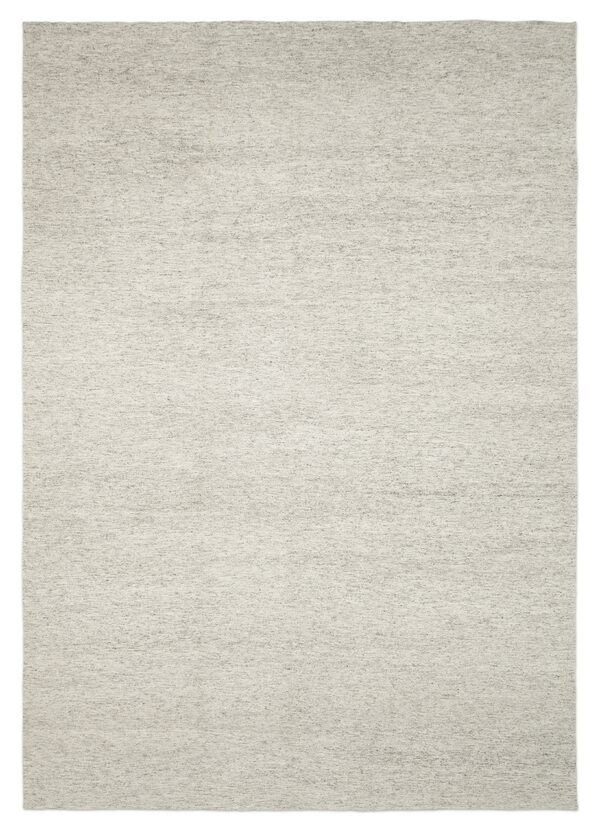
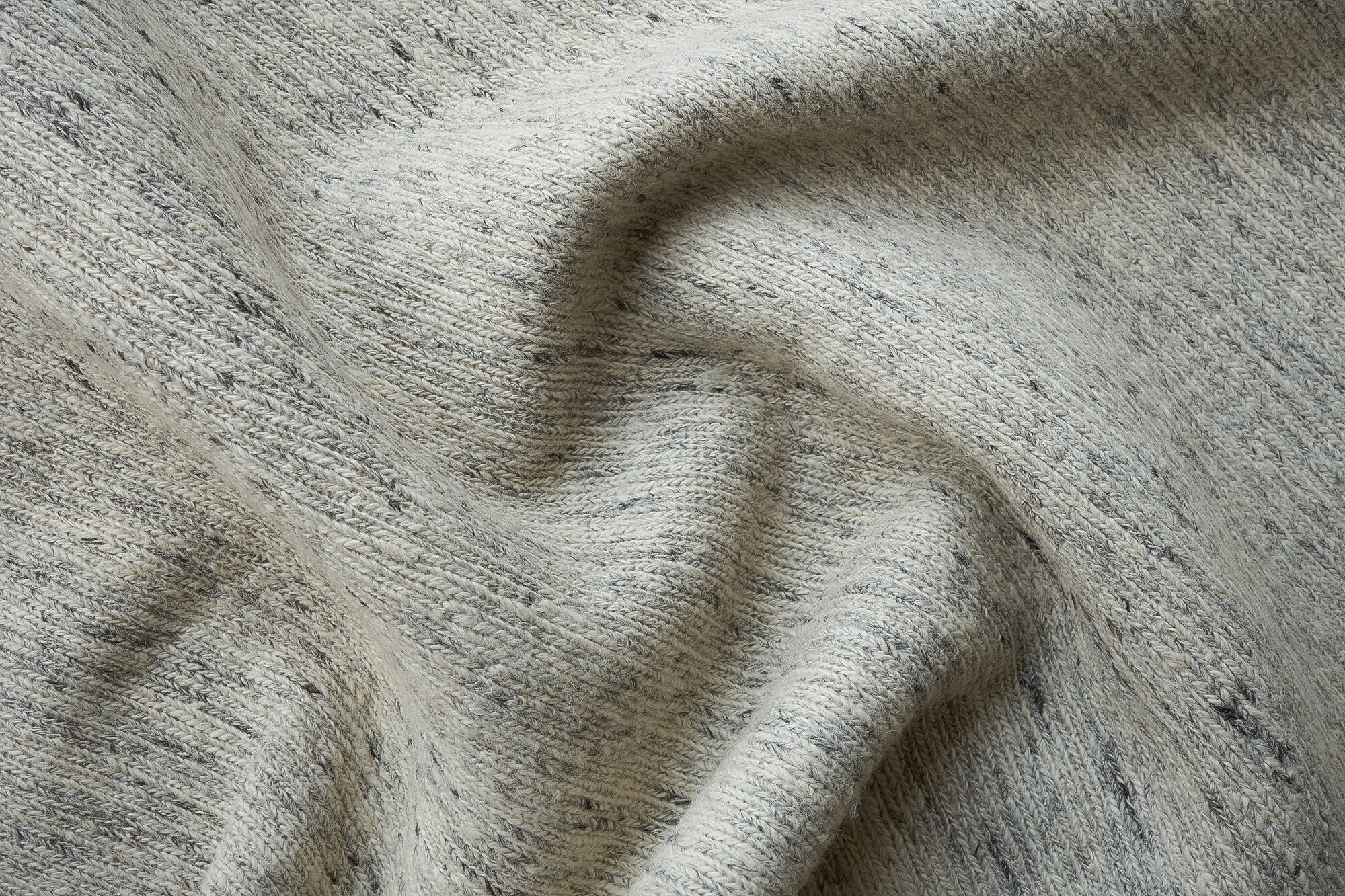
Our Wool Soumak and Wool Loop offer different surfaces within a natural palette. Wool Soumak has a petite braid of heathered wool. Wool Loop uses hand-spun wool in a small loop, with greater color variation to be expected in its natural shades.
| Quality and color | Fiber | Surface | Nominal profile |
|---|---|---|---|
| Wool Soumak, Heathered Ivory | 100% wool | Petite heathered braid | 9 mm |
| Wool Loop, Sandstone | 100% wool | Small loop with natural shade variation | 12 mm |
These profiles describe the rug qualities; they do not include a pad or rank one texture above the other. A sample helps you judge how much of the surface pattern you want to see. Look from the doorway first, then beside the furniture. A weave that seems pronounced close up may read quite quietly across the room.
We recommend Wool Soumak for medium-traffic spaces such as living rooms and bedrooms. It is not our recommendation for busy hallways or stairs. That placement guidance belongs to this quality, rather than to undyed wool as a whole.
Choose the shade with the room around it
Put the sample directly against the floor and the upholstery. A warm ivory can sit differently beside reddish oak than beside gray stone. Color names such as Sandstone or Heathered Ivory are useful references, but the surrounding finishes determine how the combination looks.
With strongly grained timber, we would start by comparing a restrained color range and a clearly defined weave. With plain plaster and a smooth sofa, a more visible texture may supply detail the room needs. These are design choices; neither surface is automatically the better one.
Review the sample in daylight and under the lights you use in the evening. Keep nearby materials in view, including curtains and the largest upholstered pieces. Our approach to custom color starts with that same relationship between the rug, the other finishes and the room's light.
Allow for variation in natural wool shades. A sample is a color and texture reference, not a picture of every part of a full rug. If two rugs will sit together, choose them as part of the same scheme rather than relying on a color name to produce an exact match.
Care for the weave as well as the wool
Our general care guidance for natural-fiber rugs recommends suction-only vacuuming, without a beater bar or bristles. Wool Loop has an additional caution: avoid high suction on the looped surface. Both wool qualities can shed loose fibers initially.
Keep the rug away from prolonged direct sunlight, and use a suitable rug pad. For a spill, gently blot excess liquid with a clean white cloth instead of rubbing. Avoid household chemical cleaners and arrange professional cleaning when needed. Our rug care guide provides the broader maintenance guidance.
Choose undyed wool for the shades and texture you want to live with. Wool Soumak gives a living room a small braided pattern; Wool Loop offers a more raised loop surface. Compare both beside your finishes, with their care requirements in mind. If neither gives the room the right balance, our rug material guide offers other directions to consider.
Published by WOVEN. For questions about this guide or to flag a correction, contact WOVEN.