knowledge library / What Is a Kerman Rug? Floral Drawing, Open Fields and Medallions
A Kerman rug is a Persian rug associated with the city and surrounding region of Kerman in Iran. Floral and curving designs are prominent in the tradition, including medallions, all-over patterns and pictorial compositions. A Kerman can be richly patterned or visually spacious, so the name alone does not tell you how much ornament it will bring to a room.
For WOVEN, the useful distinction is between the amount of detail in the drawing and the amount of contrast across the whole rug. Fine floral work can sit within a quiet palette. A relatively open design can still command attention through the color of its border.
Look at the organization of the flowers
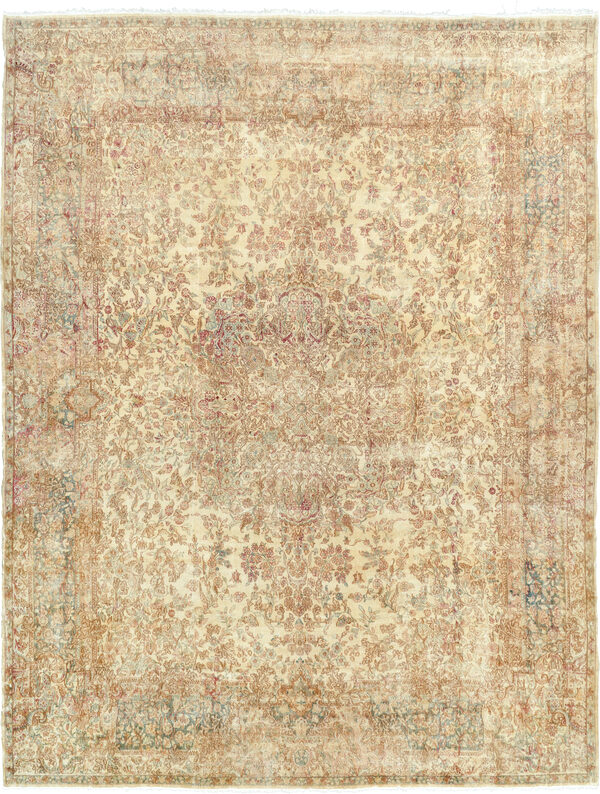
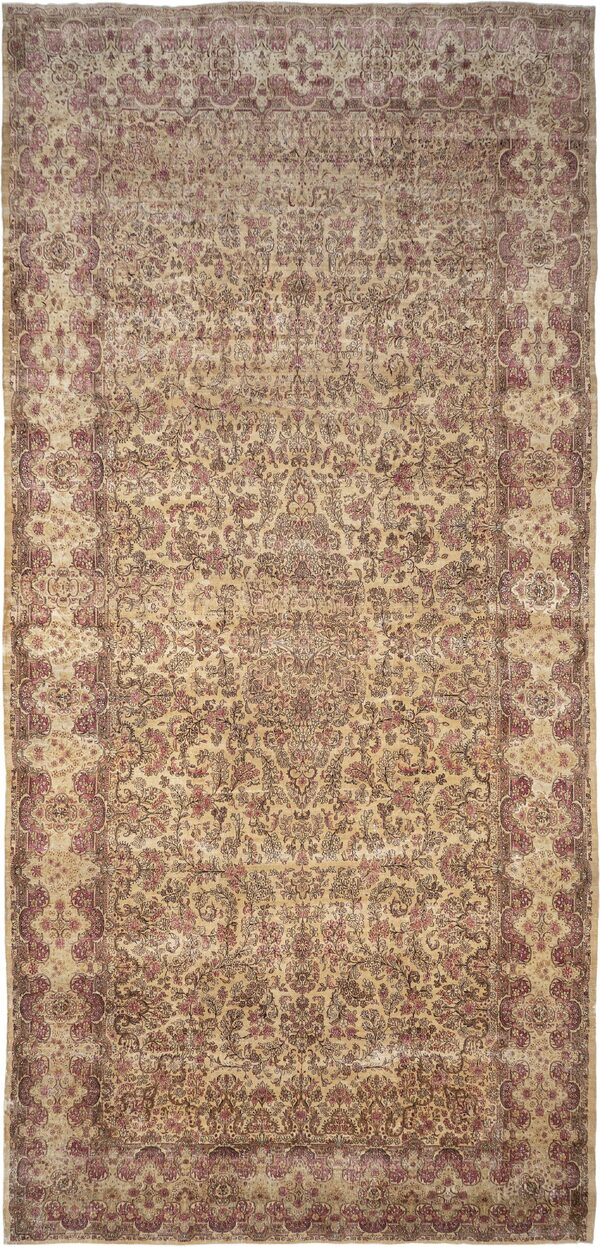
Kerman floral drawing can be arranged around a central medallion, repeated across the field, or incorporated into more pictorial subjects. The flower shapes are only part of the design. Their arrangement determines where the eye pauses and how the surface reads from across the room.
Our Kerman collection is a place to compare those differences. Start with the whole object, then move closer. Does the pattern lead toward a center? Does it continue evenly across the rug? Does the border form a clear frame or blend into the field?
These questions are more useful for placement than assuming all Kerman rugs are formal, pale or densely decorated. The answer belongs to the particular rug.
Open ground can give floral detail room to breathe
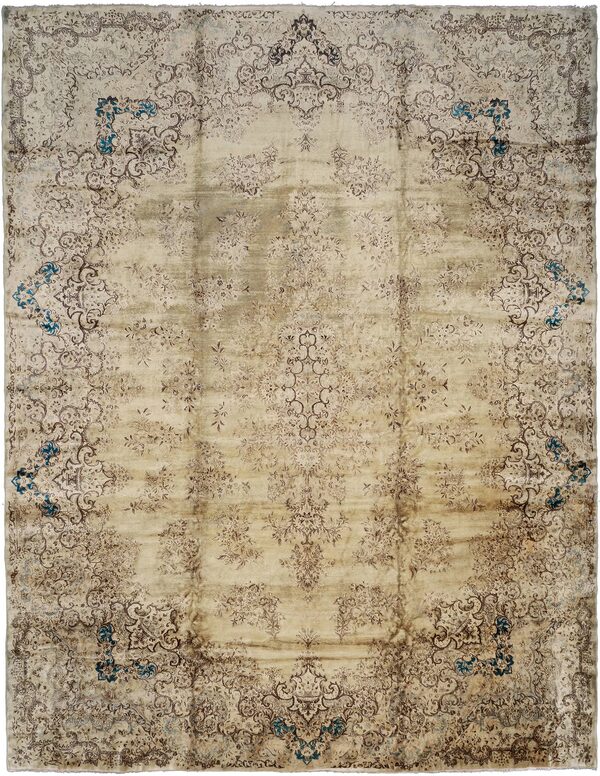
An open field gives the eye a pause between decorated areas. In a Kerman with a medallion, that space can separate the center from the border and corner drawing. The result depends on the actual composition: open ground may make a central motif more prominent, rather than making the whole rug disappear into the room.
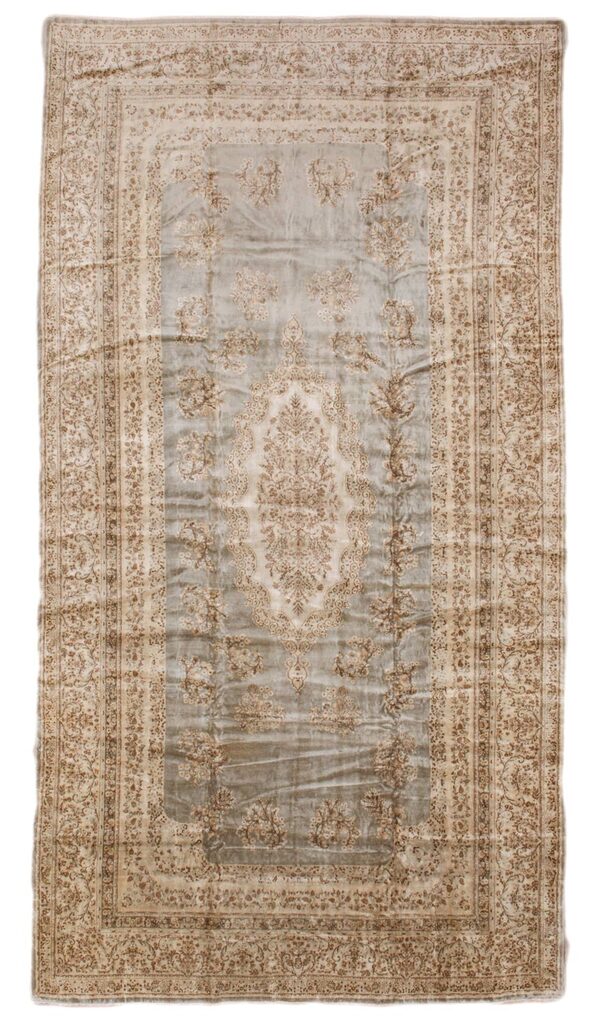
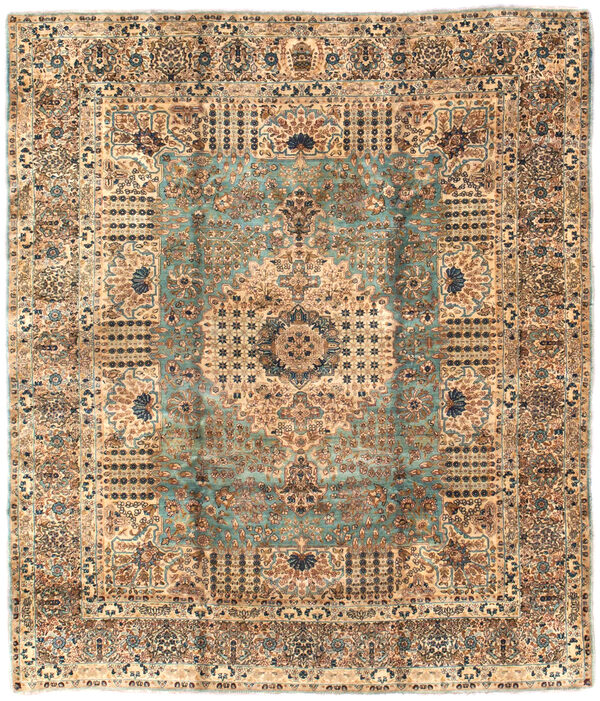
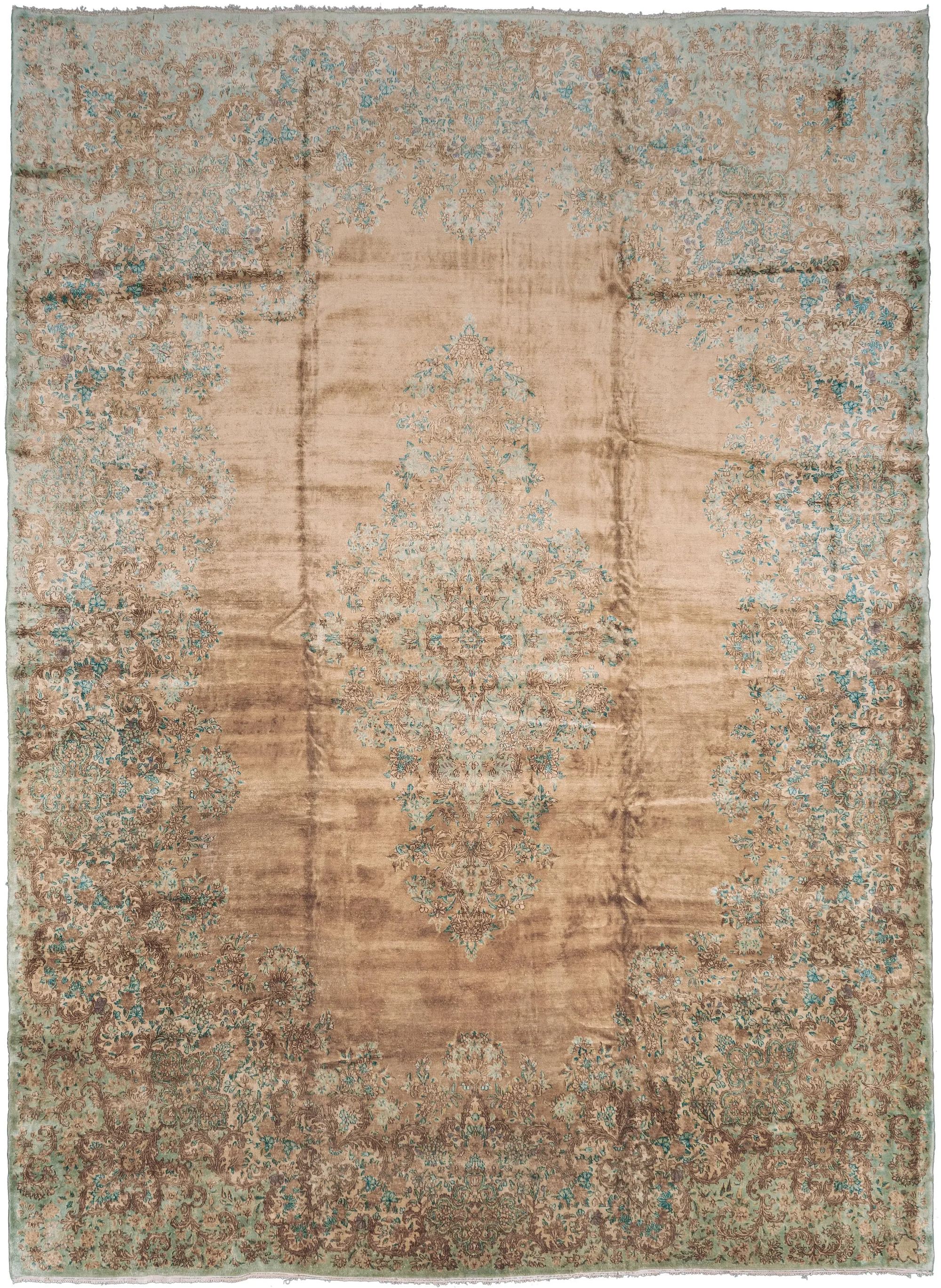
WOVEN's Kerman 14328 is catalogued as a wool rug with a medallion layout. Its overhead photograph shows a broad pale area around the center, with turquoise-toned and brown floral detail gathering more densely near the perimeter. That arrangement illustrates why both the middle and the edges need to be considered in a furniture plan.
We would first test a rug with this arrangement under a seating group that leaves some of the field visible. If the furniture covers most of the center, the decorated perimeter will carry more of the design. That can work, but it is a different effect from viewing the rug in full.
Compare a medallion with an all-over Kerman
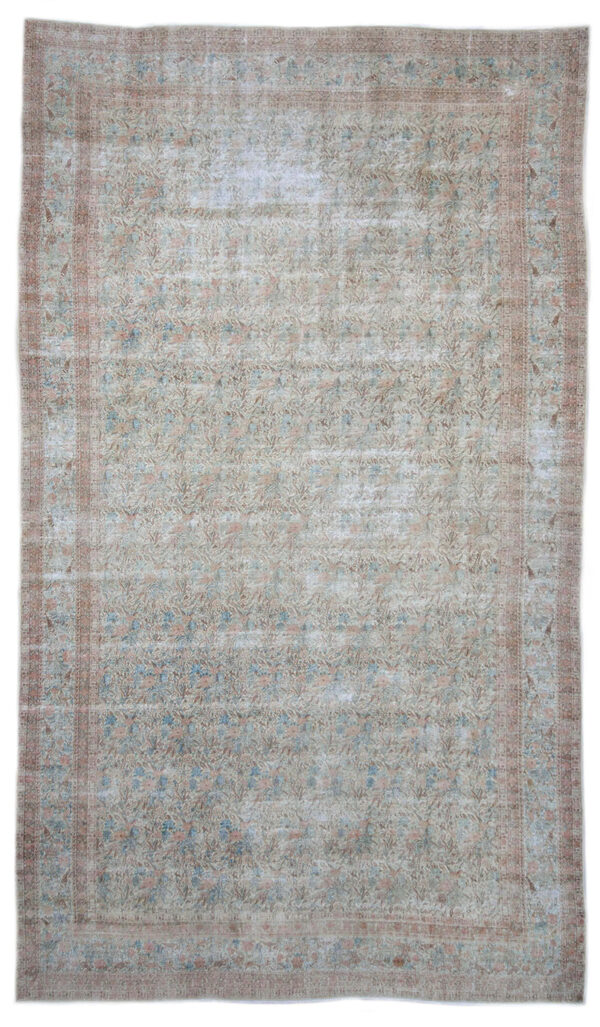
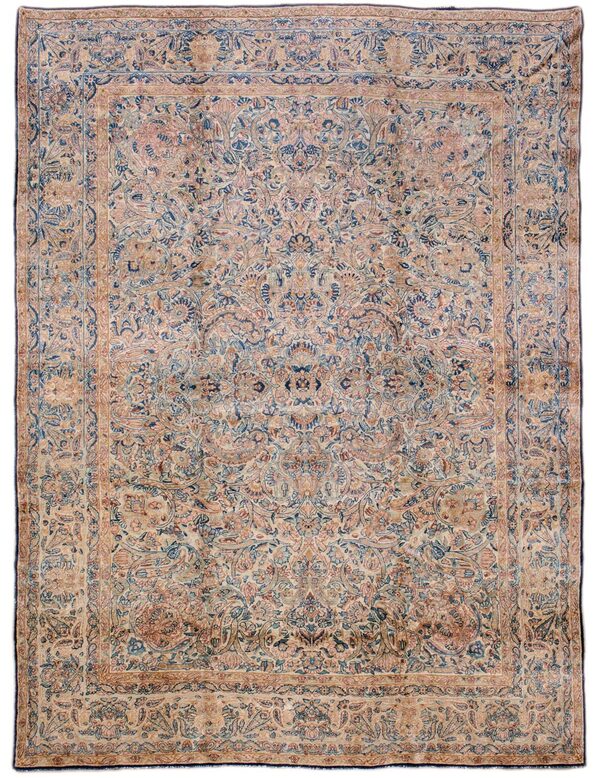
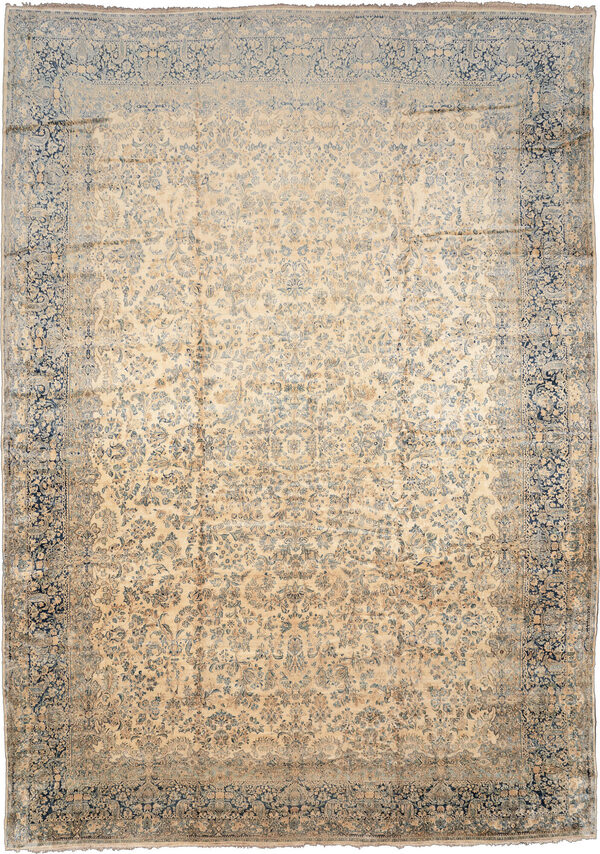
An all-over Kerman distributes its pattern through the field rather than relying on one central motif. WOVEN's Kerman 15947 is catalogued with that layout. It provides a useful comparison with 14328 when deciding whether a room needs a visible center or a more continuous pattern.
| Decision | Medallion layout | All-over layout |
|---|---|---|
| Visual focus | A center to reveal or deliberately cover | A repeat to read across the exposed field |
| Furniture placement | Check where the main table meets the medallion | Check the visible pattern around the table and seating |
| Border | May reinforce the centered composition | May provide the strongest frame for the repeat |
| First comparison | Center, corners and open intervals | Motif scale, density and repetition |
The table describes design choices, not performance differences. Layout does not establish durability or the condition of an older piece.
Kerman and Ravar Kerman need careful descriptions
Ravar Kerman is a more specific label encountered within the broader Kerman rug conversation; Lavar is another spelling used in the trade. A finely drawn floral rug should not be assigned that label simply because its pattern looks delicate. Use the recorded attribution for the particular piece and retain any qualification attached to it.
Our guide to Persian rug types explains these naming distinctions. For a design shortlist, keep the attribution separate from your visual description. “Pale field with a floral medallion” describes something visible. A precise place, date or workshop attribution asks a different question.
A pale palette does not tell the whole condition story
The appearance of an older Kerman cannot establish how it reached its present color or surface. A photograph alone does not identify dyes, explain every color change, or show the full extent of repair. We keep those claims separate from what the image can demonstrate.
Review the available condition record with the rug's proposed placement. If the attraction is an open field, look closely at that exposed area as well as the decorated border. Our guide to patina and damage helps distinguish an aesthetic preference from a condition question.
Choose a Kerman by deciding how much of its composition the room will reveal. Consider the center, the floral rhythm and the perimeter together, then use the actual rug's dimensions and condition to complete the choice. The beauty of the drawing becomes more useful when its place in the room is clear.