knowledge library / What Is a Tabriz Rug? Reading Its Pattern, Palette and Proportion
A Tabriz rug is a Persian rug associated with Tabriz in northwest Iran. Its design can center on a medallion, spread across the field in an all-over repeat, or include pictorial subjects. That range is part of its appeal: choosing a Tabriz means looking at the particular composition, rather than expecting one pattern or palette from the name.
At WOVEN, we find the most useful starting point is the whole rug. Before studying a small flower or a finely drawn border, look at what organizes the surface. Where does your eye settle, and how much open ground surrounds it? Those questions connect the rug's design to the room it will occupy.
Tabriz describes a weaving tradition, not one design
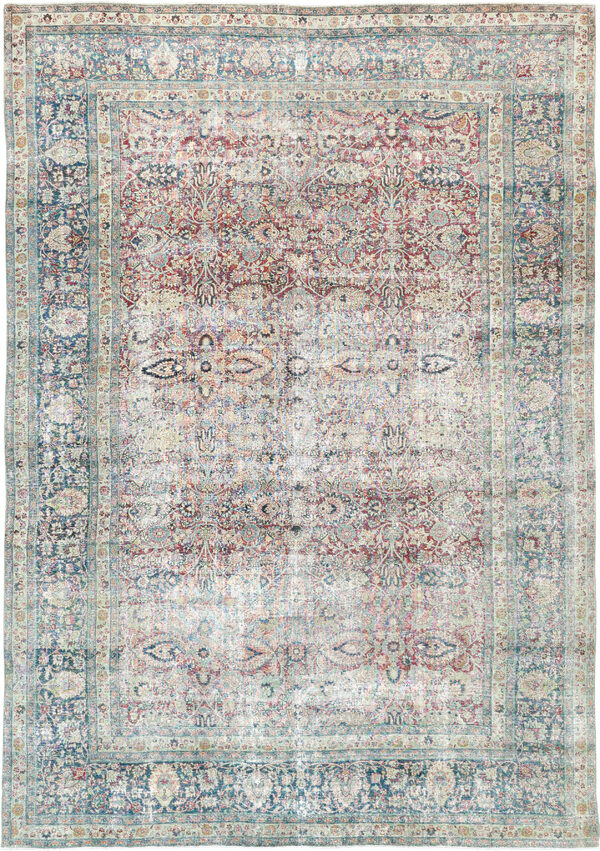
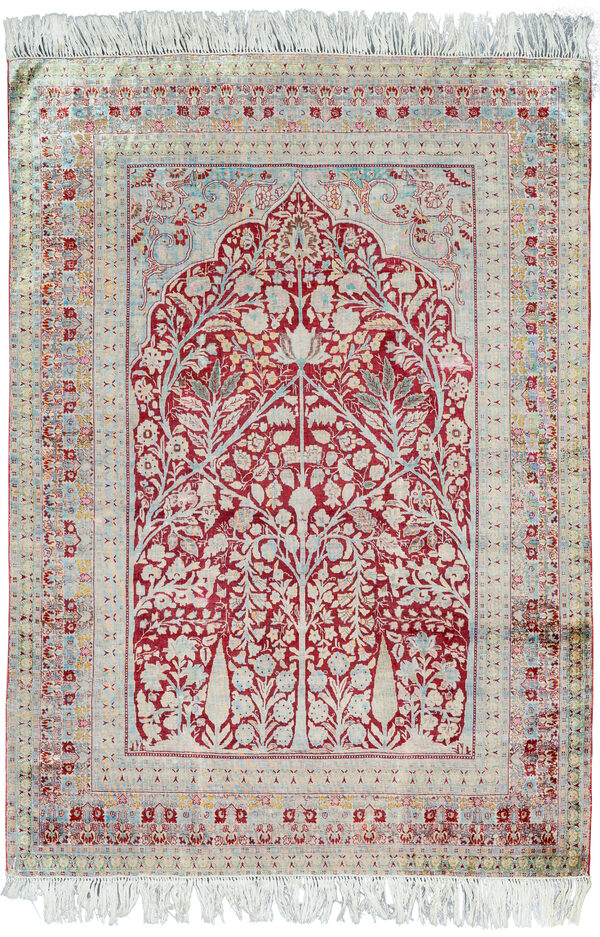
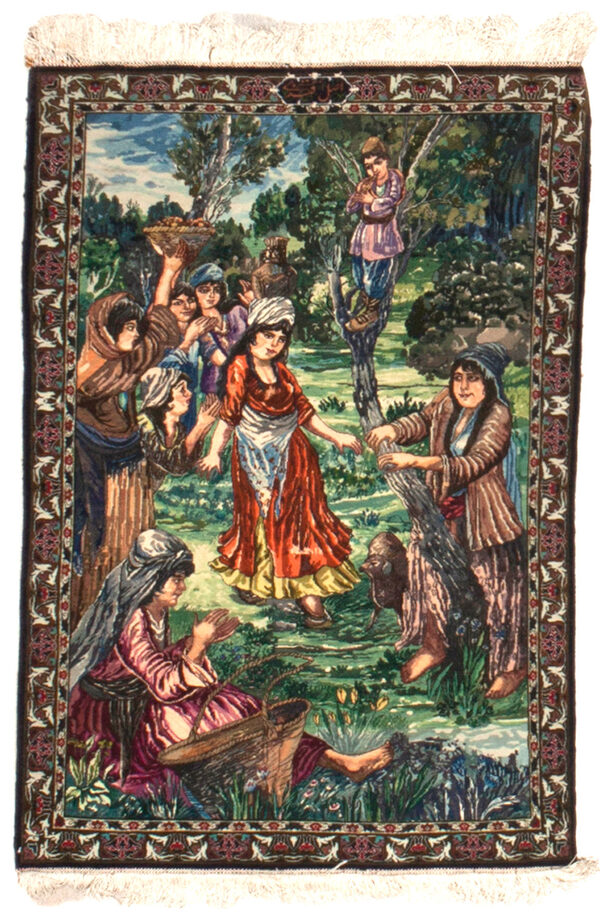
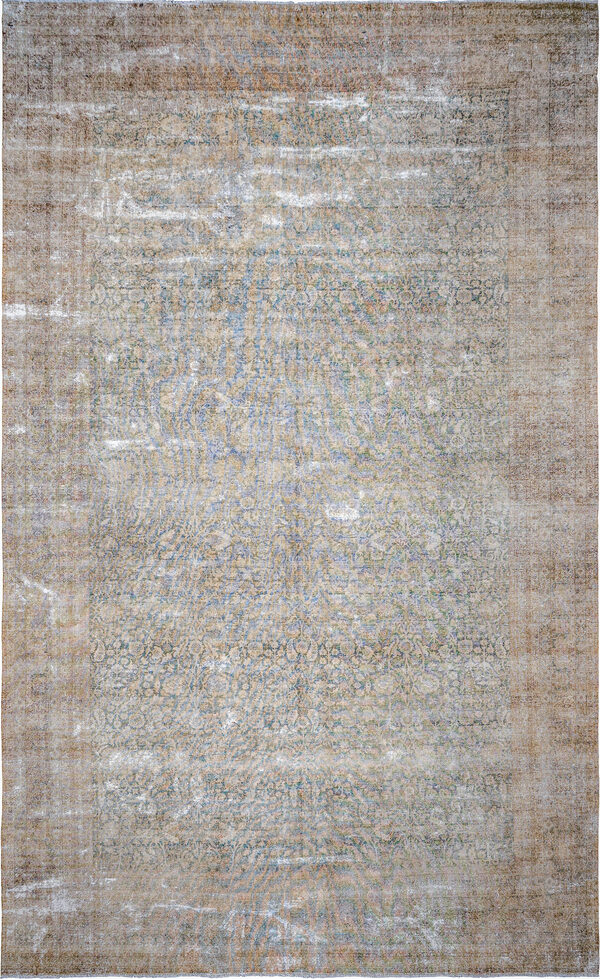
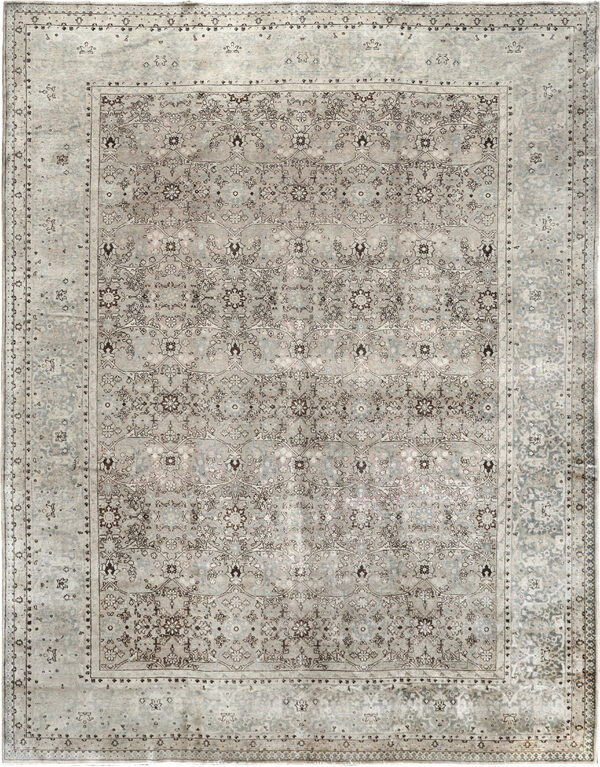
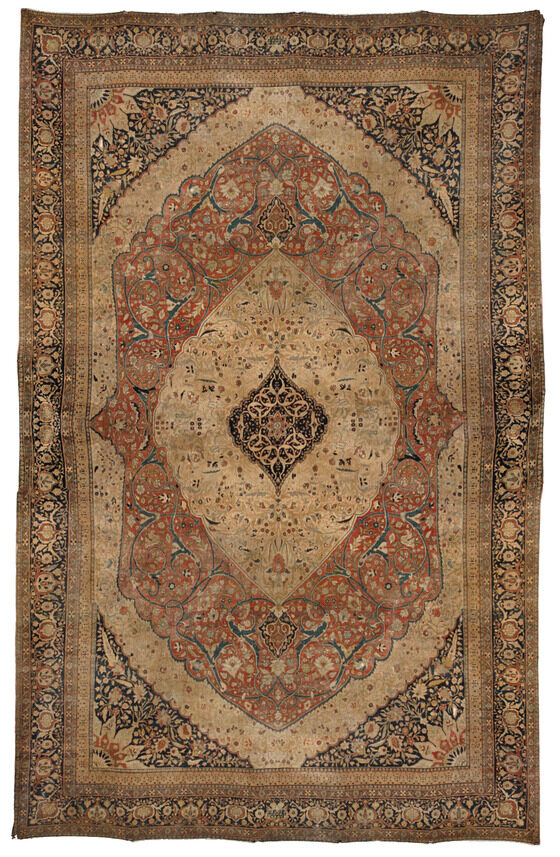
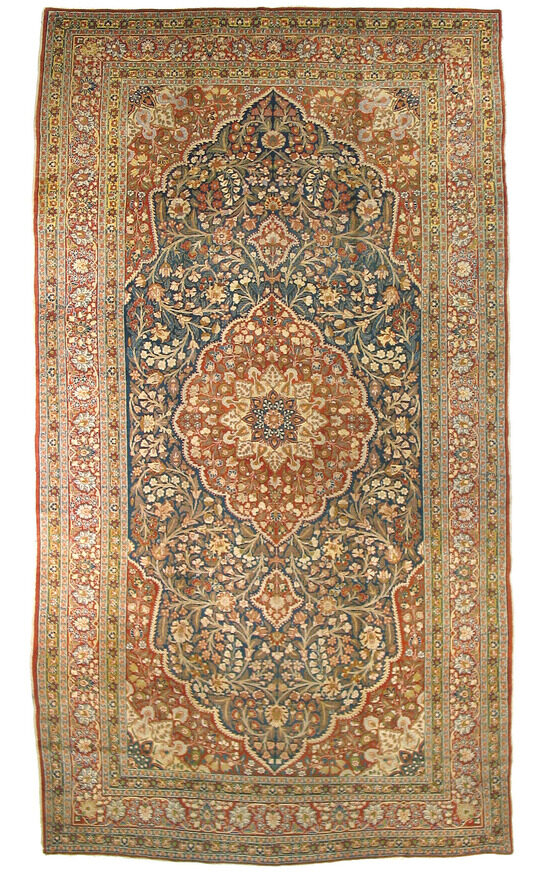
Tabriz rugs encompass a broad vocabulary of floral, medallion, repeating and pictorial designs. Color varies too. A strongly colored example and a pale, finely drawn rug can both belong to the Tabriz family. Neither palette establishes a rug's age or quality on its own.
Our Tabriz collection brings together examples of that variety. The name helps narrow a search, but the individual rug still needs its own description: dimensions, material, layout and condition. For the wider context, our guide to Persian rug types explains how regional names and design traditions relate.
Treat a resemblance as a visual clue. A floral medallion is not enough to establish that a rug was woven in Tabriz, and a new design inspired by Tabriz is not automatically an antique Persian rug.
Read the field before the detail
The field is the main area inside a rug's borders. In a medallion composition, the center gives that field a focal point. In an all-over design, repeated elements distribute attention across the surface. A pictorial composition asks you to read a subject or scene as well as the overall pattern.
That difference has practical consequences. A large solid coffee table may cover the feature that first attracted you to a medallion rug. An all-over design may leave more of its rhythm visible around the same table. Neither arrangement is inherently better; the furniture determines what you will actually see.
| Tabriz layout | What to look at | A useful placement check |
|---|---|---|
| Central medallion | Center, corner elements and the space between them | Will the furniture conceal the focal point? |
| All-over repeat | Motif size, spacing and the strength of the border | Does enough pattern remain visible around the furniture? |
| Pictorial design | Direction of the subject and its relationship to the frame | From which approach will the image be read? |
Two WOVEN examples show why the label is only a beginning
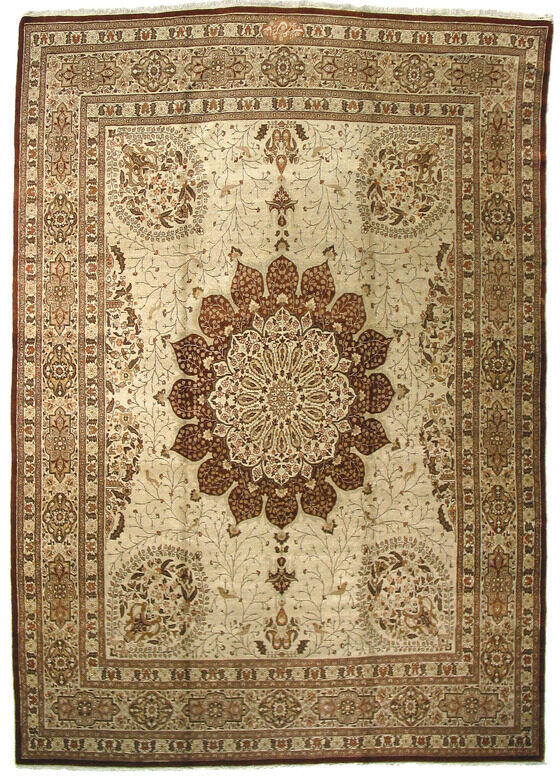
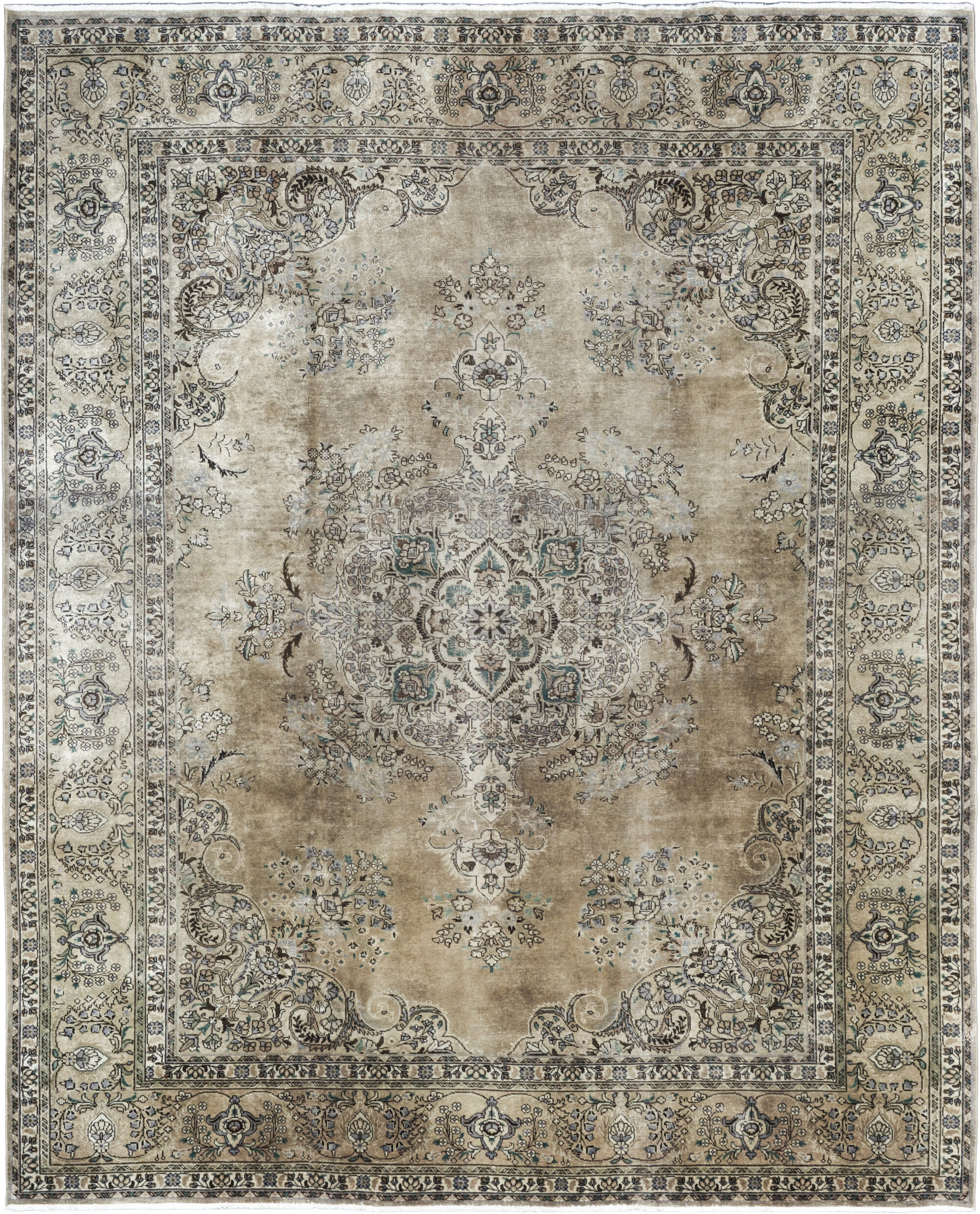
WOVEN's Tabriz 13648 is catalogued as a wool rug with a medallion layout. In its photograph, a pale central field separates the medallion from dense ornament at the edges. Small blue-green details sit within the broader cream and brown palette. The empty-looking intervals are as important to the composition as the decorated areas.
By comparison, Tabriz 14095 is catalogued with an all-over layout. It offers a different starting point for a furniture plan: the pattern continues across the field instead of depending on one central feature. These are examples of layout, not a ranking of the two rugs or a statement about their present availability.
For a room with several pieces of sculptural furniture, we would first compare how those two arrangements divide attention. A medallion can reinforce a centered seating group. A repeat can help a less symmetrical group read as one area. This is a design choice to test on the plan, not a rule about where Tabriz rugs belong.
Let the border take part in the palette
A Tabriz border can carry a stronger color or denser pattern than the field. When much of the center sits beneath furniture, the border may become the rug's most visible element. Choose with that exposed area in mind.
Place the rug image alongside the floor and upholstery, then mark the furniture footprint. Look at the colors that remain outside it. A pale center does not necessarily make a rug quiet if a contrasting border surrounds the entire seating group. Conversely, close tones can soften the effect of intricate drawing.
Use photographs to narrow the comparison; judge final color with the actual rug in suitable light. Our rug size guide helps establish the footprint before a pattern choice becomes a purchase decision.
Keep appearance and condition separate
A softened pattern may be appealing, but the photograph alone does not explain its condition. Before choosing an older Tabriz, review the available condition information, including repairs, edges, ends and areas of wear. A pleasing palette does not answer those questions.
Our antique rug evaluation guide provides a fuller framework. For the design decision, begin with the layout, check what the furniture leaves visible, and use the border to connect the rug to the room. Tabriz offers many possible expressions; the right one is the particular composition that makes sense in your space.