knowledge library / What Is a Kashan Rug? Medallions, Floral Fields and How to Choose
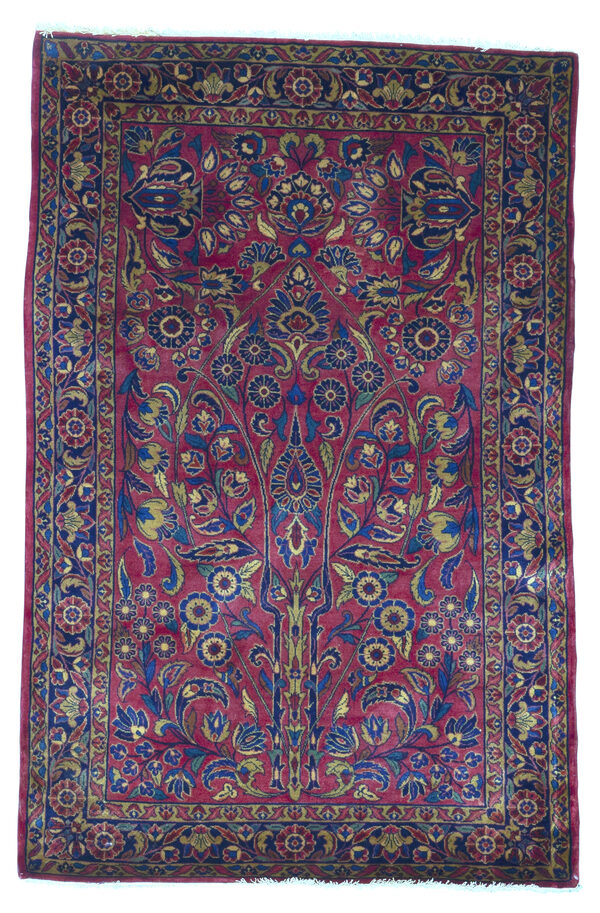
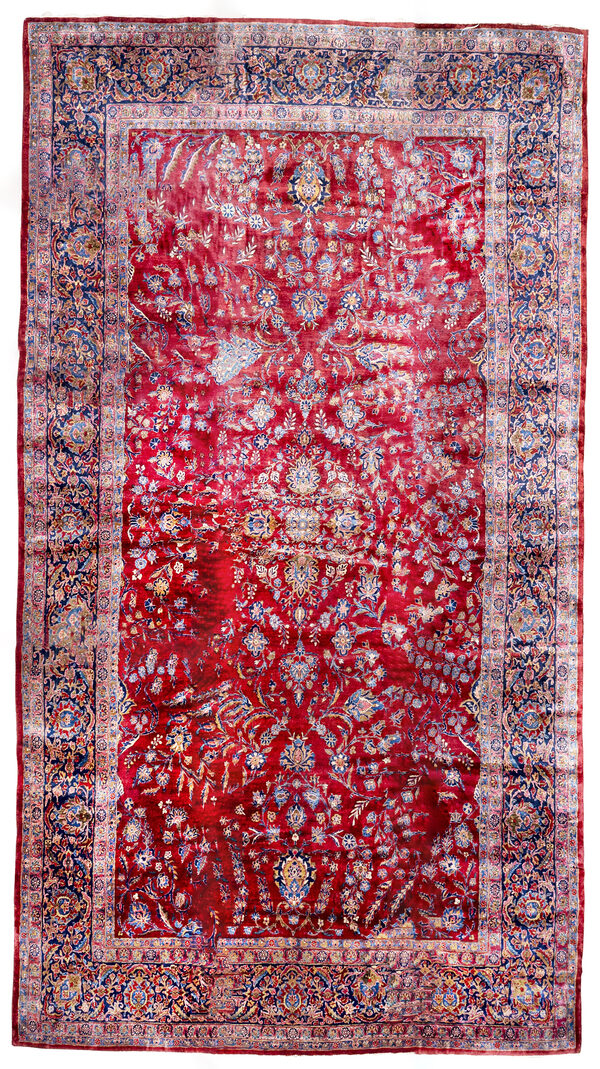
A Kashan rug is a Persian rug associated with Kashan in central Iran. Curving floral patterns, central medallions and defined borders are familiar features, but Kashan rugs also include all-over compositions. The most useful way to choose one is to read the whole layout, then check how its color, dimensions and visible pattern relate to the furniture.
An intricate rug can be surprisingly clear in its organization. At WOVEN, we begin by separating the field, center and frame. Once those large elements make sense, the smaller flowers and vinework become easier to read.
The Kashan name is not a single pattern
Kashan identifies a Persian rug tradition associated with a place. It does not mean that every rug has the same medallion, uses the same palette or belongs to the same period. A design inspired by Kashan also needs to be distinguished from a rug attributed to Kashan itself.
The Kashan collection includes examples with different layouts. Our broader Persian rug type guide gives the context for these names; the individual product record provides the more useful detail when choosing a piece for a room.
Look for the dimensions, material and layout before using the type name as a design shortcut. Age, attribution and condition remain separate parts of the description.
How to read a medallion Kashan
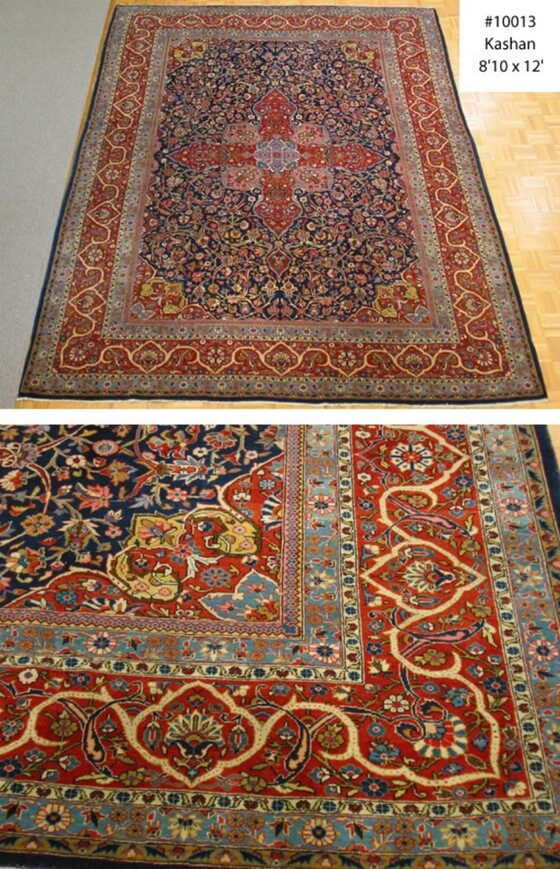
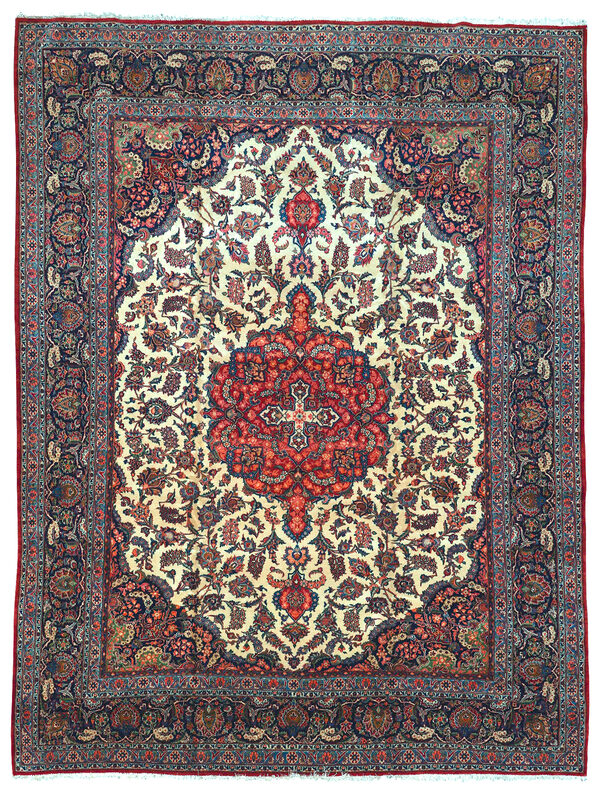
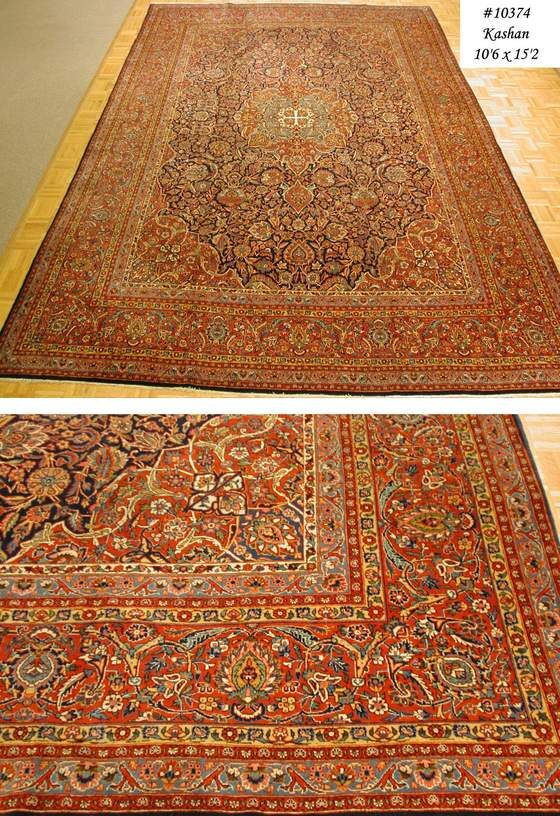
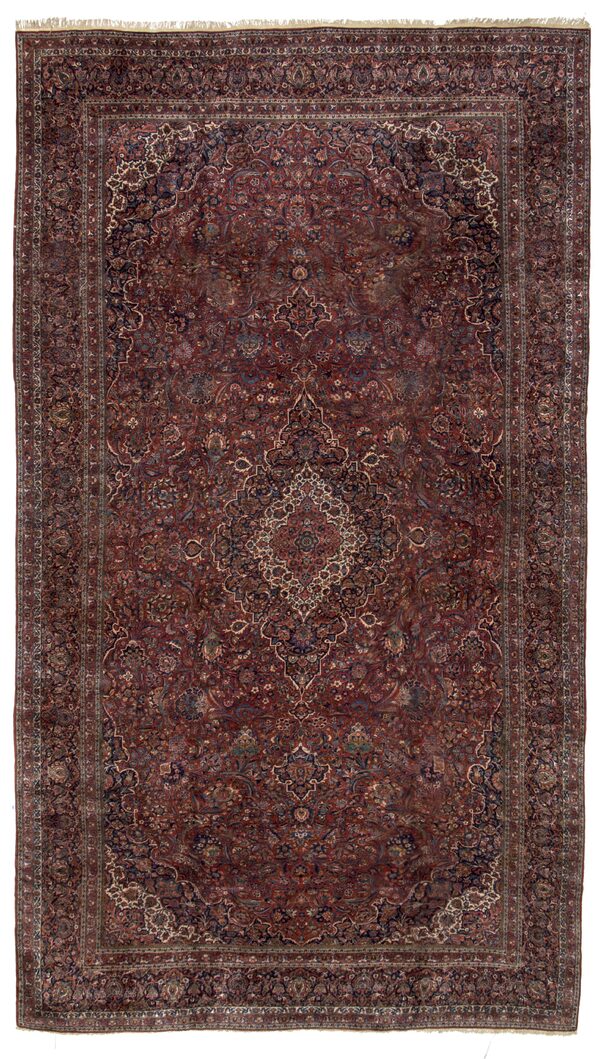
A medallion Kashan organizes its design around a central motif. The surrounding field, corner elements and borders give that center its setting. To understand the composition, look at the relationship between those parts rather than trying to identify every small ornament.
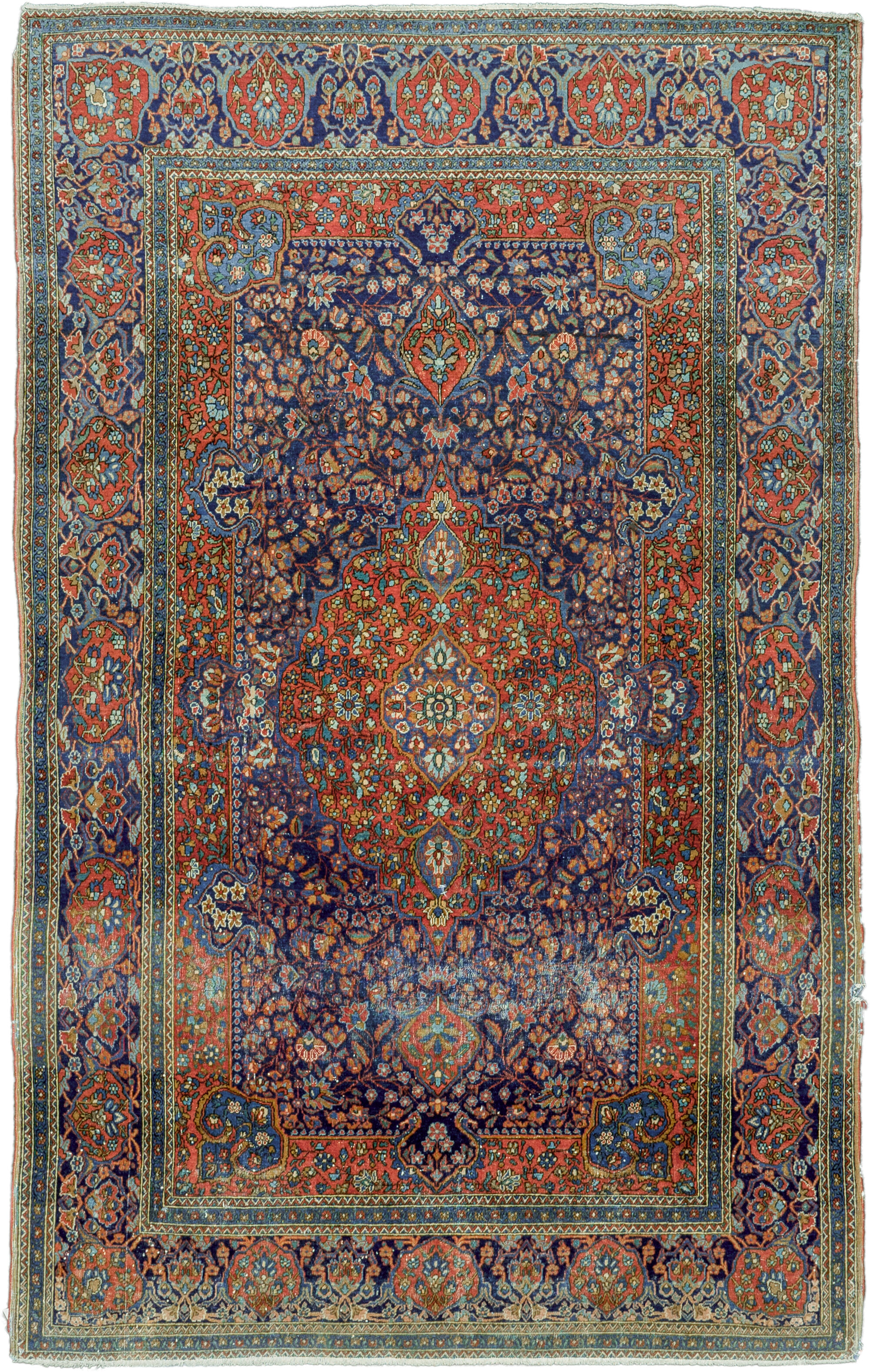
WOVEN's Kashan 20287, illustrated here, is catalogued as wool with a medallion layout. The overhead image shows a long central form set within blue and coral-red areas, with smaller floral details and several enclosing border bands. Those repeated color relationships help connect the center to the perimeter.
For placement, mark the proposed table or seating directly over an image of the whole rug at the correct proportions. If the center disappears, ask whether the visible borders and corner drawing still produce the effect you wanted. Covering a medallion is not automatically a mistake; it should be a deliberate choice.
All-over Kashan rugs offer another arrangement
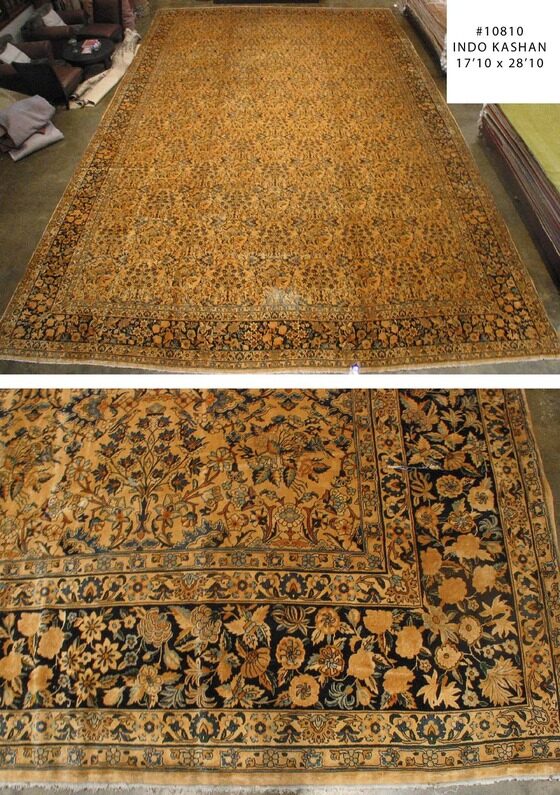
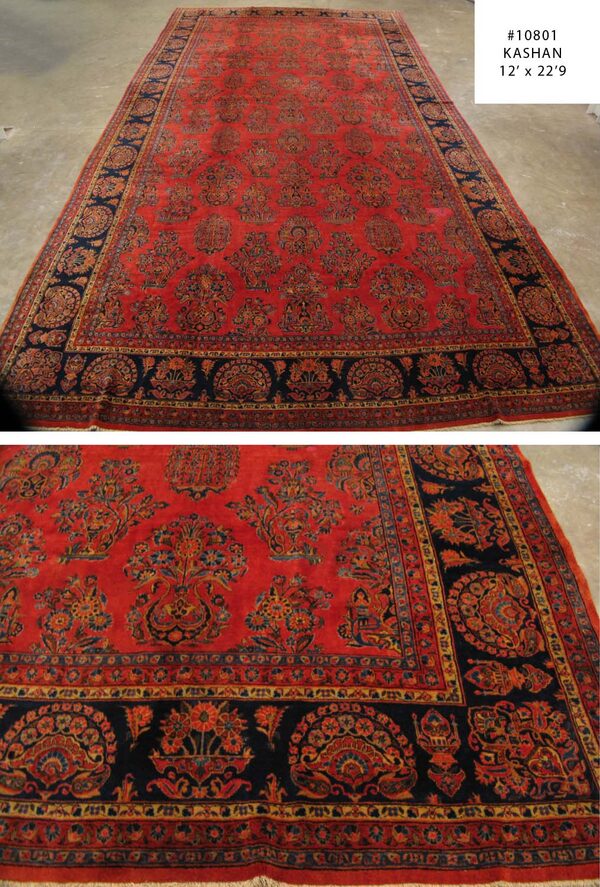
An all-over Kashan carries its pattern across the main field without depending on one dominant central medallion. WOVEN's Kashan 13221 is catalogued with an all-over layout. It makes a useful counterpoint to 20287 when comparing composition, even before considering their different dimensions.
The choice is not between a decorative rug and a plain one. Both layouts can be intricate. The distinction is where the emphasis sits: concentrated around a center or distributed across a repeat. A furniture group can reveal very different portions of each.
| What you want to understand | Compare this part of the rug |
|---|---|
| Whether the room will have a strong center | The medallion's size and contrast against the field |
| How the pattern will read beneath furniture | The motif arrangement outside the furniture footprint |
| How much color the rug introduces | The largest visible color areas, not just the accents |
| Whether the rug frames the seating | Border width and the amount left exposed |
Choose color at the scale you will see it
The largest visible color area usually has more influence on a room than a tiny accent in the drawing. In a strongly patterned Kashan, the main field and border may create a different palette from the small flowers that first catch the eye in a close-up.
We recommend comparing the rug with the room's largest surfaces first: floor, sofa or bed, walls and curtains. Then choose whether a smaller rug color should be repeated elsewhere. There is no need to carry every accent into the room.
For an illustrative seating scheme with plain upholstery, a vivid medallion can become the main decorative element. In a room that already has patterned upholstery and prominent artwork, a quieter relationship between field and border may be easier to work with. These are comparisons to make with the actual options, not rules that limit Kashan rugs to one style of interior.
Resolve size and condition before the final choice
The dimensions of an existing Kashan are part of the decision. A layout that looks right in a photograph still needs to fit the furniture arrangement and leave enough of the desired pattern visible. Use the rug size guide to check the plan before committing to an individual piece.
For an older rug, review the available condition information alongside its appearance. A clear pattern does not establish that every edge or area of pile is sound, and a softer pattern does not explain the cause of wear or color change. Our antique evaluation guide sets out the fuller review.
A Kashan is best chosen through the relationship between its parts: field, medallion or repeat, and border. Find the arrangement you want to live with, check what the furniture will reveal, and let the individual rug's records complete the picture.