knowledge library / How to Present Rug Options to Clients
A useful rug presentation connects each option to the same room, budget and practical brief. Show the rug in the furniture layout, place its physical sample beside the project's materials, and explain the difference each option makes. Keep a client's preferred direction separate from final specification approval, especially when a custom rug still needs artwork or a woven sample.
At WOVEN, our custom process begins with what the client wants to achieve and why. A presentation works better when it makes that purpose visible: a quieter floor beneath expressive furniture, a pattern that brings the room together, or a surface that introduces more texture.
Give each option a clear reason to be there
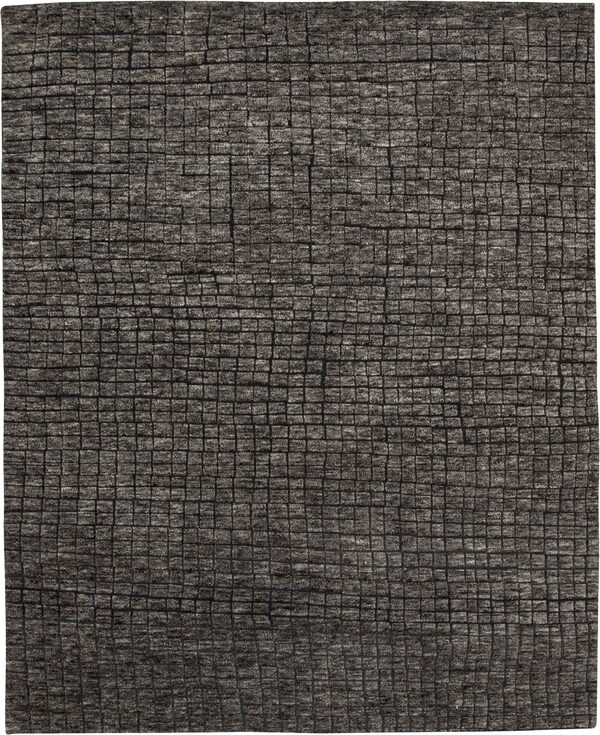
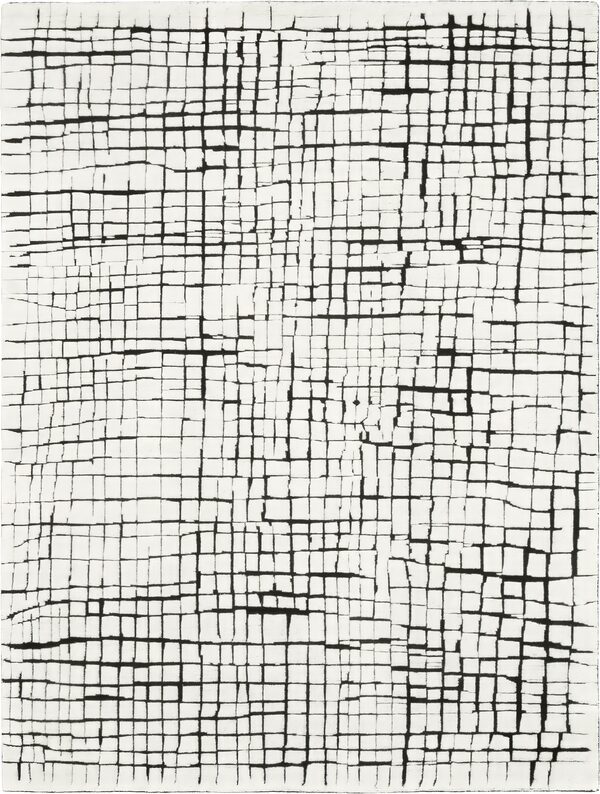
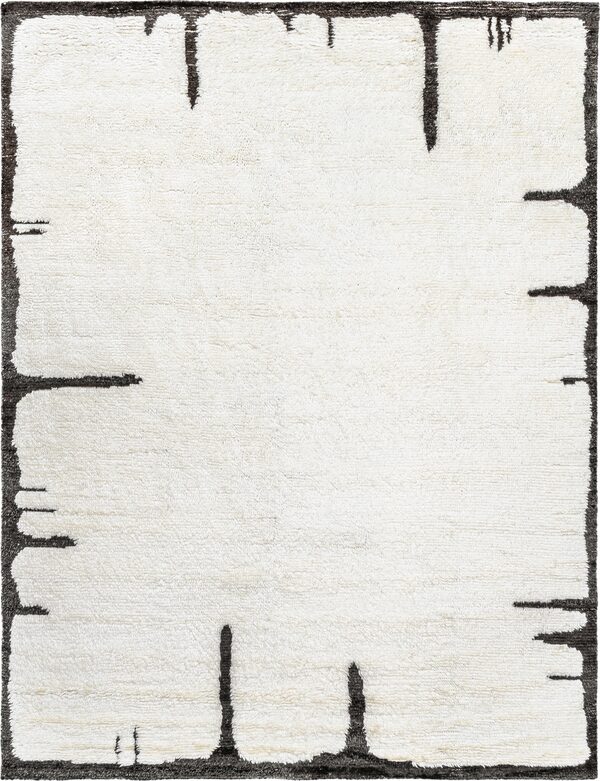
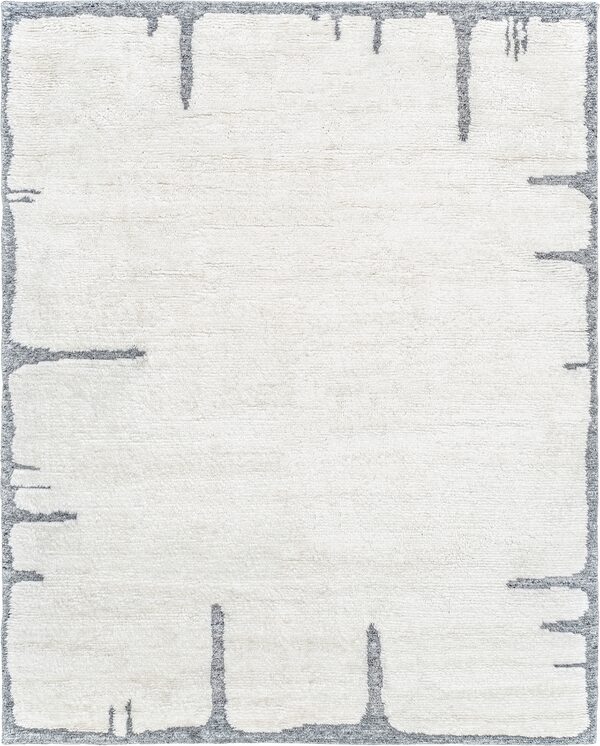
A shortlist should help the client compare meaningful choices. Two or three directions are often enough for an initial conversation: one quiet, one more textural and one with a stronger pattern, for example. The number is a presentation choice, not a rule; the important part is explaining why each option belongs in the room.
Name the design difference in ordinary language. “This keeps the floor quiet and brings the chair forward” is more useful than describing every rug as timeless or versatile. If two choices look similar, identify the distinction the client should assess: color, surface, pattern scale or the path from selection to delivery.
Use the same furniture layout for every option. Changing the viewpoint, scale or surrounding finishes at the same time makes the rugs harder to compare.
Put the rug beside the materials it will meet
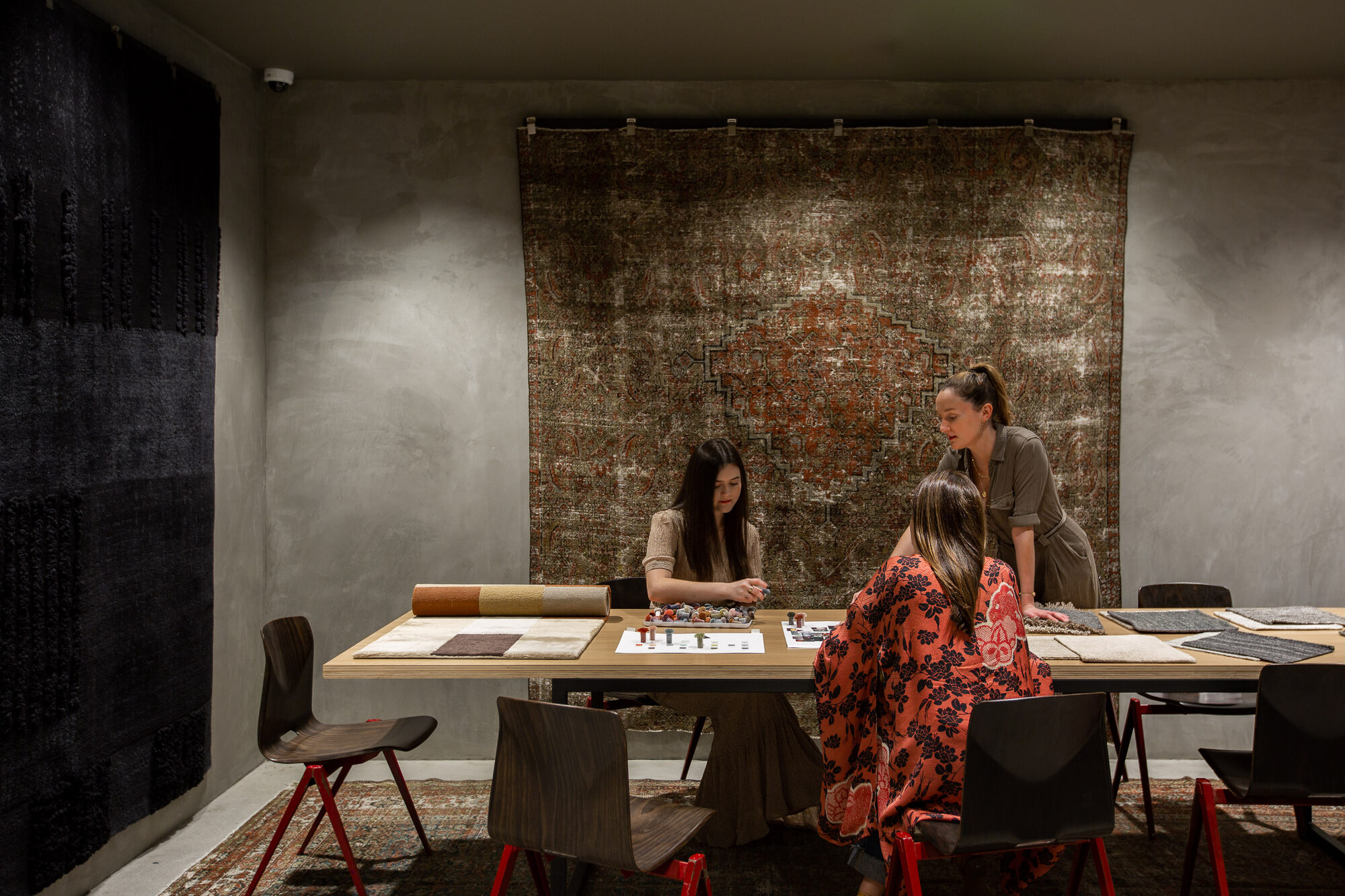
Physical samples should be reviewed with the room's upholstery, timber, paint and stone references where available. WOVEN's color-selection process brings those materials together and considers light close to the installation setting. A mood board helps explain the composition; the physical references help resolve close material and color decisions.
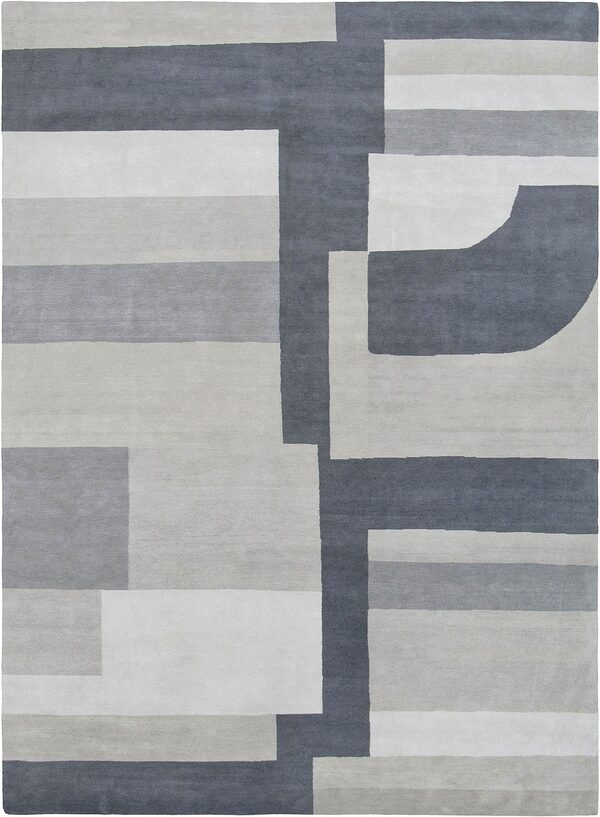
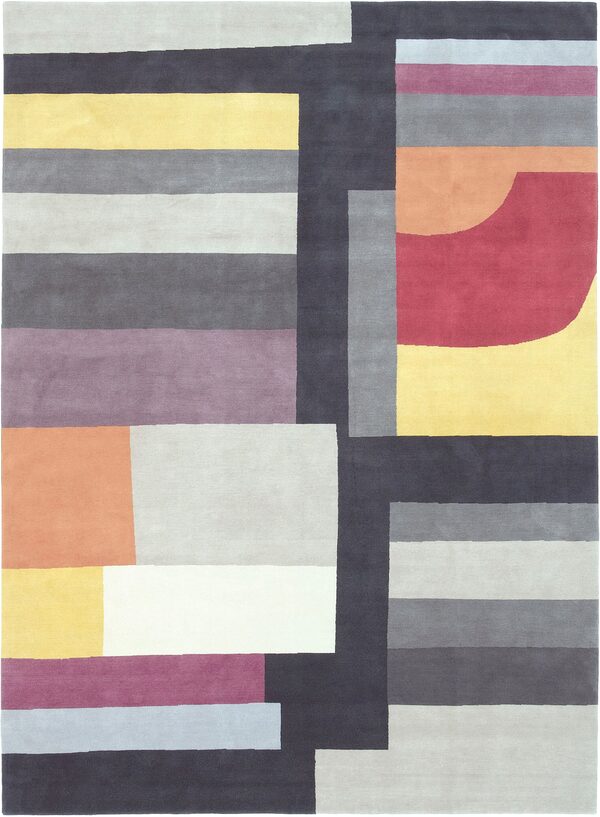
Show the whole rug design as well as a detail. A small sample may establish the surface while leaving the full pattern unclear. Conversely, a complete image can communicate the drawing without establishing the rug's feel.
Keep the distinction simple for the client: “This image shows the layout; this sample shows the surface we are considering.” If the sample represents a different color or material from the proposal, label that difference directly.
Use one comparison sheet for the shortlist
A consistent comparison sheet makes the trade-offs visible without turning the meeting into a technical review. Give every rug the same fields, using confirmed product or quotation details. Where a detail is still open, say what is awaiting confirmation instead of filling the space with an estimate presented as fact.
| Field | What the client needs to understand |
|---|---|
| Design role | What this rug contributes to the room |
| Proposed size and placement | How it relates to the furniture and circulation |
| Material and surface | What the physical sample represents |
| Color and pattern | What is standard and what would change |
| Care | The guidance relevant to this particular quality |
| Price and timing | The current quoted scope and any unresolved elements |
| Decision today | Whether the client is choosing a direction, a sample or a final specification |
Our custom rug specification checklist provides the more detailed record behind that short presentation. The client-facing sheet can stay focused on the decision at hand.
Explain a trade-off rather than picking a universal winner
A good presentation shows why a rug may be right for this room. For an illustrative living room with patterned chairs, a quieter field could leave the upholstery as the focal point. A more visible rug pattern could connect the seating into a stronger overall composition. Present those as two design intentions and let the client respond to the difference.
Treat material and care with the same specificity. Use the selected quality's guidance, rather than promising that every wool rug is equally suitable for the household. Our designer rug material guide offers a starting point for that discussion.
Price comparisons also need the same scope. A standard design in a different size and a rug with changed material, color and construction involve different decisions. The custom rug pricing guide explains which choices belong in the brief before a quote is compared.
Close the meeting with a named decision
A client choosing a favorite direction has not necessarily approved a rug for production. Record what was selected, which reference was reviewed, what still needs to change and the next item to approve. For custom work, keep the current artwork and physical sample references connected to that record.
WOVEN's process can use a master sample for standard STUDIO WOVEN designs when material, color and construction remain unchanged. Custom changes can require a strike-off, a woven sample developed for approval. Our samples and strike-offs guide explains that stage.
End with one clear next step: compare the shortlisted samples in the room, develop the selected color direction, or approve the current artwork once the remaining details are resolved. Explore STUDIO WOVEN for starting points, then let the project's materials and priorities shape the shortlist.