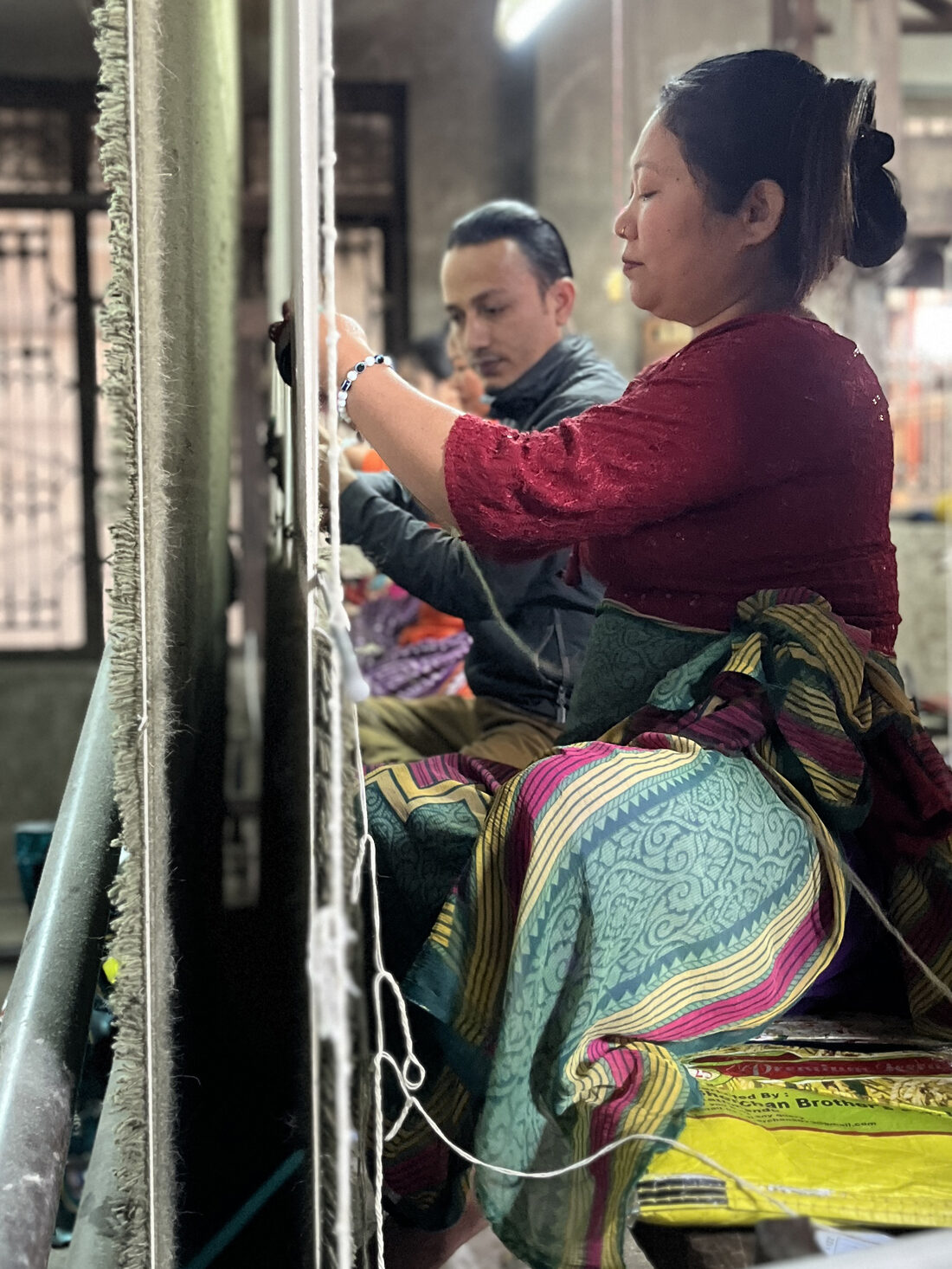
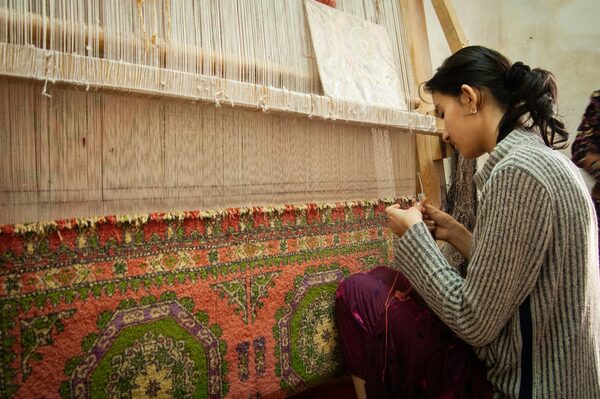
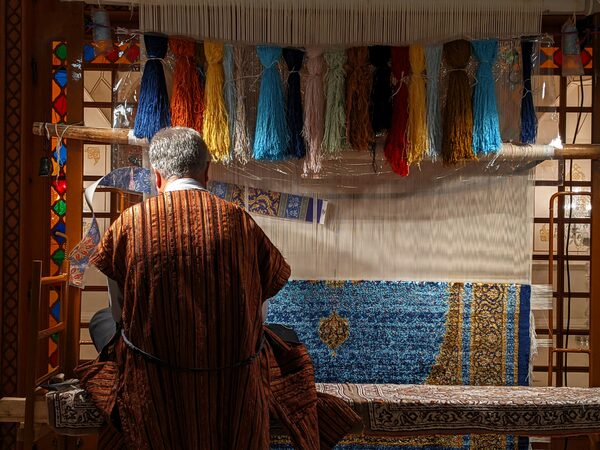
Follow a custom hand-knotted rug from its drawing through yarn preparation, weaving and finishing, and see what each approval needs to resolve.
Understand the overlap between kilim and dhurrie terminology and distinguish tapestry interlacing from soumak weft wrapping.
Compare Heriz and Serapi as related regional and trade terms, with catalog evidence, object-specific attribution and condition kept separate.
Identify handmade rug construction through matched front-and-reverse evidence, foundation and edge details, while recording what remains uncertain.
Read Persian rug names as place, community or trade attributions, and separate observed construction from the evidence for a precise origin.
Persian identifies rugs made in Iran; Oriental is a much broader traditional trade term. Learn how origin, construction, age, and attribution work together when reading a rug label.
A closer look at why WOVEN continues to make rugs by hand, and how structure, material, texture, and human judgment become part of the design.